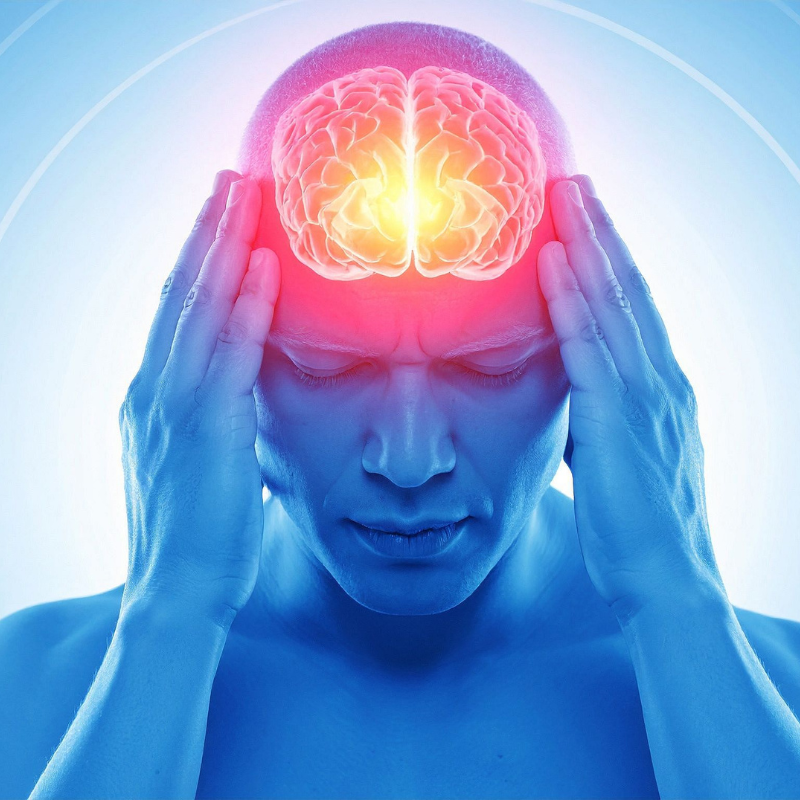
Brain Tonic for Anxiety is thoughtfully formulated to support calm focus, emotional balance, and mental clarity. Ideal for individuals managing daily worries or mental tension, it helps promote a sense of ease without interfering with productivity. This tonic is designed for consistent, everyday use and fits well into a wellness-centered lifestyle. By focusing on brain health and nervous system support, it helps users feel more composed and centered. Choose Brain Tonic for Anxiety if you’re looking for a gentle, supportive option to help manage mental stress and maintain emotional well-being.
Description
Anxiety is one of the most common mental health challenges worldwide, affecting people across all ages, backgrounds, and lifestyles. While occasional anxiety is a normal and even protective response to uncertainty or danger, persistent or excessive anxiety can interfere with daily functioning, relationships, sleep, and overall quality of life. As understanding of the brain’s role in emotional regulation has expanded, so too has interest in approaches framed as “brain tonics for anxiety.”
This concept suggests a shift away from viewing anxiety solely as a psychological issue and toward recognizing it as a neurobiological state shaped by brain chemistry, nervous system balance, and environmental context. Rather than suppressing symptoms, a brain tonic framework emphasizes supporting the brain’s capacity to regulate emotional responses more effectively.
This article explores the idea of brain tonics for anxiety through a neutral, educational, and research-oriented lens. It examines the neurobiology of anxiety, contributing factors, evidence-based support strategies, and the limitations of simplified solutions—without promoting specific products or promising outcomes.
Understanding Anxiety as a Brain-Based Process
Anxiety originates in the brain’s threat-detection and response systems. Key regions involved include:
- The amygdala, which detects potential threats and triggers fear responses
- The prefrontal cortex, which evaluates context and regulates emotional reactions
- The hippocampus, which provides memory and situational awareness
In healthy regulation, these regions work together to assess risk and restore calm once a threat has passed. In anxiety disorders, this balance can be disrupted, leading to heightened threat perception, prolonged stress responses, and difficulty returning to baseline.
Importantly, anxiety is not simply “overthinking.” It reflects measurable changes in neural activity and signaling.
The Autonomic Nervous System and Anxiety
Anxiety is closely linked to the autonomic nervous system, which controls involuntary physiological functions. This system has two primary branches:
- The sympathetic nervous system, responsible for “fight or flight” responses
- The parasympathetic nervous system, responsible for “rest and digest” states
Chronic anxiety is associated with sympathetic dominance, meaning the body remains in a heightened state of alert even when no immediate threat is present.
A brain tonic framework for anxiety focuses on restoring balance between these systems rather than suppressing the stress response entirely.
Neurochemistry and Anxiety Regulation
Several neurotransmitters play critical roles in anxiety modulation:
- GABA, the primary inhibitory neurotransmitter, which calms neural activity
- Serotonin, involved in mood stability and emotional regulation
- Norepinephrine, which influences alertness and stress responses
- Dopamine, associated with motivation and reward processing
Disruptions in these systems can contribute to heightened anxiety sensitivity. Stress, sleep deprivation, inflammation, and nutritional inadequacy can all influence neurotransmitter balance.
From a research perspective, supporting these systems involves creating conditions for balance rather than attempting to force calm.
Stress, Cortisol, and Anxiety Cycles
Chronic stress is one of the most significant contributors to anxiety. Prolonged activation of the HPA axis leads to sustained cortisol release, which can alter brain structure and function over time.
Elevated cortisol has been associated with:
- Increased amygdala reactivity
- Reduced prefrontal cortex regulation
- Impaired hippocampal memory processing
This pattern helps explain why chronic anxiety often feels uncontrollable. The brain becomes more reactive and less able to contextualize perceived threats.
Supporting stress regulation is therefore central to anxiety management.
Cognitive Factors and Threat Interpretation
Anxiety is influenced not only by physiological arousal but also by how the brain interprets internal and external cues. Cognitive patterns such as catastrophizing, hypervigilance, and intolerance of uncertainty can amplify anxiety responses.
Research in cognitive neuroscience shows that attention bias toward threat increases anxiety severity. Conversely, cognitive strategies that improve flexibility and reappraisal can reduce symptom intensity.
A brain tonic framework includes cognitive support as part of emotional regulation.
The Role of Sleep in Anxiety Regulation
Sleep and anxiety are deeply interconnected. Sleep deprivation increases emotional reactivity, reduces impulse control, and heightens amygdala activity.
Studies show that even modest sleep loss can significantly increase anxiety levels the following day. Chronic insomnia, in turn, increases the risk of developing anxiety disorders.
From a research standpoint, improving sleep quality is one of the most effective anxiety-support strategies available.
Nutrition and the Anxious Brain
Nutrition influences brain function through energy metabolism, neurotransmitter synthesis, and inflammatory regulation. While diet alone does not cause or cure anxiety, certain patterns are associated with improved emotional regulation.
Research has explored the role of:
- Stable blood sugar, which reduces physiological stress
- Omega-3 fatty acids, linked to neuronal membrane health
- Magnesium, involved in nervous system signaling
- B-vitamins, which support neurotransmitter pathways
Nutritional support should be viewed as foundational rather than curative.
The Gut-Brain Axis and Anxiety
The gut-brain axis plays a significant role in anxiety regulation. Gut microbes influence immune signaling, neurotransmitter production, and stress hormone activity.
Disruptions in gut health have been associated with increased anxiety symptoms, though causality remains complex and bidirectional.
Dietary patterns that support gut diversity and reduce inflammation may indirectly support emotional regulation.
Physical Activity and Emotional Resilience
Exercise has consistently been shown to reduce anxiety symptoms. Physical activity influences anxiety through multiple mechanisms:
- Reducing stress hormone levels
- Increasing neurotrophic factors
- Improving sleep quality
- Enhancing self-efficacy
From a brain perspective, movement helps regulate neural circuits involved in stress and emotion.
Regular activity does not eliminate anxiety, but it can significantly reduce baseline arousal.
Psychological Safety and Social Support
Human brains evolved in social contexts. Social connection plays a critical role in regulating stress and anxiety responses.
Research shows that perceived social support reduces cortisol reactivity and enhances emotional resilience. Conversely, isolation increases anxiety vulnerability.
A brain tonic approach recognizes social and environmental safety as biological regulators of anxiety.
Risks of Oversimplified Anxiety Solutions
Anxiety is a complex, multifactorial experience. Oversimplified solutions—particularly those promising rapid or universal relief—carry risks, including:
- Delayed professional support
- Increased self-blame when symptoms persist
- Overreliance on unproven interventions
Educational approaches emphasize gradual support and realistic expectations.
Individual Variability in Anxiety Experience
Anxiety manifests differently across individuals. Genetics, temperament, trauma history, and life context all influence symptom expression.
This variability explains why anxiety-support strategies must be personalized. What calms one nervous system may overstimulate another.
A research-aligned framework respects this diversity rather than prescribing uniform solutions.
Evaluating Brain Tonic Claims for Anxiety Critically
When encountering discussions of brain tonics for anxiety, critical evaluation is essential. Useful questions include:
- Does the approach acknowledge complexity and variability?
- Is professional support encouraged when needed?
- Are claims framed as supportive rather than curative?
- Are lifestyle and psychological factors included?
These markers help distinguish education from overreach.
Integrating Brain Support Into Anxiety Management
From a scientific standpoint, anxiety management is most effective when approached as a system rather than a single intervention.
Integrated anxiety-support strategies often include:
- Stress regulation practices
- Consistent sleep routines
- Balanced nutrition
- Physical activity
- Cognitive and emotional skills training
In this context, a brain tonic is not a substance, but an environment that supports nervous system balance.
Why the Brain Tonic Concept Resonates in Anxiety Discussions
The concept resonates because many people experience anxiety as something happening to them, beyond conscious control. Framing anxiety as a brain-regulation issue reduces stigma and emphasizes support rather than blame.
It shifts the narrative from “fixing a problem” to “supporting a system.”
A Balanced Research Perspective
From an educational standpoint, brain tonics for anxiety represent a holistic interpretation of emotional health. They align with evidence showing that anxiety is shaped by neurobiology, behavior, and environment.
No single intervention resolves anxiety for everyone. Progress often comes from layered, consistent support.
Conclusion
Anxiety is not a sign of weakness—it is a reflection of how the brain responds to perceived threat and stress. The concept of a brain tonic for anxiety reflects growing recognition that emotional well-being depends on nervous system regulation rather than symptom suppression.
When grounded in research, this framework emphasizes balance, resilience, and support across multiple domains: sleep, nutrition, movement, cognition, and social connection. Rather than offering instant relief, it promotes sustainable strategies that help the brain regain flexibility over time.
In that broader context, brain tonics are not cures. They are supportive tools within a comprehensive, evidence-based approach to emotional health—one that respects complexity, individuality, and the brain’s remarkable capacity for adaptation.