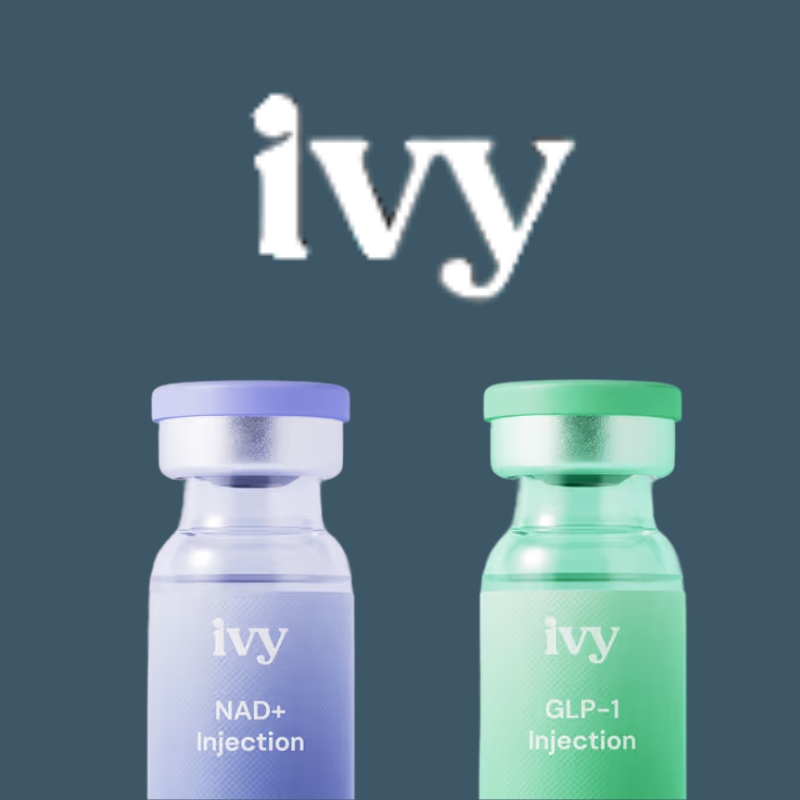
Ivy Rx is a modern telehealth platform designed to help you lose weight, boost energy, and support healthy aging — all from the comfort of home. With licensed medical providers, a simple 3-step process, and fast 2-day delivery, getting personalized treatment has never been easier. Choose from GLP-1 weight loss injections, NAD+, Sermorelin, B12, and more, tailored to your goals. No insurance is required, and consultations are free. Medications are prescribed by qualified professionals and shipped discreetly to your door. If you’re looking for convenient, affordable, and personalized care, Ivy Rx makes taking control of your health simple and stress-free.
Description
Ivy Rx (ivyrx.com) positions itself as a modern telehealth brand focused on two big consumer goals: weight loss and longevity/anti-aging. Its homepage messaging is built around a simple promise—“medication, personalized to you”—paired with convenience claims like no insurance required, free consultation, and fast delivery (as little as ~2 days).
This article unpacks what Ivy Rx offers, how the experience works, how it discusses safety and compounding, what the pricing looks like, and what a careful shopper should evaluate before starting any prescription-based program.
Important note: This article is informational and not medical advice. Prescription treatments—including GLP-1 medications, NAD+ injections, and peptide therapies—should only be used under the supervision of a qualified clinician.
1) What Ivy Rx is
At its core, Ivy Rx presents itself as an online care pathway that connects patients to:
- an intake/assessment flow,
- a licensed medical provider evaluation, and
- medication fulfillment via a partner pharmacy and delivery to your door.
The brand’s framing fits a now-common “telehealth DTC” model: reduce friction (no insurance, quick approvals, discreet shipping), present a small menu of outcomes (weight loss + longevity), and keep steps minimal.
On its public pages, Ivy Rx emphasizes:
- Large user base (200,000+ patients/members is cited in marketing copy)
- Social proof (e.g., “4.5” rating and “3000+ reviews” displayed on site)
- Speed and convenience (delivery “in 2 days,” “free and discreet delivery”)
2) The Ivy Rx “How it works” flow
Ivy Rx lays out a three-step onboarding process:
Step 1: Free quiz
You answer questions about health history, lifestyle, and goals.
Step 2: Provider evaluation
A medical professional reviews your intake and determines what’s appropriate.
Step 3: Receive your medication
Ivy Rx states medication can be delivered to your door in about 2 days.
This structure is designed to feel closer to a guided clinic journey than a typical ecommerce checkout—especially since it repeatedly notes that prescription products require an online evaluation by a licensed professional.
3) Treatments Ivy Rx markets
On Ivy Rx’s main experience pages, the core menu commonly shown includes:
- GLP-1 — $175
- GLP-1 Microdose — $155
- NAD+ — $199
- Sermorelin — $175
- Glutathione — $179
- MIC + B12 Injection — $179
- B12 Injection — $179
The brand also organizes navigation around categories like Weight Loss, Anti-Aging, and Supplements, and uses longevity/energy language (“Stay energized,” “Don’t just live longer, live healthier”).
A note on what’s not clear from the storefront view alone
The headline pricing is simple, but consumers should still confirm details during intake/checkout such as:
- whether the price shown is “per month” or “per shipment,”
- what’s included (provider fee, supplies like needles, alcohol swabs, etc.),
- whether there are membership/visit charges,
- and whether dose changes affect price.
Those specifics can vary by telehealth provider and by program—even when a page shows a single “starting at” price.
4) Weight loss via GLP-1: what Ivy Rx is actually selling
The GLP-1 category is typically the main draw for these platforms. Ivy Rx markets “GLP-1 Injections” and also a “Microdose GLP-1” option.
Compounded medication positioning
Ivy Rx includes a clear disclaimer on its pages that:
- Prescription products require an online evaluation by a licensed medical professional
- medications are prescribed by licensed physicians
- and importantly: “The FDA does not review compounded medications for safety or effectiveness.”
- prescriptions, if approved, “can be filled at a partner pharmacy.”
That language matters because it signals that at least some GLP-1 offerings may be compounded rather than an FDA-approved branded product dispensed in its original manufacturer packaging.
Why compounding matters
Compounded medications are custom-prepared by pharmacies (for example, to adjust dosage forms or address supply constraints). The trade-off is that compounded products do not go through the same FDA premarket review process for safety/effectiveness as FDA-approved drugs, and quality can depend heavily on pharmacy standards and testing practices.
Ivy Rx’s own disclaimers are transparent about the FDA’s role in compounded products, which is a good sign in terms of consumer clarity.
5) Longevity and “feel better” therapies: NAD+, peptides, and injections
Beyond weight loss, Ivy Rx leans into the longevity category with products like NAD+ injections and Sermorelin, plus wellness injections such as B12, MIC+B12, and Glutathione.
NAD+ injections
NAD+ is often marketed in wellness settings with claims related to energy, cellular function, and “anti-aging.” Ivy Rx’s positioning is broadly consistent with that framing (“Stay energized NAD+ injections”).
Sermorelin
Sermorelin is frequently discussed in longevity circles as a peptide related to growth hormone pathways (it has a long history in clinical contexts, though modern consumer marketing varies widely). Ivy Rx presents it as part of its longevity/anti-aging selection and lists it at $175 on the treatment menu.
Glutathione, MIC+B12, B12
These are common “injection therapy” items in the wellness market—often promoted for energy, metabolism support, or antioxidant support. Ivy Rx lists each at $179 in the menu view.
Practical takeaway: These categories can range from clinically appropriate (for example, documented B12 deficiency) to more discretionary “wellness optimization.” The right question isn’t only “Do they sell it?”—it’s “Do I have a clinical reason, and what evidence supports the outcome I want?”
6) Quality, testing, and pharmacy claims
On its About page, Ivy Rx emphasizes quality-related language, stating medication is prepared in a state-licensed pharmacy, “independently verified” in FDA- and DEA-registered labs, and delivered on schedule.
Those statements are important, but as a consumer you may still want to ask:
- Which pharmacy partner will fill my prescription?
- What is the pharmacy’s licensing status in my state?
- What “independent verification” means in practice (potency testing? sterility testing? batch frequency? third-party lab name?)
- Whether the specific compounded product has a certificate of analysis available.
These questions are especially relevant if you’re considering compounded GLP-1 products.
7) Shipping, speed, and privacy
Ivy Rx prominently markets:
- free and discreet delivery
- and delivery in as little as ~2 days after approval.
Telehealth shoppers tend to value two things here:
- speed (how quickly treatment starts), and
- privacy (packaging discretion, HIPAA-adjacent expectations, and data handling clarity).
Ivy Rx’s public-facing pages emphasize discretion, and their legal pages (Terms/Privacy) govern how the service and user account operate.
8) Refunds, returns, and the reality of prescription ecommerce
One of the most important “fine print” sections for any telehealth medication program is the refund policy.
Ivy Rx’s refund policy states that due to the nature of the products, returns are not accepted, and it encourages contacting them to work toward a solution if something is wrong.
Its Terms of Service also reinforces that sales/payments are generally final, with refunds only as described in the refund policy.
Additionally, Ivy Rx’s help center reiterates that prescription products can’t be taken back for reuse/resale and that transactions are considered final, while still instructing users to reach support if there’s a dispensing issue.
Consumer takeaway: Before you purchase, treat it like you would any “specialty healthcare” transaction:
- understand what happens if you can’t tolerate side effects,
- whether dose changes are handled as exchanges or new orders,
- and whether clinician fees are refundable (many telehealth models treat clinical review time as non-refundable even if medication isn’t a fit).
9) Reviews and reputation: what the public signals show
Ivy Rx shows “4.5” and “3000+ reviews” on its site UI.
On Trustpilot, the Ivy Rx listing indicates thousands of reviews (the count shown can differ from the on-site badge), with examples of the company replying publicly to reviews.
On the Better Business Bureau (BBB) page for “Ivy Rx, PLLC,” the visible customer review summary shows a much smaller sample size and a low average rating, and notes the business is not BBB accredited (accreditation is optional and doesn’t necessarily imply legitimacy or quality, but it’s a signal some consumers notice).
How to reconcile conflicting review ecosystems
It’s common for ratings to vary across platforms because:
- the number of reviews and the type of customer who leaves reviews differ,
- some platforms attract mostly complaints,
- and some collect “post-purchase prompts” more aggressively.
A smart approach:
- read the most recent 1–3 star reviews for patterns,
- check how the company responds,
- and focus on operational issues that matter to you (delivery time, support responsiveness, refill handling, side-effect support, billing clarity).
10) Who Ivy Rx may be a fit for
Ivy Rx may appeal to people who:
- want a self-serve onboarding experience (quiz → review → delivery),
- prefer cash-pay simplicity over insurance complexity,
- value speed and discretion, and
- are comfortable with telehealth-first communication.
People who should be especially cautious and ask more questions:
- anyone with complex medical histories, multiple medications, or a history of severe side effects,
- anyone seeking compounded GLP-1 products without understanding the quality and oversight differences, and
- anyone who expects “traditional clinic” touchpoints (in-person vitals, labs, ongoing physical exams) rather than telehealth monitoring.
Ivy Rx explicitly states prescriptions require evaluation and are prescribed by licensed professionals, which is the right baseline, but the degree of monitoring can vary by provider and program.
11) A practical checklist before you start (especially for GLP-1)
If you’re considering Ivy Rx for GLP-1 weight loss, here’s a practical, non-hyped checklist:
- Confirm what medication you’re receiving
Is it an FDA-approved branded medication or compounded? Ivy Rx’s own language flags compounding as a possibility and notes FDA non-review for compounded products. - Ask about pharmacy partner details
Name, licensing, quality controls, testing frequency. - Understand the full cost
Is the posted price inclusive of provider evaluation and supplies? Any recurring membership costs? - Clarify the clinical support model
How do you message your provider? What’s the typical response time? What happens if you have side effects? - Know the refund/return reality
Prescription purchases are generally final; Ivy Rx states it can’t accept returns and points to support for issues.
12) Brand positioning: why Ivy Rx resonates in today’s market
Ivy Rx’s messaging is built on five pillars that tend to perform well in direct-to-consumer healthcare marketing:
- Personalization (“medication, personalized to you”)
- Low friction (free quiz, fast approval, no insurance)
- Convenience (delivery in ~2 days, discreet shipping)
- Outcome buckets (weight loss + longevity/anti-aging)
- Trust cues (review count + quality/testing language + licensed provider statements)
That combination is effective for consumers who already “want the category” (GLP-1, NAD+, peptides) and are comparing platforms based on cost, speed, and ease of access.
13) Final thoughts: evaluating Ivy Rx like a well-informed consumer
Ivy Rx is representative of a fast-growing class of telehealth platforms that package modern demand—weight loss medications and longevity therapies—into a streamlined digital experience.
From its own public pages, Ivy Rx clearly communicates:
- a 3-step intake-to-delivery flow
- a compact menu of treatments and headline pricing
- and an important compounding disclaimer about FDA review status
- plus a no-returns posture typical of prescription fulfillment
Whether it’s the “right” platform depends less on the homepage promises and more on the specifics: what medication you’re prescribed, which pharmacy fills it, how support is delivered, and how transparent total cost is in your checkout path.