Support your hormonal health and reproductive wellness with high-quality inositol supplements. These products are formulated to promote a balanced cycle, improve egg and sperm quality, and support overall cell health, making them a popular choice for those seeking natural fertility and wellness assistance. By providing essential nutrients in bioavailable forms, these supplements help your body maintain the delicate balance necessary for optimal reproductive function. Whether you are looking for simple Myo-Inositol or a specialized blend, these supplements offer a clean, non-GMO, and vegan-friendly way to integrate vital support into your daily routine.
Description
This article is for informational purposes and is not medical advice. GLP-1 medications should only be used under a physician’s supervision, and anyone taking a GLP-1 medication should discuss any new supplement with their prescribing doctor before starting it.
GLP-1 medications like semaglutide (Ozempic, Wegovy) and tirzepatide (Mounjaro, Zepbound) have changed the weight loss conversation faster than almost any pharmaceutical development in recent memory. Millions of people are now losing significant amounts of weight through appetite suppression alone, without the surgery, calorie-counting obsession, or willpower battles that defined weight loss for decades before. But as more people move through months of treatment, a second conversation has started catching up to the first one: what, exactly, is being lost along with the fat?
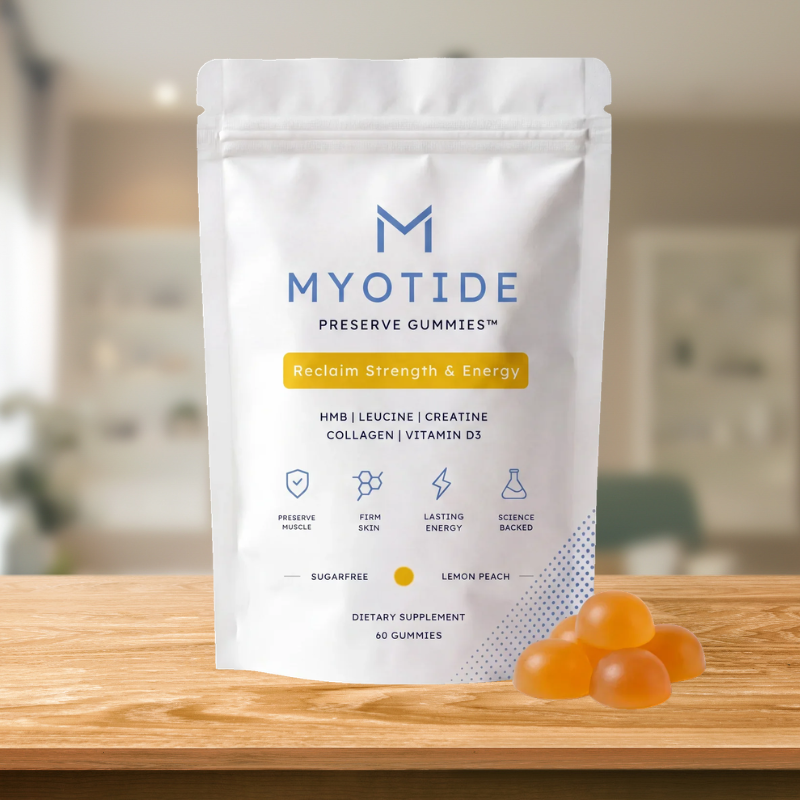
That question has real research behind it. Body composition substudies from major GLP-1 clinical trials have found that a meaningful share of the weight lost on these medications is lean mass — muscle, not fat — and that share can run higher than what’s typically seen with diet-alone or exercise-based weight loss. That’s the gap Myotide, a gummy supplement branded as a “GLP-1 companion protocol,” is built to address. Rather than targeting weight loss itself, Myotide is formulated around ingredients studied for muscle preservation, skin elasticity, and energy — the three things people on GLP-1 medications most commonly report struggling with as the pounds come off.
In this guide, we’ll dig into what Myotide actually is, what the research says about GLP-1 and muscle loss more broadly, what’s in the formula and what the evidence looks like for each ingredient, how it’s priced, and what realistic expectations should look like if you’re considering it as part of a GLP-1 routine.
What Is Myotide?
Myotide is a daily gummy supplement, sold under the “Preserve Stack” name, formulated specifically to address three concerns commonly reported by people on GLP-1 medications: loss of muscle mass and strength, loss of skin elasticity (sometimes referred to informally as “Ozempic face” or “Ozempic body” when it affects the face or other areas), and reduced energy during a sustained caloric deficit. Rather than a weight loss product itself, it’s positioned as a complementary supplement meant to be taken alongside an existing GLP-1 prescription, whether that’s a branded medication or a compounded version of semaglutide or tirzepatide.
The product is built around a six-ingredient formula — HMB (beta-hydroxy beta-methylbutyrate), creatine monohydrate, L-leucine, hydrolyzed collagen types I and III, and vitamin D3 — delivered as two lemon-peach, sugar-free gummies taken once daily. The gummy format is a deliberate design choice aimed at GLP-1 users specifically, since nausea and reduced appetite are common side effects of these medications, and a two-gummy routine avoids the pills, powders, and shaker bottles that can be harder to tolerate on a compromised stomach.
Manufactured in a cGMP-certified facility and third-party tested according to the brand, Myotide is marketed as a research-informed formula rather than a proprietary blend with undisclosed dosing — each ingredient is listed with its specific milligram amount, which allows for a more transparent comparison against published research than blends that don’t disclose individual ingredient amounts.
The Research Behind GLP-1 and Muscle Loss
To evaluate a product like Myotide fairly, it helps to understand the actual research behind the problem it’s trying to solve, rather than taking any single number at face value. The conversation largely traces back to an exploratory body composition substudy within the landmark STEP 1 trial — the 2021 New England Journal of Medicine study that established semaglutide’s effectiveness for weight loss. In a subgroup of participants who underwent DEXA scanning, researchers found that a substantial share of the weight lost was lean body mass rather than fat mass, with follow-up analyses and expert commentary putting that substudy’s lean-mass contribution at roughly 39-40% of total weight lost — notably higher than the roughly 25% lean-mass contribution typically seen with traditional diet-and-exercise weight loss.
It’s worth noting that this finding was exploratory and wasn’t the trial’s primary endpoint, and the broader body of research since then has produced a range of estimates rather than a single settled number. Subsequent reviews and meta-analyses examining semaglutide, tirzepatide, and older GLP-1 drugs have reported lean-mass contributions to total weight loss generally somewhere between 20% and 40%, depending on the specific drug, dose, study population, and whether participants engaged in resistance training or higher protein intake alongside treatment. Some more recent case series have shown that patients who deliberately prioritize resistance training and higher protein intake during GLP-1 treatment can preserve — or in some cases even gain — lean mass despite substantial fat loss, suggesting the muscle-loss risk is real but not inevitable, and that behavior during treatment matters as much as the medication itself.
The second research thread relevant to a product like Myotide concerns what happens after people stop taking GLP-1 medications. A 2026 University of Cambridge analysis, published in eClinicalMedicine, modeled weight regain across six randomized controlled trials and found that, on average, people regained about 60% of their lost weight within one year of discontinuing treatment, with regain projected to plateau at roughly 75% of the original weight lost by around 60 weeks. Real-world data cited alongside that study also indicates that a large share of people stop taking GLP-1 medications within the first year, whether due to cost, side effects, or other factors — meaning the “what happens next” question isn’t a hypothetical edge case, but something a large share of GLP-1 users will eventually face. If a meaningful portion of lean mass has already been lost during active treatment, that matters directly for metabolic rate and body composition during this regain period, since muscle tissue is more metabolically active than fat tissue.
Taken together, this research supports the basic premise behind Myotide: GLP-1 treatment does appear to carry a real, measurable risk of lean mass loss beyond what’s typically seen with conventional weight loss, and that risk has downstream implications both during treatment and after it ends. What the research doesn’t yet establish is exactly how much any particular supplement protocol changes that trajectory for an individual user — that’s a much harder thing to study, and it’s the gap between “the underlying problem is real” and “this specific product solves it” that’s worth keeping in mind throughout the rest of this guide.
Myotide Ingredients: What the Research Says
Each ingredient in Myotide’s formula has its own body of research, largely developed outside the specific context of GLP-1 use, in areas like aging-related muscle loss, clinical cachexia, athletic performance, and skin health. Here’s a closer look at what’s actually behind each one.
HMB (Beta-Hydroxy Beta-Methylbutyrate) — 1,000mg
HMB is a metabolite of the amino acid leucine that has been studied for decades in the context of preventing muscle protein breakdown, particularly in older adults, bedridden patients, and people experiencing muscle wasting from illness or caloric restriction. Its proposed mechanism involves reducing the rate of muscle protein breakdown during periods of physiological stress, which is conceptually well-aligned with the caloric-deficit, appetite-suppressed state that GLP-1 medications create. HMB’s research base predates GLP-1 medications entirely, so its inclusion here represents an application of established sarcopenia and muscle-wasting research to a newer context rather than GLP-1-specific clinical evidence.
Creatine Monohydrate — 500mg
Creatine is among the most extensively studied supplements in sports nutrition, with a large body of evidence supporting its role in muscle energy metabolism, strength, and lean mass maintenance. It works by helping replenish ATP, the primary energy currency muscles use during activity, independent of insulin signaling — a relevant detail for anyone eating significantly less, since some other muscle-support pathways rely more heavily on nutrient availability. The 500mg dose here is considerably lower than the 3-5 grams typically used in sports performance research, reflecting this product’s positioning as a maintenance-oriented daily supplement rather than a performance-loading protocol.
L-Leucine — 250mg
Leucine is a branched-chain amino acid recognized as the primary trigger for muscle protein synthesis via the mTOR signaling pathway. In the context of reduced food intake, supplemental leucine is intended to help ensure the body still receives a signal to build and preserve muscle tissue even when overall protein intake from food may be lower than usual due to appetite suppression — a relevant mechanism specifically for GLP-1 users, who often report eating far less overall than before starting treatment.
Hydrolyzed Collagen Types I and III — 200mg
Collagen types I and III are the primary structural proteins in skin, and hydrolyzed collagen supplementation has a growing body of research supporting modest improvements in skin elasticity and hydration over consistent use, typically studied over periods of 8-12 weeks or longer. This ingredient is the one most directly aimed at the “Ozempic face” and skin-laxity concern that’s become a widely discussed side effect of rapid weight loss, where skin doesn’t always retract as quickly as underlying fat and muscle volume is lost.
Vitamin D3 — 2,000 IU
Vitamin D3 plays a well-established role in muscle function, and vitamin D insufficiency has been associated in research with reduced muscle strength and increased fatigue. Its inclusion here is likely also a practical consideration: reduced food intake on GLP-1 medications can mean lower overall micronutrient intake, and vitamin D deficiency is already common in the general population independent of GLP-1 use.
Reviewing this ingredient list, the formula’s logic holds together reasonably well on paper: HMB and leucine target the muscle protein breakdown and synthesis pathways specifically implicated in the STEP-1 lean-mass findings, creatine supports muscle energy independent of reduced food intake, collagen targets the skin-elasticity concern, and vitamin D addresses a plausible micronutrient gap. What’s worth being clear-eyed about is that none of these ingredients have been studied specifically in GLP-1 users as a combined stack — the research supporting each ingredient comes from other populations and contexts, applied here by inference rather than direct clinical evidence in this exact use case.
Benefits of Myotide
- Targets a documented risk, not a marketing invention — Lean mass loss during GLP-1 treatment is a real, published finding, not a hypothetical concern manufactured to sell a product.
- Ingredient transparency — Each active ingredient is listed with its specific dose, allowing for direct comparison against published research rather than relying on an undisclosed proprietary blend.
- Designed around GLP-1-specific practical constraints — The two-gummy format avoids pills, powders, and shakes that can be harder to tolerate for people experiencing GLP-1-related nausea or reduced appetite.
- Addresses three distinct, commonly reported concerns — Muscle preservation, skin elasticity, and energy are three of the most frequently discussed GLP-1 side effects, and the formula includes ingredients targeting each one specifically.
- Relevant beyond active treatment — Given published data on rapid weight regain after stopping GLP-1 medications, preserving lean mass during treatment may be relevant to metabolic rate during the post-treatment period as well.
- Ingredients with independent research support — HMB, creatine, and leucine each have substantial standalone research bases in muscle preservation and sports nutrition contexts, even though that research predates GLP-1-specific use.
- Simple daily routine — Two gummies once daily is a low-friction addition to an existing GLP-1 routine, without requiring additional planning or preparation.
- No added sugar — Formulated as sugar-free, which may be a relevant consideration for anyone also managing blood sugar alongside GLP-1 treatment for weight or metabolic reasons.
- Manufacturing transparency claims — cGMP-certified manufacturing and third-party testing are claimed, which are reasonable baseline quality markers to look for in any supplement.
- A conservative, non-prescription addition — As a supplement rather than a medication, it can be discussed with and layered into a plan alongside a prescribing physician’s guidance, rather than requiring a separate prescription.
How to Use Myotide
Myotide’s recommended use is straightforward: two gummies taken once daily, ideally at a consistent time to build a routine, such as alongside a morning meal or medication schedule. As with any supplement intended to work over an extended period, consistency matters considerably more than any single day’s dose — the brand’s own suggested timeline describes energy improvements beginning around days 7-10, more noticeable changes to skin elasticity and stabilized energy by around week 4, and measurable lean mass preservation effects by around week 8, with continued benefit through 12 weeks and beyond.
It’s worth setting expectations accordingly: this is not a product designed to produce an immediately noticeable change, and anyone expecting a dramatic difference within the first few days is likely to be disappointed regardless of which product in this category they choose. Because the formula is designed to work alongside, not instead of, good nutrition and activity habits, pairing it with adequate (even if reduced) protein intake and some form of resistance activity — even light strength training or resistance bands — is likely to meaningfully improve outcomes beyond what any supplement alone can provide, consistent with what the broader research on GLP-1 and lean mass preservation suggests.
As with any new supplement, especially for someone already taking a prescription GLP-1 medication, discussing it with your prescribing physician before starting is a reasonable and recommended step, both to confirm there’s no relevant interaction for your specific health situation and to make sure it fits appropriately into your overall treatment plan.
Myotide vs. Other Approaches
Compared to a standard whey or plant-based protein powder, Myotide is a fundamentally different category of product. A protein supplement provides raw amino acids in bulk — useful for anyone who can tolerate a shake and needs to close a protein gap — but doesn’t provide the specific signaling compounds like HMB and leucine at research-informed doses in a format designed for reduced appetite. For someone who can comfortably drink a protein shake daily, combining both approaches is reasonable; for someone whose GLP-1-related nausea makes shakes unappealing, a gummy-based option may simply be easier to stick with consistently, and consistency is what ultimately determines whether any supplement approach works.
Compared to assembling an individual supplement stack — separate HMB, creatine, leucine, collagen, and vitamin D3 products — a combined formula like Myotide trades some flexibility (you can’t adjust individual ingredient doses) for simplicity and cost predictability. Buying five separate supplements individually would likely cost more per month and require juggling multiple bottles and dosing schedules, which matters for the same reason the gummy format matters: the best supplement protocol is the one a person actually sticks with consistently over months, not the theoretically optimal one they abandon after two weeks.
Compared to doing nothing and relying on GLP-1 treatment alone, the research reviewed earlier suggests there’s a real, measurable case for actively addressing lean mass preservation rather than treating it as an unavoidable side effect. Whether a supplement stack, a structured resistance training program, increased protein intake, or some combination of all three is the right approach for a given individual is worth discussing with a physician or dietitian familiar with that person’s specific treatment and health history.
Pros and Cons of Myotide
Pros: Myotide is built around a real, published concern with GLP-1 treatment, uses a transparent, fully-dosed ingredient list rather than a proprietary blend, and is formatted specifically to be tolerable for people managing GLP-1-related appetite suppression and nausea. Several of its individual ingredients have solid independent research support in muscle preservation and skin health contexts.
Cons: No published clinical research currently exists on this specific ingredient combination in GLP-1 users specifically — the case for the formula is built by extending research on individual ingredients into a new context, not from a dedicated clinical trial on the product itself. Results take weeks to become noticeable rather than being immediate, individual response will vary, and a supplement is not a substitute for resistance training and adequate protein intake, which remain the most well-established tools for preserving lean mass during any period of weight loss, GLP-1-assisted or otherwise.
How to Order and What’s Included
Myotide is sold directly through its official website as the “Preserve Stack,” with a one-month supply and a discounted 3-month auto-refill subscription option available at checkout. A standard order includes the gummy supply itself along with usage guidance; the auto-refill option is managed through the site’s subscription management page, which allows adjusting or canceling upcoming shipments.
Before ordering, it’s worth confirming current pricing and any active promotions directly on the official site, along with reviewing the full ingredient and allergen information — the product is gluten-free, soy-free, dairy-free, and sugar-free, but is not vegan due to its bovine-derived collagen content, which is worth knowing for anyone with dietary restrictions.
Myotide Pricing and Guarantee
Myotide is priced at $49.90 per month for a standard one-month supply, with a discounted 3-month auto-refill subscription available at $179.70 (working out to roughly 30% savings compared to paying month-to-month), plus free shipping on orders over $50. The product is backed by a 90-day money-back guarantee, which is a meaningfully longer trial window than many supplements offer — a reasonable design choice given that the brand’s own suggested timeline places measurable lean-mass effects around the 8-week mark, meaning a shorter guarantee window wouldn’t give buyers enough time to properly evaluate results.
Pricing and promotional terms are subject to change at any time. Always check the official website for current pricing, subscription terms, and guarantee details before purchasing.
Conclusion
The muscle-loss conversation around GLP-1 medications isn’t marketing hype — it’s a real, published finding from the same clinical trials that established these drugs’ effectiveness, and it’s one that a growing number of researchers, clinicians, and patients are taking seriously as GLP-1 use has scaled into the millions. Myotide’s core premise — that muscle, skin elasticity, and energy deserve deliberate attention during GLP-1 treatment, not passive acceptance as inevitable trade-offs — is well-supported by the broader research, even though the specific six-ingredient combination hasn’t been studied in a dedicated clinical trial of its own.
For someone currently on a GLP-1 medication who wants to be proactive about lean mass preservation without adding pills, powders, or shakes to an already-reduced appetite, Myotide represents a reasonably well-reasoned approach built on ingredients with independent research support. It’s not a substitute for resistance training or adequate protein intake — nothing in this category is — but as a low-friction daily addition alongside those habits, and in consultation with a prescribing physician, it’s a supplement worth evaluating on its actual merits rather than dismissing or accepting at face value.
If preserving what you’ve built while losing what you don’t want to keep sounds like the right priority for your own GLP-1 journey, reviewing the current pricing, ingredient details, and guarantee terms on the official Myotide website is a reasonable next step.
Myotide FAQs
What is Myotide designed to do?
It’s a daily gummy supplement formulated to support muscle preservation, skin elasticity, and energy levels for people taking GLP-1 medications.
Can I take Myotide with Ozempic, Wegovy, Mounjaro, or Zepbound?
The brand states none of its ingredients are known to interact with semaglutide or tirzepatide, but always review any new supplement with your prescribing physician first.
Does Myotide work with compounded semaglutide or tirzepatide?
The underlying mechanism of GLP-1-associated lean mass loss is the same regardless of whether the medication is branded or compounded, so the rationale for the formula applies similarly either way.
Is the “40% muscle loss” claim accurate?
An exploratory DEXA substudy within the STEP-1 trial found lean mass made up roughly 39-40% of weight lost in that subgroup; broader research across GLP-1 studies puts the range closer to 20-40% depending on the specific drug and population.
How long before I notice results?
The brand’s suggested timeline describes early energy improvements around days 7-10, more noticeable changes by week 4, and measurable lean mass preservation by around week 8.
What are the main ingredients?
HMB (1,000mg), creatine monohydrate (500mg), L-leucine (250mg), hydrolyzed collagen types I and III (200mg), and vitamin D3 (2,000 IU).
Is Myotide vegan?
No. Its collagen is bovine-derived, so the product is not suitable for a vegan diet.
Are there side effects?
The brand states all five active ingredients have established safety profiles at the doses used, with possible mild GI adjustment in the first few days, which is common with new supplements generally. Discontinue and consult your doctor if you experience anything unexpected.
How much does Myotide cost?
$49.90 per month, or $179.70 for a 3-month auto-refill subscription (roughly 30% savings). Confirm current pricing on the official website.
Is there a money-back guarantee?
Yes, a 90-day guarantee, which lines up with the timeline needed to evaluate the product’s stated lean-mass preservation effects.
Can I take Myotide if I’m not on a GLP-1 medication?
The brand states the same ingredients support muscle preservation for anyone in a caloric deficit or looking to maintain lean mass, though the product is specifically marketed and formulated with GLP-1 users in mind.
Related products
-
Sale!
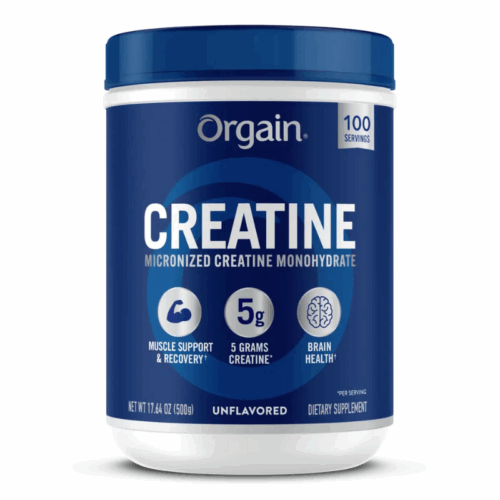
Orgain Creatine
Original price was: $22.99.$19.54Current price is: $19.54. Buy From The Official Website -
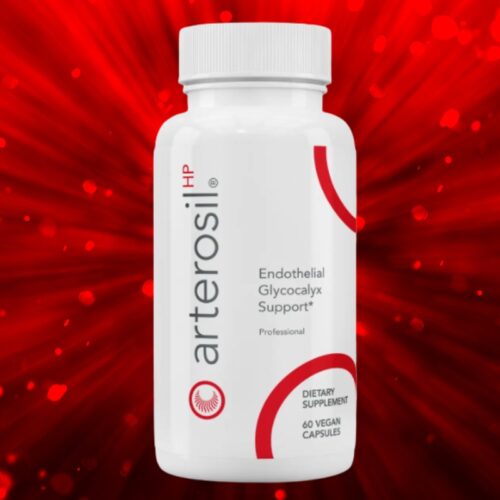
Arterosil HP
$129.00 Buy From This Official Website -
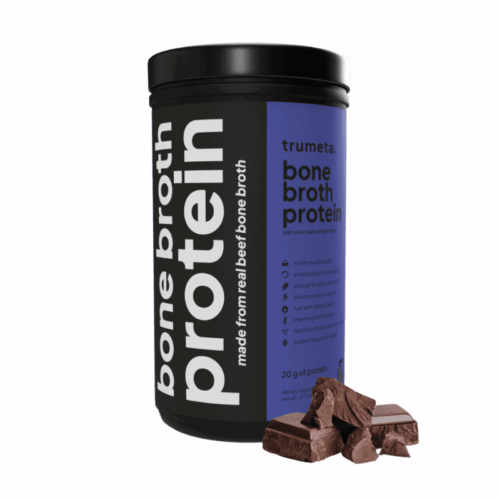
Trumeta Bone Broth Protein
$37.80 Buy From The Official Website -
Sale!
Glucobolic
Original price was: $59.00.$39.95Current price is: $39.95. Buy From Official Website