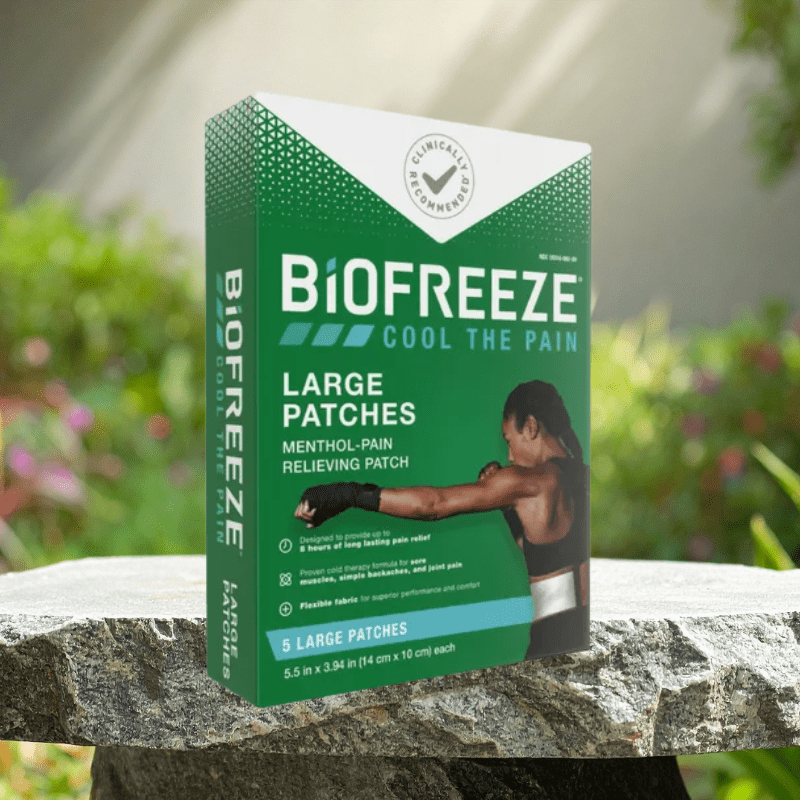
$9.43
Biofreeze Patch provides targeted, long-lasting cooling relief for sore muscles and joint discomfort in a convenient, mess-free format. Each flexible patch adheres securely to deliver continuous comfort without the need for creams or reapplication. Powered by menthol, it creates a soothing cooling sensation that helps ease everyday aches from workouts, long hours at a desk, or physical strain. The large patch design offers broader coverage, making it ideal for backs, shoulders, and legs. For effective, on-the-go support that moves with you, Biofreeze Patch delivers reliable relief when and where you need it most.
Description
Muscle and joint discomfort is one of the most common reasons adults modify their daily routines. Whether it is a stiff lower back after long hours at a desk, sore shoulders after lifting, or localized aches that flare after exercise, discomfort can make ordinary tasks feel harder than they should. At MeridianMedicalCentre.com, we approach pain and mobility through an evidence-based lens that respects both conventional care and carefully chosen wellness tools. For many readers, that means starting with practical fundamentals—movement, posture, recovery strategies, and clinician guidance when needed—while also exploring topical options that may provide temporary, localized relief without systemic effects.
Biofreeze Patch is a topical pain-relief patch that delivers menthol (5%) to targeted areas of discomfort. Menthol is a widely used counterirritant in over-the-counter (OTC) pain relief products, often chosen for its cooling sensation and its ability to help temporarily reduce the perception of pain. Unlike oral pain relievers, topical menthol products act locally and may be preferred by individuals who want to avoid swallowing pills or who are cautious about systemic medications. That said, topical products are not cures for underlying joint or muscle conditions, and they should not replace medical evaluation for persistent pain, numbness, weakness, swelling, or injury.
This research-style guide explains how Biofreeze Patch works, which ingredients it contains, the benefits you may reasonably expect, and how to use it safely. We will also address side effects, purchasing considerations, and common questions readers ask when deciding whether a patch format fits their lifestyle. Our goal is to provide balanced, trustworthy information that supports informed decision-making. If you have chronic pain, are managing arthritis, have a skin condition, or are taking medications that affect your skin or circulation, consult a healthcare professional before adding any topical analgesic product.
Product Overview
Formulation:
Topical analgesic patch (OTC-style counterirritant) designed for localized, temporary relief of minor muscle and joint discomfort.
Key Ingredients:
Active ingredient: Menthol 5%.
Inactive ingredients include soothing agents, botanical extracts, adhesives, and stabilizers (full list provided below).
Bottle Contents:
Patch format (counts vary by package; commonly 5 patches per pack).
Guarantee:
Guarantee and return policies vary by retailer. Review the seller’s return terms prior to purchase.
Cost:
Pricing varies by pack size and retailer, with options for single or multi-pack purchases.
What is Biofreeze Patch?
Biofreeze Patch is a topical pain-relief patch designed to be applied directly over areas of muscle or joint discomfort. It uses menthol (5%) as the active ingredient. Menthol is categorized as a counterirritant—meaning it creates a cooling sensation on the skin that can temporarily distract from deeper discomfort and alter pain perception through sensory pathways. Many people describe this as a “cooling relief” that helps them feel more comfortable during daily activities, exercise recovery, or while resting.
The patch format is distinct from creams, gels, or roll-ons. A patch is intended to stay in place and deliver menthol over a longer period without requiring frequent reapplication. For people who prefer a less-messy option, patches can be convenient: they can be applied in seconds, worn under clothing, and removed without leaving significant residue. This format may also help users treat hard-to-reach areas—such as the upper back—more consistently.
From a practical health education standpoint, it is important to separate temporary symptom relief from treatment of underlying causes. A menthol patch may help reduce the sensation of soreness in the short term, but it does not repair tendon injuries, reverse arthritis, correct structural problems, or treat nerve compression. If pain is severe, persistent, or associated with swelling, redness, fever, injury, numbness, or weakness, it is appropriate to seek medical evaluation.
Biofreeze Patch may be most useful as part of a broader self-care strategy that includes appropriate movement, stretching, strengthening, rest, hydration, and clinician-directed therapy when needed. Used correctly, a topical menthol patch can be a helpful tool for people who want targeted relief without relying solely on oral medications.
Who is Biofreeze Patch Specifically For?
Biofreeze Patch may be a good fit for adults who experience occasional, localized muscle or joint discomfort and want a topical option that is easy to apply, portable, and relatively low-maintenance. It can appeal to people who prefer to avoid the mess of gels and creams or who need an option that stays in place during a workday, commute, or light activity.
Common scenarios where users consider menthol patches include:
- Post-exercise soreness in a specific muscle group.
- Mild back stiffness after prolonged sitting or standing.
- Shoulder or neck tension related to desk posture.
- Knee, elbow, or wrist discomfort after repetitive activities.
- General muscle tightness after travel or physical labor.
It may also be relevant for individuals who want to minimize systemic exposure to pain relievers. While topical menthol still requires safe use, it does not typically produce the same systemic effects associated with oral nonsteroidal anti-inflammatory drugs (NSAIDs). However, this does not mean it is risk-free. Skin sensitivity, irritation, or allergic reactions can occur, especially with repeated application or use on compromised skin.
Biofreeze Patch may be less suitable for:
- People with very sensitive skin, eczema, psoriasis, or frequent dermatitis.
- Individuals with known allergy to menthol or any inactive ingredients.
- Those with open wounds, broken skin, or recent shaving irritation in the area.
- Children, unless a clinician specifically advises topical menthol use.
- Individuals with significant pain or suspected injury requiring diagnosis.
If you are pregnant, breastfeeding, or managing complex health conditions, consult your clinician before use. While topical menthol is common in OTC products, personalized guidance is always the safest approach when health circumstances are more complicated.
Does Biofreeze Patch Work?
Biofreeze Patch is designed to provide temporary, localized relief through the mechanism of menthol-based counterirritation. Many users find menthol helpful because it produces a cooling sensation that changes how the nervous system interprets discomfort. In clinical terms, this is often discussed as modulation of sensory input rather than treatment of inflammation or structural damage.
For minor aches and pains, the patch can be a practical option because it delivers menthol continuously while it remains on the skin. This can be beneficial for individuals who want consistent relief without reapplying a gel multiple times a day. In many real-world settings, the patch format helps with adherence—people are simply more likely to use it correctly when it is easy and convenient.
That said, effectiveness depends on expectations. A menthol patch is not intended to eliminate severe pain, nor should it be used as a substitute for evaluation of injuries, progressive joint symptoms, or chronic pain conditions. Many people experience the best outcomes when Biofreeze Patch is used as part of a broader routine: ergonomic adjustments, gentle stretching, strengthening, physical therapy exercises, rest, hydration, and sleep.
If you try the patch and find that your discomfort returns quickly, worsens, or becomes more frequent, consider it a signal to reassess the root cause and consult a healthcare professional.
Biofreeze Patch Real Customer Reviews and Testimonials
Many users describe Biofreeze Patch as a convenient, “no-mess” way to get cooling relief in a specific spot. Reviews often mention using it for lower back tightness, shoulder tension, or knee discomfort after activity. Some people appreciate that it can be worn under clothing and remains in place during daily movement. As with any topical product, experiences vary: skin sensitivity, personal comfort with the cooling sensation, and the cause of discomfort can influence results.
What are the Ingredients in Biofreeze Patch?
Active Ingredient: Menthol 5%
Menthol is the primary active ingredient responsible for the cooling sensation associated with Biofreeze Patch. It is widely used in OTC topical analgesics as a counterirritant. Menthol stimulates cold receptors in the skin, creating a cooling effect that can temporarily reduce the perception of pain. For many users, this sensory shift helps them feel more comfortable during movement or rest. Menthol does not “heal” injured tissue or treat arthritis, but it can support short-term comfort when used appropriately. Important safety note: menthol products should not be used with external heat sources (heating pads) or under tight occlusion, as this can increase skin irritation.
Inactive Ingredients Overview
Biofreeze Patch includes multiple inactive ingredients that support patch adhesion, stability, texture, and skin feel. These include moisturizing agents (such as glycerin and mineral oil), botanical extracts (like aloe, arnica, boswellia, and green tea), structural components (cellulose gum, polyacrylic acid), and preservatives (phenoxyethanol, iodopropynyl butylcarbamate). While inactive ingredients are not responsible for the cooling effect, they may influence user experience, especially for individuals with sensitive skin.
Below is the full inactive ingredient list provided: Aloe Barbadensis Leaf Extract, Arnica Montana Flower Extract, Boswellia Carterii Resin Extract, Camellia Sinensis Leaf Extract, Cellulose Gum, Dihydroxyaluminum Aminoacetate, Ethylhexylglycerin, Glycerin, Iodopropynyl Butylcarbamate, Kaolin, Mineral Oil, Phenoxyethanol, Petrolatum, Polyacrylic Acid, Polysorbate 80, Propylene Glycol, PVP, Sodium Polyacrylate, Tartaric Acid, Titanium Dioxide, Water.
Aloe Barbadensis Leaf Extract
Aloe is commonly used in topical products for its soothing and hydrating properties. In patch formulations, aloe can help reduce the feeling of dryness and provide a more comfortable skin experience, especially during longer wear times. While aloe is not a pain-relieving ingredient in this context, it may support skin tolerance for some users. People with very sensitive skin can still react to botanicals, so patch testing is appropriate if you have a history of irritation.
Arnica Montana Flower Extract
Arnica is a botanical ingredient widely used in topical wellness products, often associated with soothing properties after minor bumps or exertion. In a menthol patch, arnica is included as a supportive botanical component rather than the primary driver of pain relief. Evidence for topical arnica varies by product and concentration, and it should not be presented as treating injuries or inflammation. Some individuals can develop contact dermatitis from arnica, so discontinue use if redness or itching occurs.
Boswellia Carterii Resin Extract
Boswellia is often discussed in wellness contexts for its role in supporting balanced inflammatory responses. In topical formulations, it may be included to complement comfort-focused products. However, topical boswellia should not be framed as treating arthritis or inflammatory disease. It may contribute to a more supportive skin feel or overall formulation profile. As with other botanicals, skin reactions are possible.
Camellia Sinensis Leaf Extract
Green tea extract is valued for antioxidant polyphenols and is commonly used in skincare products. Within Biofreeze Patch, it likely functions as a supportive ingredient that contributes to the formula’s overall skin profile. Antioxidants can help support skin health, but this does not translate into direct pain relief. Individuals sensitive to botanical extracts should monitor for irritation.
Glycerin, Mineral Oil, Petrolatum, Kaolin, and Supporting Polymers
Glycerin is a humectant that helps attract and retain moisture. Mineral oil and petrolatum help reduce water loss from the skin surface. Kaolin can contribute to texture and stability. Polymers such as polyacrylic acid, sodium polyacrylate, cellulose gum, and PVP help the patch maintain structure and adhesion. These ingredients are common in topical delivery systems, helping the product remain comfortable and effective during wear.
Biofreeze Patch Science
Menthol has a long history of use in topical analgesics, with a mechanism rooted in sensory modulation. By activating cold-sensitive receptors in the skin, menthol can alter pain perception and provide temporary relief for minor aches and pains. This effect is often described as counterirritation: the cooling sensation competes with pain signals and can reduce the intensity of discomfort for some users.
In addition to menthol’s sensory effects, the patch format may improve consistency compared with creams or gels. Steady contact with the skin allows continued exposure to menthol during wear, which can be useful for people who want a longer-lasting option. This does not mean the patch treats underlying pathology; rather, it supports comfort while the body recovers or while the user addresses contributing factors such as muscle tension, posture, or overuse.
Several inactive botanical ingredients—such as aloe and green tea extract—are commonly used for skin support and antioxidant properties. However, evidence for these ingredients as primary drivers of pain relief in this context is limited. The clinically meaningful mechanism remains menthol’s counterirritant action. For readers managing chronic pain, this distinction matters: topical menthol can be helpful, but it is typically one tool among many in a responsible pain management plan.
Biofreeze Patch Benefits
Biofreeze Patch is designed to support temporary, localized comfort in a practical format. One of the most recognized benefits is targeted relief. Because the patch is applied directly over the area of discomfort, users can focus support where they need it without applying product broadly. This is especially appealing for localized soreness in the lower back, shoulder region, knee area, or forearm.
Another meaningful benefit is convenience and cleanliness. Patch formats reduce mess compared with gels and creams and can be applied quickly. This can support consistent use, which is often a key factor in whether people feel a product helps. For individuals who need relief during the day, the patch can be worn under clothing and removed when no longer needed.
The cooling sensation may also support return to movement. When people feel less discomfort, they are often more likely to continue gentle activity—walking, stretching, or light strengthening—which is frequently recommended for many types of non-serious musculoskeletal discomfort. This is not a claim to treat medical conditions; it is a wellness observation about comfort enabling healthier behavior.
Finally, Biofreeze Patch offers a non-oral option. For those who cannot or prefer not to take oral pain relievers, topical menthol can be a reasonable alternative for minor aches, provided skin safety precautions are followed.
Biofreeze Patch: Pros and Cons
Pros:
- Menthol 5% provides a well-known cooling counterirritant effect
- Patch format supports consistent, localized application
- Clean, portable, and convenient compared with gels/creams
- May be useful for minor muscle and joint discomfort without oral medication
- Includes skin-supportive components such as glycerin and aloe
Cons:
- Temporary symptom relief only; does not treat underlying causes
- Skin irritation or allergy possible, especially with botanicals and adhesives
- Not suitable for broken skin or sensitive dermatologic conditions
- Cooling sensation may be too strong for some users
- Retailer pricing varies; value depends on pack size and frequency of use
What is the Price of Biofreeze Patch?
Biofreeze Patch pricing varies by pack selection and retailer. Based on the provided options:
- 5 Count (Pack of 1): $9.43 ($1.89 per count)
- 5 Count (Pack of 2): $19.99
- 5 Count (Pack of 3): $25.55
Pricing Disclaimer: Always check the official website or authorized retailer listing for final prices and current availability, as pricing is subject to change at any time.
Usage
For best results, apply Biofreeze Patch to clean, dry, intact skin over the area of discomfort. Press firmly to ensure proper adhesion, especially along the edges. Wash hands after application to avoid accidentally transferring menthol to the eyes or sensitive areas. Avoid using the patch on broken skin, irritated skin, or directly after shaving.
Do not combine with heating pads or external heat sources. Heat can increase absorption and raise the risk of skin irritation or burns. Similarly, avoid tight occlusion over the patch unless the product label specifically permits it. If you experience excessive burning, redness, rash, or discomfort, remove the patch and wash the area with mild soap and water.
From a wellness perspective, consider pairing the patch with gentle movement: light stretching, short walks, or mobility exercises that do not increase pain. For muscle soreness, hydration and adequate sleep also support recovery. If discomfort persists beyond a few days, worsens, or is associated with swelling, numbness, weakness, or injury, seek medical evaluation to rule out more serious causes.
More Biofreeze Patch Actual User Reviews and Testimonials
Some users report that the patch format helps them stay consistent during busy schedules, especially for back and shoulder tightness. Others mention using it during travel or after workouts for short-term comfort. A subset of reviewers note that skin sensitivity can be a limiting factor, reinforcing the importance of patch testing and following label guidance. As with any OTC topical product, individual results vary.
Are There Side Effects to Biofreeze Patch?
The most common side effects of menthol patches involve the skin. Users may experience redness, irritation, itching, or a burning sensation, especially if they have sensitive skin or leave the patch on longer than recommended. Contact dermatitis can occur from adhesives or botanical extracts such as arnica. If you develop a rash, blistering, or significant discomfort, discontinue use and consult a healthcare professional.
Menthol should be kept away from eyes, mucous membranes, and broken skin. Accidental contact can cause intense irritation. Using the patch with heat sources can increase the risk of skin injury. Rarely, individuals may have allergic reactions to ingredients; signs include swelling, hives, or difficulty breathing—seek urgent medical care if these occur.
People with certain conditions should take extra caution: those with neuropathy may have reduced sensation and may not perceive excessive irritation early. Individuals with circulation disorders or fragile skin should consult a clinician. When used as directed on intact skin, menthol patches are generally considered safe for short-term use, but safe use depends on following label instructions and respecting individual tolerance.
Who Makes Biofreeze Patch?
Biofreeze is a well-known brand in the topical analgesic category, recognized for menthol-based products in gels, sprays, and patches. Manufacturing and distribution details can vary by region and retailer. For safety and authenticity, purchase through authorized sellers and verify packaging integrity upon arrival. If you have questions about ingredients, lot numbers, or quality standards, the official brand site and product packaging typically provide manufacturer contact information. If you are managing a medical condition, bring the ingredient list to a pharmacist or clinician to confirm compatibility with your health status and medications.
Does Biofreeze Patch Really Work?
Supplements are most effective with diet and exercise. Topical patches, however, work differently: they provide local, temporary symptom relief rather than supporting systemic nutritional pathways. Still, the broader principle remains the same—topical relief tools tend to work best when paired with the behaviors that address root causes of discomfort.
For example, if back discomfort is driven by prolonged sitting and weak core stability, a menthol patch may help you feel comfortable enough to move, but long-term improvement usually requires posture changes, strengthening, and mobility work. If knee discomfort is related to overuse, the patch may support short-term comfort, but recovery strategies—activity modification, gradual strengthening, and proper footwear—are often necessary.
Think of Biofreeze Patch as a bridge: it can reduce discomfort temporarily so you can continue healthy behaviors like gentle exercise, physical therapy routines, and daily movement. Those behaviors support circulation, tissue recovery, joint stability, and overall function. Nutrition matters as well—adequate protein supports tissue repair, and a diet rich in colorful plants supports antioxidant balance. Hydration and sleep influence pain perception and recovery.
In practice, people often get the best value from topical analgesics when they use them strategically: during a flare, after activity, during travel, or while resuming movement. If you find yourself relying on patches daily for weeks, it is a signal to consult a healthcare professional to identify and address the underlying cause.
Is Biofreeze Patch A Scam?
Biofreeze Patch is an established OTC-style topical product format with a clear active ingredient (menthol 5%) and a widely understood mechanism (counterirritation/cooling sensation). That transparency reduces scam risk compared with products that hide ingredients or promise medical cures. However, marketing language online can sometimes exaggerate what topical products can do. The patch can provide temporary relief for minor aches and pains, but it should not be framed as curing arthritis, repairing injuries, or treating nerve pain. Buying from authorized retailers helps ensure authenticity.
Is Biofreeze Patch FDA Approved?
OTC topical analgesics in the United States are regulated under FDA frameworks, but “FDA approved” is typically a term reserved for prescription drugs and certain medical devices. Many OTC topical products are marketed under established monographs or regulatory pathways that specify allowable ingredients, concentrations, and labeling. Consumers should rely on the product’s Drug Facts label (when present), follow directions, and consult a clinician for medical concerns. If you are unsure whether a product is appropriate, a pharmacist is an excellent resource for OTC guidance.
Where to Buy Biofreeze Patch?
Biofreeze Patch is commonly available through major retailers and pharmacies, as well as online marketplaces. To reduce the risk of counterfeit or expired products, purchase from reputable, authorized sellers. Check the packaging for intact seals, verify expiration dates, and review return policies before ordering. If you have sensitive skin or medical conditions, consider starting with a smaller pack size to assess tolerance before purchasing larger bundles.
Is Biofreeze Patch Really on Amazon, eBay and Walmart?
Can you buy Biofreeze Patch on Amazon for quick delivery?
Biofreeze Patch is often listed online, but availability and authenticity depend on the seller. To reduce the risk of counterfeit or improperly stored products, purchase only from verified, authorized sellers and review the listing details carefully.
Is Biofreeze Patch sold on eBay by third-party resellers?
Biofreeze Patch may appear on reseller platforms, but quality control is harder to verify. To protect product integrity, prioritize authorized retailers where storage conditions, expiration dates, and return policies are clearer.
Is Biofreeze Patch available at Walmart or Walmart.com?
Biofreeze Patch is commonly found through large retailers, including Walmart in many regions, but inventory varies. Confirm the seller identity, check product details, and verify packaging on arrival for safety and authenticity.
Conclusion
Biofreeze Patch offers a practical, evidence-informed approach to temporary, localized pain relief through menthol 5%—a widely used counterirritant known for its cooling sensation and short-term comfort benefits. For many adults, the patch format is the primary advantage: it is simple to apply, less messy than gels, and can stay in place during daily activity. When used correctly on intact skin and without heat exposure, it can be a helpful tool for minor muscle soreness, joint stiffness, and post-activity discomfort.
The most responsible way to use Biofreeze Patch is as part of a broader plan. If discomfort is occasional and related to overuse or posture, topical relief may support comfort while you address contributing factors through movement, ergonomic changes, strengthening, hydration, and rest. If pain is persistent, severe, or associated with swelling, numbness, weakness, or injury, professional evaluation is essential.
For readers seeking a non-oral, localized option that fits into real life, Biofreeze Patch can be a reasonable purchase—especially when chosen from reputable sellers and used according to label directions. As always, consult a healthcare professional for individualized guidance, particularly if you have sensitive skin, chronic conditions, or medication considerations.
Biofreeze Patch FAQs
- How long can I wear a Biofreeze Patch?
Follow the label directions. If irritation occurs, remove it immediately. - Can I use Biofreeze Patch with a heating pad?
No. Avoid heat sources because they can increase irritation or burns. - Is Biofreeze Patch safe for sensitive skin?
Some people with sensitive skin may react. Consider patch testing first. - Can I apply it to my neck or shoulder?
Often yes, on intact skin, but avoid the face and any irritated areas. - Does Biofreeze Patch treat arthritis?
It may temporarily ease discomfort, but it does not treat arthritis itself. - Can I use it after a workout?
Many people use menthol patches for post-exercise soreness if skin tolerates it. - Will it stain clothing?
Patches are generally less messy than gels, but check the product guidance. - Can I cut the patch to size?
Only do so if the label permits; cutting may affect adhesion or delivery. - What should I do if it burns too much?
Remove the patch and wash the area with mild soap and water. - When should I see a doctor for pain instead of using patches?
If pain is severe, persistent, worsening, or associated with swelling, numbness, weakness, injury, or systemic symptoms.
Related products
-
Sale!
Mounja Root
Original price was: $89.00.$49.00Current price is: $49.00. Buy From The Official Website -
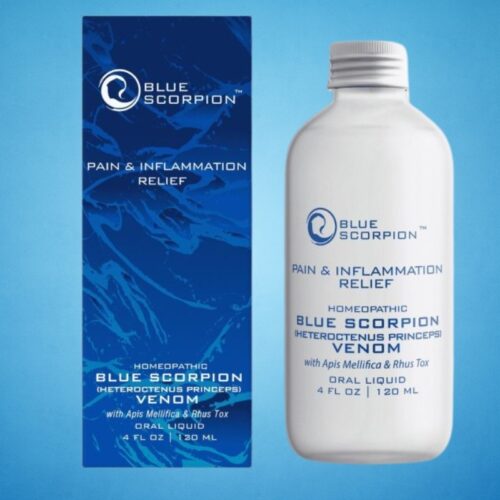
Blue Scorpion
$299.00 Buy From The Official Website -
Sale!

Nourix
Original price was: $19.95.$16.96Current price is: $16.96. Buy From The Official Website -
Theobroma Cacao for Weight Loss
Buy From The Official Website