
$11.42
Dovi Liver Support is a convenient liquid dietary supplement featuring a blend of nutrients and botanical ingredients commonly associated with liver wellness. The formula includes milk thistle, NAC, glutathione, dandelion root, artichoke, beetroot, and choline, offering a multi-ingredient approach for adults looking to complement their everyday wellness routine. Its liquid format provides an easy alternative for customers who prefer not to swallow capsules or tablets. Dovi stands out through its combination of familiar liver-support ingredients in one simple daily formula. For wellness-conscious shoppers seeking convenient nutritional support, Dovi offers an approachable addition to a balanced lifestyle and healthy routine.
Description
Medical disclaimer: This article is for educational and informational purposes only and does not constitute medical advice, diagnosis, or treatment. Dietary supplements should not be used as substitutes for evaluation or treatment of liver disease. Anyone with abnormal liver tests, known liver disease, unexplained symptoms, or who takes prescription medications should discuss supplement use with a qualified healthcare professional.
The liver rarely gets much attention until a blood test comes back abnormal or a clinician mentions terms such as elevated ALT, fatty liver, fibrosis, or metabolic dysfunction.
That creates an understandable market for products promising to “support” liver health.
Dovi Liver Support is one of the newer liquid supplement formulas competing for that attention. Its ingredient list combines several familiar names from the liver-supplement category—including N-acetyl cysteine (NAC), glutathione, milk thistle, dandelion, artichoke, beetroot and choline—with additional botanical ingredients.
At first glance, that is an interesting formula.
But an interesting ingredient panel and a clinically proven finished product are two very different things.
That distinction is particularly important with liver supplements. Individual ingredients may have laboratory research, observational evidence or even human clinical trials behind them, but those findings cannot automatically establish that a multi-ingredient commercial supplement will produce the same outcome.
This Dovi Liver Support review therefore takes a different approach from simply asking whether its ingredients are “good for the liver.”
We looked at what the brand currently says is in the formula, what research tells us about several of those ingredients, where the evidence becomes uncertain, and what consumers should consider before interpreting liver-support marketing as medical evidence.
Dovi Liver Support at a Glance
Dovi Liver Support is marketed as a liquid dietary supplement designed around ingredients commonly associated with antioxidant, nutritional and liver-health support.
According to Dovi’s current product information, the formula includes glutathione, NAC, milk thistle extract, dandelion root extract, artichoke extract, beetroot extract and choline citrate. It also contains a proprietary botanical blend reportedly incorporating chanca piedra, astragalus, ginger, burdock, turmeric and schisandra.
The brand directs consumers to take 2 mL per day, which it describes as approximately half a teaspoon. According to its product page, one bottle supplies 30 servings.
Those details tell us what the product is intended to be.
They do not, however, answer the most important question:
Has this exact finished formula been demonstrated in rigorous human trials to meaningfully improve liver health?
Based on the publicly accessible material reviewed for this article, we did not identify high-quality published clinical trials demonstrating that the finished Dovi Liver Support product treats liver disease, reverses fatty liver, reduces liver fibrosis or reliably normalizes abnormal liver enzymes.
That does not prove that the supplement has no value.
It means the strength of a conclusion should match the strength of the available evidence.
Why Dovi Liver Support Is Getting Attention
Dovi’s appeal is easy to understand.
Rather than relying exclusively on milk thistle—the ingredient consumers probably associate most strongly with “liver detox” supplements—the brand combines multiple compounds.
That creates a compelling marketing narrative.
Glutathione is involved in antioxidant defense. NAC is a precursor involved in glutathione synthesis. Choline is an essential nutrient involved in normal liver function and lipid transport. Milk thistle has a long history of traditional liver-related use. Artichoke has attracted clinical research interest. Beetroot supplies naturally occurring bioactive compounds.
Put them together and the formula sounds comprehensive.
The scientific problem is that biological plausibility is not the same thing as demonstrated clinical effectiveness.
A compound can participate in an important biological pathway without supplementation necessarily improving a disease outcome.
An ingredient can also perform differently depending on dose, extraction method, population, duration of use and formulation.
And when multiple ingredients are combined, research performed on one isolated ingredient does not become research on the combination.
This is one of the most important principles for evaluating Dovi Liver Support.
What Is Actually in Dovi Liver Support?
At the time of our research, Dovi’s online product information listed the following components:
Glutathione at 50 mg.
Milk thistle extract 30:1 at 200 mg.
Dandelion root extract 4:1 at 200 mg.
Artichoke extract 4:1 at 100 mg.
Beetroot extract 30:1 at 100 mg.
Choline, supplied as choline citrate, at 50 mg.
N-acetyl cysteine is also listed, although consumers should check the current Supplement Facts panel for the exact declared amount before purchase.
Dovi additionally lists a 100 mg proprietary blend containing chanca piedra, astragalus, ginger, burdock, turmeric and schisandra.
Formulas and labels can change, so the bottle label and current official product information should take precedence over third-party summaries.
More importantly, ingredient names alone do not tell us whether the product matches the doses and preparations used in clinical research.
That is where ingredient-by-ingredient analysis becomes useful.
NAC: One of the More Scientifically Interesting Ingredients
N-acetyl cysteine has considerably more medical history than the typical herbal supplement ingredient.
NAC provides cysteine, which the body can use in the synthesis of glutathione.
It also has established medical uses in specific clinical contexts. That medical history, however, should not be converted into the claim that an over-the-counter NAC-containing supplement can generally “detox” or repair a person’s liver.
Research into NAC and metabolic liver conditions does exist.
For example, a small randomized study involving 30 people with nonalcoholic fatty liver disease compared NAC with vitamin C and examined liver-function measurements over several months.
Small studies like this are scientifically interesting, but they are not equivalent to demonstrating that every NAC-containing supplement produces clinically meaningful improvements.
Dose matters as well.
If a commercial formula contains a different amount of NAC from the dose investigated in a study, the study cannot simply be transferred to that product.
That is why Dovi consumers should look for the precise NAC amount on the current label rather than assuming the presence of NAC itself establishes effectiveness.
Glutathione and the “Master Antioxidant” Narrative
Glutathione frequently appears in supplement marketing because it is genuinely important to human physiology.
It participates in cellular antioxidant systems and helps maintain redox balance.
The liver has an important relationship with glutathione metabolism, which makes the ingredient an intuitive addition to a liver-support formula.
But another distinction is necessary.
Showing that glutathione is physiologically important does not establish that taking 50 mg of supplemental glutathione produces a specific liver outcome.
Supplement marketing sometimes compresses these two very different statements:
“Your body uses this compound.”
Therefore:
“Taking our product improves the associated organ.”
Human biology is rarely that simple.
Consumers should therefore separate the legitimate biochemical importance of glutathione from product-specific claims about what Dovi Liver Support will accomplish.
Milk Thistle: Popular Does Not Mean Proven
Milk thistle may be the quintessential liver supplement.
Its principal extract is commonly described in terms of silymarin, a collection of plant compounds that has been studied for antioxidant and other biological properties.
Its reputation, however, is considerably stronger than the clinical certainty surrounding it.
The National Center for Complementary and Integrative Health states that there is not enough high-quality evidence to reach definite conclusions regarding milk thistle’s effects on health conditions in humans.
Clinical research involving liver conditions has produced conflicting or limited results.
NCCIH also notes that two studies it supported—one involving hepatitis C and another involving nonalcoholic steatohepatitis—did not demonstrate benefits from supplementation with silymarin.
This does not mean milk thistle is scientifically meaningless.
It means statements suggesting that milk thistle reliably repairs liver damage or treats liver disease go beyond what current evidence can comfortably support.
Dovi reportedly supplies 200 mg of a 30:1 milk thistle extract per serving.
The extract ratio is relevant, but it still does not tell us everything needed for a research comparison. Standardization, chemical composition and the amount of specific active constituents can matter substantially.
Artichoke Extract Has Some Noteworthy Human Evidence
Artichoke is one of the more interesting components of Dovi Liver Support because human randomized trials and systematic analyses have examined it.
A 2022 systematic review and meta-analysis evaluated seven randomized controlled trials involving artichoke supplementation and liver enzymes.
The pooled results indicated reductions in ALT and AST.
Another meta-analysis specifically examining artichoke leaf extract in people with nonalcoholic fatty liver disease included five randomized trials involving 333 participants and reported favorable changes in ALT and AST.
There has also been a double-blind randomized controlled trial involving 100 people with ultrasound-diagnosed nonalcoholic fatty liver disease. Participants were assigned to 600 mg per day of artichoke leaf extract or placebo for two months, with researchers reporting changes in several liver-related measurements.
Those findings make artichoke worth further study.
They still cannot be used as proof that Dovi Liver Support produces the same results.
Dovi currently lists 100 mg of a 4:1 artichoke extract.
A trial involving a particular 600 mg artichoke preparation does not automatically validate a different 100 mg extract used inside a multi-ingredient formulation.
This illustrates why dose comparison is essential when researching supplements.
What About Dandelion Root?
Dandelion has a long history of food and traditional herbal use.
It is also frequently included in modern “detox” and liver formulas.
The word detox, however, deserves caution.
The liver already carries out enormously sophisticated metabolic processes. A botanical does not become a clinically demonstrated liver detoxification therapy simply because it has traditionally been associated with digestion, bile or liver health.
Preclinical research on dandelion is interesting, but human evidence supporting strong liver-treatment claims is much less established.
For Dovi, the presence of a 4:1 dandelion root extract should therefore be considered a formulation characteristic—not proof that the product removes toxins, repairs liver cells or reverses liver disease.
Beetroot: Promising Research, Important Limitations
Beetroot has become popular in nutrition research because it contains nitrate, betalains and other compounds of biological interest.
A randomized controlled trial published in 2023 compared beetroot juice, a Mediterranean diet, their combination and a control condition among adults with nonalcoholic fatty liver disease.
Researchers reported favorable changes in several measured outcomes in the intervention groups.
That deserves attention.
But once again, the research intervention and Dovi’s ingredient are not interchangeable.
Dovi lists 100 mg of a 30:1 beetroot extract.
A concentrated extract in a supplement is not necessarily equivalent to beetroot juice used in a clinical trial. Composition, nitrate concentration, dosing and other factors may differ.
We therefore regard the beetroot research as supporting scientific interest in the ingredient rather than proving a clinical benefit from Dovi.
Choline Is an Essential Nutrient
Choline occupies a different category from many of Dovi’s herbs because it is an essential nutrient.
The body requires choline for several physiological functions, including cellular membrane structure and normal lipid metabolism.
The relationship between inadequate choline and liver health is biologically meaningful.
But that does not mean more choline is automatically better or that a modest amount added to a supplement will reverse an existing liver disorder.
Dovi lists 50 mg of choline as choline citrate.
Consumers should consider that amount in the context of their total dietary intake rather than interpreting the presence of choline as evidence that the product prevents or removes liver fat.
The Proprietary Botanical Blend Deserves Attention Too
Dovi also lists a proprietary blend containing chanca piedra, astragalus, ginger, burdock, turmeric and schisandra.
The entire blend is reportedly 100 mg.
This creates a research limitation because the individual quantity of each component is not readily apparent from the blend total.
Without knowing how much of each ingredient is present, comparing the formula with clinical studies becomes difficult.
This does not automatically make a proprietary blend problematic.
It simply reduces transparency from an evidence-analysis perspective.
A research paper may investigate hundreds or thousands of milligrams of a particular botanical, while a proprietary blend could theoretically provide a much smaller amount.
Consumers should not assume that an ingredient appearing on a label is present at a clinically studied dose.
Can Dovi Liver Support Lower Liver Enzymes?
This is where marketing language requires particularly careful interpretation.
ALT and AST are laboratory measurements commonly included when clinicians evaluate liver health, although their interpretation depends on the individual clinical situation.
Changing a laboratory value is a medical outcome.
Consequently, a claim that a supplement reliably improves liver enzymes deserves direct evidence for that supplement—not merely studies involving ingredients appearing somewhere in its formula.
Dovi’s current marketing materials discuss liver-enzyme improvements on a roughly 60-to-90-day timeline.
We would not treat that timeline as an independently established clinical expectation unless the company can provide appropriately designed finished-product human trials supporting it.
Some individual ingredients have been studied in relation to liver enzymes.
That is not the same claim.
Until robust research on the exact Dovi formulation is available, consumers should regard product-specific liver-enzyme expectations as brand marketing rather than a medically established outcome.
Anyone with elevated liver enzymes should also resist the temptation to self-treat the laboratory number.
Abnormal results can have many causes and deserve appropriate medical evaluation.
Can Dovi Liver Support Reduce Liver Fat?
The same evidentiary rule applies to liver fat.
Research exists on some nutritional interventions and isolated botanical ingredients in populations with fatty liver disease.
But fatty liver is a medical condition—not simply a wellness metric.
Evidence involving artichoke extract, beetroot interventions or other individual components does not prove that Dovi’s combination reduces hepatic fat.
More importantly, a supplement should not distract someone from evidence-based evaluation and management.
Lifestyle, metabolic health, alcohol intake, medications, body composition and underlying medical conditions can all be relevant depending on the individual.
People concerned about fatty liver should discuss appropriate testing and management with a healthcare professional rather than relying on a supplement to determine whether their condition is improving.
What About Liver Scarring or Fibrosis?
Claims involving liver scarring deserve an even higher evidentiary threshold.
Fibrosis represents structural change within the liver.
Determining whether an intervention meaningfully improves fibrosis generally requires appropriate clinical assessment and robust research.
We did not identify evidence sufficient to conclude that Dovi Liver Support has been clinically demonstrated to reverse liver fibrosis.
Research involving individual botanicals or changes in liver enzymes should not be converted into a fibrosis-reversal claim.
An ALT result and fibrosis are not interchangeable outcomes.
Consumers with suspected or diagnosed fibrosis should be managed with appropriate medical care.
The Problem With Customer Reviews as Medical Evidence
Customer reviews can answer certain questions reasonably well.
Does the liquid taste acceptable?
Is the bottle convenient?
Was shipping straightforward?
Did customers like the purchasing experience?
They are far less reliable for determining whether a supplement improves liver function.
Someone cannot normally feel an ALT measurement changing.
They cannot determine whether hepatic fat has decreased without appropriate assessment.
And they cannot know that liver fibrosis has improved simply because they feel better.
The supplied commentary about Dovi raises a worthwhile concern: favorable reviews or survey results presented by the company should not be treated as equivalent to large-scale independent clinical research.
Testimonials are observations from customers, not controlled experiments.
They can be affected by expectations, lifestyle changes, selection bias, placebo effects and many other variables.
For a liver supplement, clinical claims should stand on clinical evidence rather than testimonials.
“I Feel Better” and “My Liver Is Better” Are Different Statements
This distinction deserves its own section because it applies to nearly every supplement in this category.
A consumer might report feeling less bloated or more energetic.
That experience may be completely genuine.
But neither symptom establishes that liver health improved.
Energy is influenced by sleep, diet, hydration, activity, stress, medications, illness and many other variables.
Bloating is similarly nonspecific.
Subjective wellness outcomes and objective liver outcomes therefore need to remain separate.
If Dovi customers enjoy using the product and report feeling better, that information may matter to them.
It should not be converted into evidence that liver fat, fibrosis or biochemical liver function improved.
Does Liquid Delivery Make Dovi More Effective?
Dovi emphasizes its liquid format.
For consumers who dislike swallowing capsules, that is a practical advantage.
The more complicated question is whether the format makes the formula clinically superior.
Claims about rapid or enhanced absorption require formulation-specific evidence.
Different compounds have different absorption characteristics. Simply putting multiple ingredients into liquid form does not establish that all of them enter the bloodstream more effectively or produce superior clinical outcomes compared with capsules.
A particularly strong claim would require comparative pharmacokinetic research examining the actual formulations.
Without that type of evidence, “liquid” is best viewed as a delivery format rather than proof of greater effectiveness.
Dovi Liver Support Reviews: What Should Shoppers Look For?
Instead of asking whether online Dovi reviews are positive or negative, consumers may get more useful information by asking where the reviews came from.
Brand-hosted testimonials are fundamentally different from independently collected reviews.
Neither type substitutes for clinical research, but independence matters when evaluating consumer sentiment.
Look for verified-purchase mechanisms where available.
Pay attention to whether reviewers discuss measurable facts or subjective impressions.
Be skeptical when a testimonial appears to make medical claims.
And remember that a person’s experience cannot predict another person’s outcome.
The strongest evidence for a liver-health intervention would come from appropriately designed studies using objective endpoints—not star ratings.
Dovi Liver Support Pricing and Bundle Offers
The pricing screenshot supplied for this research shows Dovi being marketed through several bundle configurations, including buy-one, buy-two-get-one-free, buy-three-get-two-free and buy-four-get-three-free options.
The displayed screenshot appears to show substantial percentage discounts for larger orders.
Pricing and promotional structures can change quickly.
Consumers should therefore verify the current total price, number of bottles, shipping charges, subscription terms if applicable, refund conditions and final cost per bottle directly at checkout before ordering.
There is another practical consideration.
A steep multi-bottle discount encourages consumers to commit to several months of a supplement before knowing whether they even want to continue using it.
The cheapest per-bottle option is not necessarily the best purchasing decision for every consumer.
Pricing disclaimer: Prices, discounts, bundle configurations, shipping terms and promotional offers can change without notice. Check the official seller’s current checkout page for the latest terms before purchasing.
Safety Matters More With Liver Supplements Than Many Consumers Realize
There is an unfortunate assumption that a product marketed “for the liver” must inherently be safe for the liver.
That is not a reliable rule.
The National Institute of Diabetes and Digestive and Kidney Diseases maintains LiverTox, a clinical resource covering liver injury associated with prescription medications, over-the-counter drugs, herbal products and dietary supplements.
Herbal and dietary supplement-associated liver injury is a recognized medical issue.
That does not mean Dovi has been shown to cause liver injury.
We found no basis to make that accusation.
The broader lesson is simply that “natural,” “herbal” and “liver support” are not substitutes for safety assessment.
Multi-ingredient products can also make adverse-event assessment more complicated because multiple compounds are consumed simultaneously.
Who Should Speak With a Healthcare Professional Before Taking Dovi?
Anyone with known liver disease should seek individualized guidance before adding a multi-ingredient liver supplement.
The same caution is appropriate for people with unexplained abnormal liver tests, people taking prescription medications, pregnant or breastfeeding individuals, and anyone with significant chronic health conditions.
Herbs can interact with medications.
Individual botanical ingredients may also cause allergic reactions or gastrointestinal effects.
NCCIH, for example, notes that milk thistle is generally well tolerated orally but can cause digestive symptoms such as nausea, bloating and gas. Allergic reactions are also possible, particularly in people sensitive to related plants.
A supplement should never be used to postpone evaluation of symptoms such as jaundice, persistent abdominal pain, dark urine, unexplained severe fatigue or other concerning changes.
Dovi Liver Support vs. Lifestyle Measures
Supplements are attractive partly because they offer a simple action: take a measured dose once per day.
Liver health is usually more complicated.
For metabolic liver conditions, broader factors such as diet quality, physical activity, body weight where medically appropriate, blood glucose control, lipid management and alcohol consumption may be important.
The appropriate strategy varies according to the cause of a person’s liver problem.
That is another reason generic “liver detox” thinking can be misleading.
There is no single liver problem and therefore no universal supplement solution.
A person with alcohol-related liver injury, viral hepatitis, medication-associated injury, metabolic liver disease or another liver condition may require very different management.
Is Dovi Liver Support a Scam?
Calling a supplement a scam requires evidence.
We do not think an ingredient list alone justifies that label.
Dovi contains recognizable ingredients with legitimate scientific interest, and some of those ingredients have human research behind them.
The more defensible criticism concerns the gap between ingredient research and finished-product claims.
There is a meaningful difference between saying:
“This formula contains ingredients that researchers have studied in relation to liver health.”
and saying:
“This finished supplement has been clinically proven to improve liver enzymes, remove liver fat or reverse liver scarring.”
The first statement can be investigated ingredient by ingredient.
The second requires evidence involving the finished product.
Based on the evidence reviewed here, consumers should not treat those two propositions as equivalent.
What We Could Verify
Several basic aspects of Dovi Liver Support can currently be checked against the brand’s product information.
The product is marketed as a liquid formula.
The brand lists glutathione, NAC, milk thistle, dandelion, artichoke, beetroot and choline among its principal ingredients.
It also lists an additional proprietary botanical blend.
The suggested serving is 2 mL daily, and the company states that a bottle contains 30 servings.
We also verified that independent scientific literature exists for several individual ingredients, including human studies involving artichoke extract, NAC and beetroot interventions.
However, the key limitation remains unchanged:
Ingredient-level evidence is not finished-product evidence.
We did not identify high-quality published evidence sufficient to conclude that Dovi itself treats fatty liver disease, reverses liver fibrosis or reliably normalizes liver enzymes.
Questions We Would Want Dovi to Answer
Greater transparency could make the product easier to evaluate scientifically.
The first question is the exact amount of NAC supplied per current serving.
Next is whether the milk thistle extract is standardized to a specified concentration of silymarin or other constituents.
It would also be useful to know the individual quantities contained within the proprietary botanical blend.
Consumers interested in quality assurance may want information about independent testing for identity, potency, microbial contamination and relevant contaminants.
Most importantly, if Dovi makes quantitative or time-specific claims involving liver enzymes, liver fat or other objective outcomes, the company should be able to identify the finished-product research supporting those claims.
That would allow consumers and healthcare professionals to evaluate the study population, endpoints, dose, duration, control group and statistical results rather than relying on marketing summaries.
The Meridian Medical Centre Research Perspective
Dovi Liver Support is more interesting than a simplistic one-ingredient “detox” formula.
Its combination of NAC, glutathione, milk thistle, artichoke, dandelion, beetroot and choline gives researchers several legitimate scientific topics to examine.
Artichoke in particular has human clinical evidence worth discussing.
NAC has an established biochemical and medical background that makes it scientifically relevant.
Choline is unquestionably an essential nutrient.
But none of those observations answers the finished-product question.
The central limitation is not necessarily that Dovi contains implausible ingredients.
It is that evidence supporting an ingredient cannot automatically validate every claim made about a commercial combination containing that ingredient.
That distinction becomes especially important when marketing moves from general wellness language into measurable medical outcomes such as liver enzymes, hepatic fat or fibrosis.
Consumers deserve to know which claims come from clinical trials on the actual product and which are extrapolated from research on individual components.
Final Verdict: A Plausible Formula With a Bigger Evidence Question
Dovi Liver Support combines several ingredients that have legitimate connections to nutrition and liver-health research.
That makes it more reasonable to investigate than dismiss.
At the same time, the evidence does not justify treating the product as a proven treatment for liver disease.
Milk thistle research remains mixed.
Artichoke has encouraging randomized-trial evidence, but research doses and preparations do not necessarily match Dovi.
NAC is biologically relevant and has been clinically studied, but the existence of NAC research does not prove that Dovi produces the same outcomes.
Beetroot research is interesting but likewise cannot be directly transferred to a concentrated multi-ingredient liquid.
Glutathione and choline have important physiological roles, yet biological importance alone does not demonstrate that supplementation at Dovi’s amounts will improve a person’s liver condition.
That leaves Dovi Liver Support in a familiar but important category:
A supplement with scientifically interesting ingredients, but a finished-product evidence base that appears substantially less developed than the marketing story surrounding those ingredients.
For consumers, the appropriate response is neither automatic enthusiasm nor automatic dismissal.
Check the current label.
Look at the doses.
Separate testimonials from trials.
Separate ingredient studies from finished-product studies.
And if the reason you are considering Dovi is an abnormal liver test or diagnosed liver condition, involve a qualified healthcare professional rather than relying on a supplement to monitor or manage the problem.
The liver is too important for marketing language to substitute for medical evidence.
Final medical disclaimer: Dovi Liver Support is a dietary supplement and should not be considered a substitute for professional medical diagnosis or treatment. References to ingredient research do not establish that Dovi Liver Support prevents, treats, cures or reverses any disease. Evidence involving individual ingredients should not be interpreted as evidence for the finished Dovi formulation. Consult an appropriate healthcare professional about abnormal liver tests, suspected liver disease, medication interactions and supplement use.
Related products
-
Sale!

LifeVac
Original price was: $79.99.$69.98Current price is: $69.98. Buy From The Official Website -
Sale!
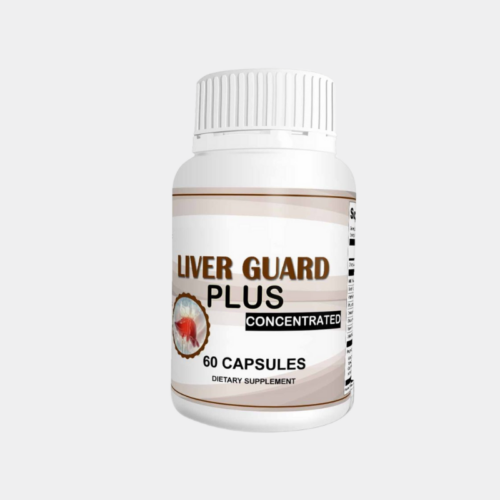
Liver Guard Plus
Original price was: $69.00.$49.00Current price is: $49.00. Buy From The Official Website -
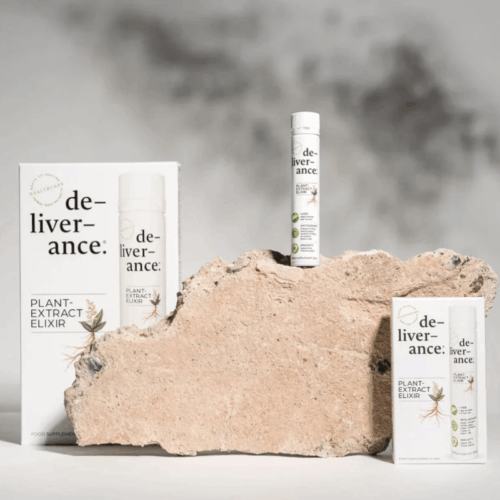
de-liver-ance
$24.99 Buy From The Official Website -
Sale!

BioRebalance
Original price was: $279.00.$219.00Current price is: $219.00. Buy From The Official Website