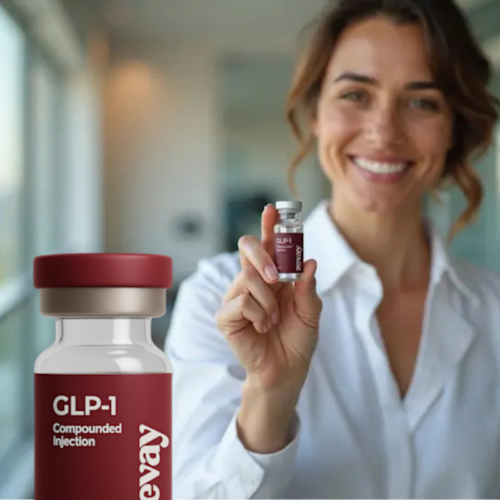
Experience the power of results-driven wellness with Effecty. We believe that when it comes to your health, efficacy is everything. Effecty provides high-performance, clinically inspired solutions meticulously formulated to deliver the tangible outcomes you demand. Whether you are aiming to boost your energy, refine your metabolic health, or support your longevity goals, our products are engineered to work as hard as you do. Stop settling for mediocre supplements and switch to a brand where science meets real-world effectiveness. Choose Effecty for a smarter, more reliable path to your wellness potential. Feel the difference that proven performance can make today.
Description
Effecty GLP-1 Program Overview 2026: Pricing, Process, Compounded Semaglutide vs Tirzepatide Considerations
Effecty, operated by Effecty LLC, describes its own structure more explicitly than most providers in this category: a technology platform that connects patients with independent, licensed medical providers, and that does not itself practice medicine or prescribe medication. If a licensed provider determines treatment is appropriate, medication is dispensed by separate, state-licensed pharmacies, including compounding pharmacies. That three-part structure, platform, independent provider, and pharmacy, is stated directly in Effecty’s own site copy rather than something a reader has to infer.
Effecty operates across three treatment categories: Weight Loss, Longevity, and Hormone Therapy for women. This overview focuses specifically on the GLP-1 weight-loss program, though Effecty’s broader catalog and pricing structure are relevant context for anyone comparing it to more narrowly focused competitors.
As with any compounded medication provider, the central fact worth holding onto throughout this overview is that compounded GLP-1 medications are not FDA-approved finished drug products. Effecty states this directly in its own site language: compounded medications are not FDA-approved and have not undergone FDA review for safety or effectiveness. That distinction matters even more here than with some competitors, because Effecty is one of the few providers in this category that also sells FDA-approved brand-name GLP-1 medications side by side with its compounded option, which makes the price and regulatory contrast unusually visible on a single pricing page.
Understanding the Medications Behind the Brand
GLP-1 receptor agonists were originally developed for type 2 diabetes management before their weight-loss effects drove much of the current telehealth demand around them. They work by mimicking a gut hormone that slows digestion, increases satiety, and helps regulate blood sugar. Semaglutide is a single-receptor GLP-1 agonist, while tirzepatide adds a second mechanism, acting on both the GLP-1 and GIP receptors, an approach associated with more pronounced outcomes in the large-scale clinical trials conducted on FDA-approved brand-name products.
Those clinical trials were conducted using FDA-approved, commercially manufactured products, not compounded versions. Compounded formulations use the same active pharmaceutical ingredients, but the compounded preparation itself has not gone through the FDA’s own drug approval process, a distinction Effecty’s own safety disclosures acknowledge directly rather than leaving to inference.
What Effecty Actually Offers, and What It Costs
Effecty’s weight-loss catalog includes both a compounded GLP-1 option and several FDA-approved brand-name medications, each with published pricing tied to a 1-month, 3-month, or 12-month purchase:
- GLP-1 Injection (compounded): $195/month at the 1-month rate, $175/month on a 3-month supply, or $145/month on a 12-month supply.
- Metformin: $80/month.
- Mounjaro® (brand-name tirzepatide): $1,300/month.
- Ozempic® (brand-name semaglutide): $1,300/month.
- Wegovy® (brand-name semaglutide): $1,600/month.
- Zepbound® (brand-name tirzepatide): $1,400/month.
The gap between the compounded option and the brand-name options here is substantial and worth sitting with directly: Effecty’s own pricing puts compounded GLP-1 treatment at roughly one-tenth to one-eleventh the monthly cost of its brand-name alternatives. That gap reflects the fundamental economics of compounding versus commercially manufactured, patent-protected medication, not a claim that the two are clinically identical. Patients choosing between the compounded and brand-name options on Effecty’s own menu are making a real tradeoff between cost and FDA-approved status, and that tradeoff is worth discussing directly with a provider rather than defaulting to price alone.
Beyond GLP-1: Effecty’s Broader Catalog
Effecty’s Longevity and Hormone Therapy categories are priced on the same 1/3/12-month tiered structure as its weight-loss treatments:
- NAD+ Injection: $225 → $195 → $160/month.
- Sermorelin: $225 → $200/month; Sermorelin ODT: $190 → $170/month.
- Glutathione: $175 → $147 → $125/month.
- NAD+ Nasal Spray: $180/month.
- Lipotropic (MIC) + B12: $150 → $109 → $95/month.
- Estradiol Patch: $180 → $125 → $105/month; Estradiol Cream: $180 → $125 → $95/month; Estradiol Tablet: $140 → $90 → $55/month.
These categories sit outside the scope of this GLP-1-focused overview, but the consistent tiered pricing structure across all of them, and the fact that longer commitments unlock lower monthly rates the same way across every product, is a useful pattern to understand if you’re evaluating Effecty as a broader wellness platform rather than a single-purpose GLP-1 provider.
How the Effecty Process Works
Effecty describes a three-step process:
- Complete a medical questionnaire covering health history and treatment goals.
- Engage in a chat-based telehealth visit with a physician licensed in the patient’s own state.
- If eligible, receive medication shipped directly to the patient’s door from Effecty’s pharmacy partner, with free expedited shipping.
It’s worth noting the specific format of that second step: Effecty describes its provider visit as chat-based rather than a phone or video call, which places it between the fully asynchronous, form-only model used by some competitors and the mandatory live-video model used by others. Patients can communicate directly with their assigned physician through text-based chat, according to the company, rather than either submitting a form with no direct interaction or scheduling a live video appointment.
Insurance and Payment
Effecty does not accept insurance directly. According to the company’s own FAQ, patients can attempt to submit a claim to their own insurance carrier independently after paying Effecty, but Effecty does not provide superbills and does not communicate with insurance carriers on a patient’s behalf under any circumstance, including denied claims, explanation-of-benefits disputes, or prior authorizations. Patients considering out-of-pocket reimbursement through their own insurer should understand upfront that this is a self-directed process with no guarantee of success and no support from Effecty in navigating it.
What Compounding Means, and Why the Distinction Matters
Drug compounding is a legal, regulated practice in the United States in which a licensed pharmacy combines or modifies ingredients to prepare a medication tailored to an individual patient’s prescription. It’s commonly used when a commercially manufactured, FDA-approved medication isn’t accessible, isn’t tolerated, or isn’t available due to supply constraints, a significant factor behind GLP-1 shortages in recent years. Effecty states it works with state-licensed compounding pharmacies, and that compounding itself is regulated by state boards of pharmacy.
What compounding does not mean is FDA approval of the finished product. Effecty’s own safety disclosures make this explicit: compounded medications are not FDA-approved and have not undergone FDA review for safety or effectiveness. A licensed, independent provider is required to determine whether compounded medication is appropriate for a given patient, which is the role Effecty’s chat-based physician visit is designed to serve. Eligibility for treatment, per Effecty’s own language, is determined by that provider and is never guaranteed.
Effecty’s Patient-Reported Outcome Data
Effecty publishes a set of self-reported outcome statistics directly on its homepage, with a methodology disclosure attached, which is more transparent than many competitors in this category: 9 out of 10 patients reported experiencing weight loss while on treatment, more than 80% reported lower appetite since starting treatment, 85% described side effects as very manageable or reported none at all, and 8 out of 10 said they felt more in control of their eating habits since starting treatment.
Effecty’s own footnote on these statistics states they reflect anonymized, self-reported survey responses from 102 Effecty patients using weight-loss treatments, covering weight change, energy, appetite, and health markers, and explicitly notes these reported outcomes have not been independently verified. That’s a meaningfully more transparent presentation than simply stating a percentage with no source, and it’s worth reading those numbers with that specific caveat in mind: a 102-patient, self-reported, non-independently-verified survey is real data, but it is not equivalent to a controlled clinical trial, and individual results will vary.
Reputation and Testimonials
Effecty features a series of named patient testimonials with before-and-after photos and, in several cases, video interviews, describing reported outcomes including weight losses in the range of 47 to over 150 pounds, alongside descriptions of reduced “food noise” and appetite control. Effecty discloses directly beneath these testimonials that they are provided by patients who used the platform, that prior results do not guarantee similar outcomes for anyone else, that results vary based on individual health factors and medical eligibility, and, notably, that certain individuals may be compensated by Effecty for their testimonials.
That compensation disclosure is worth taking seriously as a reader: a testimonial from a compensated patient may still be an honest account of their experience, but it is not an independent or unpaid endorsement, and specific figures like a 150-pound loss should be read as one individual’s reported, unverified outcome rather than a typical or expected result for anyone considering the program.
How Effecty Fits Into the Broader Compounded GLP-1 Market
Effecty’s most distinctive positioning within this category is offering compounded and brand-name GLP-1 medications side by side on the same pricing page, rather than specializing exclusively in one or the other. That structure gives prospective patients a direct, apples-to-apples price comparison most competitors don’t display as plainly, compounded GLP-1 injection at $145 to $195 per month depending on term length, versus Ozempic, Mounjaro, Wegovy, or Zepbound at $1,300 to $1,600 per month.
Effecty also stands out for its relatively thorough public disclosure practices: a named legal entity, a methodology-disclosed patient survey rather than an unsourced percentage, an explicit testimonial compensation disclosure, and a fuller set of linked legal and policy pages, including a dedicated safety and legal page, terms of service, shipping and returns policy, and a physician code of conduct, than several competitors in this same category publish. For patients who weigh a provider’s transparency as part of their decision, that publicly available documentation is a meaningful point in Effecty’s favor relative to some competitors whose sites leave more of that information unstated.
Frequently Asked Questions
Does Effecty offer both compounded and brand-name GLP-1 medications?
Yes. Effecty’s own pricing page lists a compounded GLP-1 injection alongside brand-name Mounjaro, Ozempic, Wegovy, and Zepbound, each priced separately.
Is the compounded GLP-1 injection FDA-approved?
No. Effecty states directly that compounded medications are not FDA-approved and have not undergone FDA review for safety or effectiveness, distinct from the brand-name options it also offers.
Does the provider visit happen over video?
No. Effecty describes its provider visit as a chat-based telehealth visit with a physician licensed in the patient’s state, rather than a phone or video appointment.
Does Effecty accept insurance?
No. Patients can attempt to self-file with their own insurance carrier after paying, but Effecty does not provide superbills or communicate with insurers on a patient’s behalf in any circumstance.
How reliable are the reported outcome statistics on Effecty’s site?
Effecty discloses that its published statistics, such as 9 out of 10 patients reporting weight loss, come from an anonymized, self-reported survey of 102 patients, and states plainly that these outcomes have not been independently verified.
Are Effecty’s testimonials independent endorsements?
Not necessarily. Effecty discloses that certain individuals featured in its testimonials may be compensated for sharing their experience, and that results vary and are not guaranteed.
Weighing Compounded vs Brand-Name on the Same Menu
Because Effecty lists both options in one place, it’s worth walking through what that price gap actually represents rather than treating it as a simple discount. Brand-name Ozempic, Wegovy, Mounjaro, and Zepbound are commercially manufactured, patent-protected products that went through the FDA’s full drug approval process, including the large-scale clinical trials referenced earlier in this overview. Their pricing reflects that manufacturing, patent, and regulatory pathway. Compounded semaglutide and tirzepatide use the same active ingredients but are prepared individually by a licensed compounding pharmacy under a patient-specific prescription, a different, less capital-intensive production model that is reflected in the lower price, not a difference in the underlying active ingredient itself.
This is also why compounding became such a significant part of the GLP-1 telehealth market in the first place: when brand-name manufacturers couldn’t meet demand, compounding pharmacies filled a real supply gap using FDA-regulated raw ingredients under state pharmacy board oversight. That history is useful context, but it doesn’t change the core regulatory fact that compounded preparations, unlike the brand-name products sitting next to them on Effecty’s own pricing page, have not been independently reviewed by the FDA for safety and effectiveness as finished products. Patients who want the specific reassurance of FDA-approved status should weigh that directly against the substantial price difference, ideally in a direct conversation with their assigned Effecty provider rather than deciding on price alone.
General Safety Considerations With GLP-1 Therapy
GLP-1 and GLP-1/GIP medications, whether compounded or FDA-approved, are associated with a well-documented set of common side effects reported in clinical literature on the drug class generally, most frequently gastrointestinal: nausea, diarrhea, constipation, and appetite suppression, particularly when starting treatment or increasing dose. Effecty’s own patient survey data reports that 85% of respondents described side effects as very manageable or reported none, though that figure carries the same self-reported, non-independently-verified caveat as the platform’s other survey statistics.
Because this is a prescription medication requiring individualized clinical judgment, nothing in this article should be treated as medical advice or a substitute for a provider’s evaluation. Patients with a personal or family history of certain thyroid conditions, pancreatitis, or specific gastrointestinal disorders are generally considered poor candidates for this medication class, which is exactly the kind of history a thorough intake questionnaire and provider chat visit are designed to catch.
Who This Program May Fit
Based on Effecty’s own published structure, this program may particularly appeal to patients who want the option to compare compounded and brand-name GLP-1 pricing directly within a single platform, who are comfortable with a chat-based rather than video-based provider visit, and who are considering Effecty’s broader longevity or hormone therapy catalog alongside weight-loss treatment. It’s a reasonable fit for patients who value seeing a provider’s testimonial-compensation and survey-methodology disclosures made explicit rather than left unstated.
Anyone considering Effecty, or any comparable compounded GLP-1 telehealth provider, should disclose their complete medical history during intake, confirm the specific pricing tier and total cost at their prescribed dose, and discuss both the compounded and brand-name options with their provider to decide which represents the better fit for their goals and budget.
The Bottom Line
Effecty’s clearest differentiator within the compounded GLP-1 market is putting compounded and FDA-approved brand-name medications on the same menu, giving patients a direct, visible price comparison that most single-format competitors don’t offer. Its compounded GLP-1 pricing, $145 to $195 per month depending on term length, sits within a reasonable range for the category, and its disclosure practices, a named legal entity, methodology-disclosed patient survey data, and an explicit testimonial compensation notice, are more thorough than several competitors covered elsewhere in this series.
As with any prescription treatment, the right decision depends on an individual’s full medical history and goals, not on advertised pricing or testimonial outcomes alone. Anyone considering Effecty should go into the intake and chat-based provider visit with complete and honest information and treat the resulting eligibility determination as a genuine clinical checkpoint rather than a formality.
View current Effecty program details
Important: This article is for informational purposes only and should not be construed as medical advice; it is not a substitute for professional medical consultation, diagnosis, or treatment. Compounded medications discussed in this article are not FDA-approved and have not undergone FDA review for safety or effectiveness. Individual results vary, and patient testimonials and survey statistics referenced in this article are self-reported and have not been independently verified; some testimonial participants may be compensated. All patients must consult with a licensed healthcare provider prior to the prescription or dispensing of any medication.