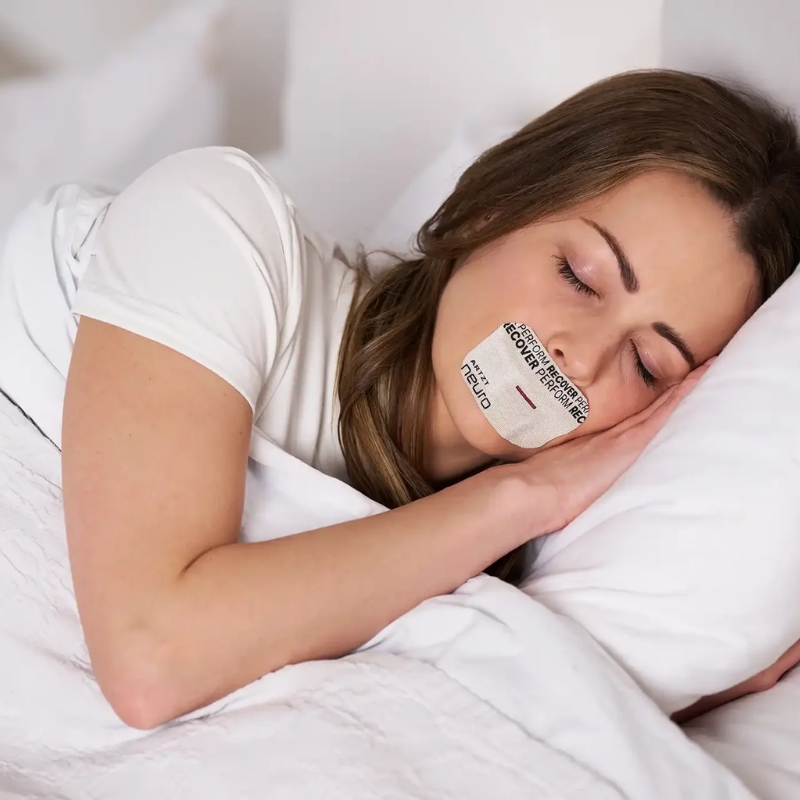
Discover how Mouth Tape to Stop Grinding Teeth may support more restful sleep by encouraging healthy nasal breathing throughout the night. Designed for comfort and gentle overnight wear, this sleep-support solution may help reduce dry mouth, noisy breathing, jaw tension, and sleep disruptions commonly associated with nighttime teeth grinding. Ideal for adults seeking a non-invasive addition to their bedtime routine, mouth tape promotes a secure yet breathable fit using skin-friendly materials. Whether you struggle with clenching, snoring, or morning jaw discomfort, this simple sleep wellness tool offers a convenient way to support better nighttime breathing habits and overall sleep comfort.
Description
Teeth grinding, also known as bruxism, has become one of the most discussed nighttime health concerns among adults struggling with jaw tension, restless sleep, headaches, and damaged teeth. At the same time, mouth taping has surged in popularity across sleep wellness communities as a simple strategy designed to encourage nasal breathing during sleep.
As these two conversations collide, many people are now asking an important question: can mouth tape help stop grinding teeth?
The answer is more nuanced than social media trends may suggest.
Current research does not prove that mouth taping directly cures bruxism. However, emerging sleep and airway research suggests that mouth breathing, poor sleep quality, airway instability, snoring, and mild sleep-disordered breathing may contribute to nighttime jaw clenching in certain individuals. In these cases, improving breathing mechanics during sleep may indirectly reduce grinding behaviors for some people.
For medical professionals, dentists, and sleep specialists, the growing interest in mouth taping presents both an opportunity and a responsibility. Patients are increasingly experimenting with at-home sleep interventions, yet many do not fully understand the underlying causes of bruxism or the potential safety considerations associated with taping the mouth during sleep.
This article explores the science behind teeth grinding, the relationship between airway health and sleep bruxism, the possible role of mouth tape in supporting nasal breathing, and what current evidence actually says about using mouth tape to stop grinding teeth.
Understanding Teeth Grinding and Bruxism
Bruxism refers to repetitive jaw muscle activity that causes clenching, grinding, or gnashing of the teeth. It can occur while awake or during sleep.
Sleep bruxism is classified as a sleep-related movement disorder. Many individuals are unaware they grind their teeth until symptoms become severe enough to trigger dental complications, chronic jaw discomfort, headaches, or disrupted sleep.
Some people experience occasional grinding during periods of stress, while others develop long-term patterns that gradually damage the teeth and surrounding structures.
Common symptoms associated with sleep bruxism include:
- Flattened or worn teeth
- Cracked enamel
- Tooth sensitivity
- Morning headaches
- Jaw soreness
- Clicking or popping in the jaw
- Neck tension
- Ear discomfort
- Facial muscle fatigue
- Interrupted sleep
- Reports of grinding sounds from a sleep partner
In moderate or severe cases, untreated bruxism may contribute to temporomandibular joint dysfunction, shortened teeth, gum recession, dental fractures, and long-term bite changes.
Why People Grind Their Teeth at Night
One of the biggest misconceptions about bruxism is the idea that stress is the only cause.
Stress and anxiety absolutely play a role in many cases. However, modern research increasingly shows that sleep bruxism is often multifactorial.
Potential contributors include:
Psychological Stress and Anxiety
Stress remains one of the most recognized contributors to nighttime jaw clenching. Emotional tension can increase nervous system arousal and muscle activation during sleep.
People experiencing high levels of emotional stress, work-related pressure, sleep deprivation, or chronic anxiety may be more likely to develop awake bruxism or nighttime grinding behaviors.
Sleep-Disordered Breathing
Many sleep specialists now believe airway instability may contribute to nighttime grinding in certain individuals.
Sleep-disordered breathing includes:
- Snoring
- Upper airway resistance syndrome
- Mild obstructive sleep apnea
- Obstructive sleep apnea
When breathing becomes partially restricted during sleep, the body may trigger micro-arousals to reopen the airway. Some researchers believe jaw clenching and grinding may occur as part of this protective response.
This theory helps explain why bruxism often appears alongside snoring and sleep apnea.
Mouth Breathing During Sleep
Mouth breathing may influence jaw position, tongue posture, oral dryness, and airway stability.
During nasal breathing, the tongue naturally rests against the roof of the mouth, helping stabilize oral posture and support airway mechanics.
With mouth breathing, tongue position changes, jaw posture may shift downward, and muscle tension patterns around the jaw and face can become altered.
This is one reason why some airway-focused dentists and sleep professionals believe correcting chronic mouth breathing may reduce grinding behaviors in selected patients.
Neurological and Nervous System Factors
Sleep bruxism is closely connected to the central nervous system.
Research suggests neurotransmitter activity, sleep stage transitions, and autonomic nervous system fluctuations may influence grinding episodes.
Many bruxism events occur during brief awakenings or transitions between sleep stages.
Medications
Certain medications may increase the risk of bruxism.
Some antidepressants, particularly selective serotonin reuptake inhibitors, have been associated with increased jaw clenching or nighttime grinding in some patients.
Lifestyle Factors
Additional risk factors may include:
- Excess caffeine consumption
- Alcohol intake
- Smoking
- Recreational stimulant use
- Sleep deprivation
- Irregular sleep schedules
The Growing Popularity of Mouth Taping
Mouth taping involves placing a small strip of skin-safe tape across the lips before sleep to encourage nasal breathing.
The practice gained widespread popularity through sleep optimization communities, wellness influencers, athletes, and biohacking trends.
Supporters of mouth taping claim it may help:
- Reduce snoring
- Improve sleep quality
- Minimize dry mouth
- Encourage nasal breathing
- Improve oral moisture balance
- Reduce nighttime awakenings
- Support relaxation
- Improve morning energy levels
More recently, people have begun exploring whether mouth tape may also help reduce teeth grinding.
Why Nasal Breathing Matters During Sleep
To understand the theory behind mouth taping and bruxism, it is important to first understand the physiological differences between nasal breathing and mouth breathing.
The nose performs several important functions during breathing.
Nasal breathing:
- Filters airborne particles
- Humidifies inhaled air
- Helps regulate airflow resistance
- Supports nitric oxide production
- Assists oxygen exchange
- Encourages healthier tongue posture
- Helps stabilize upper airway function
Mouth breathing bypasses many of these natural mechanisms.
Chronic nighttime mouth breathing may contribute to:
- Dry mouth
- Snoring
- Airway instability
- Oral tissue irritation
- Increased throat dryness
- Altered jaw positioning
- Poor sleep quality
Some sleep experts believe chronic mouth breathing may place additional strain on the muscles surrounding the jaw and airway.
This connection forms the foundation for the theory that mouth tape could potentially reduce grinding in individuals whose bruxism is linked to airway dysfunction or poor breathing patterns.
The Connection Between Bruxism and Sleep Apnea
One of the most important developments in modern bruxism research involves the relationship between sleep apnea and teeth grinding.
Obstructive sleep apnea occurs when the airway repeatedly collapses or becomes blocked during sleep.
These breathing interruptions may reduce oxygen levels and trigger repeated micro-awakenings throughout the night.
Research increasingly shows that many individuals with sleep bruxism also experience sleep-disordered breathing.
Some experts believe grinding may serve as a subconscious attempt to reopen the airway.
During an apnea event, the brain briefly activates muscles surrounding the jaw and airway. Jaw clenching or grinding may occur during this process.
This does not mean every person who grinds their teeth has sleep apnea.
However, it does suggest that airway evaluation may be important for people with persistent nighttime bruxism, loud snoring, chronic fatigue, or disrupted sleep.
Could Mouth Tape Help Reduce Teeth Grinding?
The short answer is possibly for some individuals, but evidence remains limited.
There is currently no large-scale clinical evidence proving that mouth tape directly stops bruxism.
However, there are several plausible mechanisms through which mouth taping may indirectly help certain people.
Mouth Tape May Encourage Nasal Breathing
The primary goal of mouth taping is to reduce mouth breathing and encourage breathing through the nose.
If mouth breathing contributes to airway instability, poor jaw posture, or fragmented sleep, improving breathing patterns may theoretically reduce triggers associated with nighttime grinding.
Improved Airway Stability May Reduce Micro-Arousals
Some sleep studies suggest nasal breathing may improve airway stability and reduce certain sleep disruptions.
If grinding episodes occur during sleep arousals linked to breathing instability, reducing these disturbances could potentially lower grinding frequency.
Reduced Oral Dryness May Improve Comfort
Mouth breathing commonly causes dry mouth.
Dry mouth may contribute to oral irritation, inflamed tissues, and disrupted sleep.
Nasal breathing helps preserve oral moisture and may improve nighttime comfort.
Relaxed Jaw Positioning
Some airway-focused clinicians believe nasal breathing may support healthier jaw positioning and reduce unnecessary tension in facial muscles.
This remains a developing theory rather than a fully established clinical conclusion.
What Current Research Actually Says
One of the most important aspects of discussing mouth tape responsibly is separating plausible mechanisms from proven medical outcomes.
At present, the evidence supporting mouth tape specifically for bruxism remains limited.
Most existing research focuses on:
- Snoring
- Mild sleep apnea
- Nasal breathing
- Sleep quality
- Oxygen saturation
- Airway resistance
Some smaller studies suggest mouth taping may improve snoring intensity and mild obstructive sleep apnea markers in selected patients.
However, very few controlled studies directly examine mouth taping as a treatment for teeth grinding.
This distinction matters.
Patients should understand that:
- Mouth tape is not an established cure for bruxism
- Research is still emerging
- Results likely vary depending on the underlying cause of grinding
- Airway-related bruxism may respond differently than stress-related bruxism
- Mouth taping should not replace proper medical evaluation
Cases Where Mouth Tape May Be More Relevant
Mouth taping may potentially be more relevant for individuals who:
- Consistently breathe through their mouth during sleep
- Wake with dry mouth
- Snore frequently
- Experience mild airway issues
- Grind their teeth primarily at night
- Have poor sleep quality
- Notice worsening symptoms during nasal congestion
In contrast, people whose bruxism is strongly driven by psychological stress, medication side effects, neurological conditions, or severe sleep apnea may require entirely different treatment strategies.
Cases Where Mouth Tape May Not Help
Mouth tape is unlikely to fully resolve grinding caused primarily by:
- Severe anxiety disorders
- Medication-induced bruxism
- Neurological movement disorders
- Major bite abnormalities
- Severe obstructive sleep apnea
- Temporomandibular joint disorders
- Structural jaw dysfunction
This is why a proper dental and sleep assessment remains important.
Is Mouth Taping Safe?
Safety is one of the most important parts of this discussion.
While many healthy adults tolerate mouth taping without major issues, it is not appropriate for everyone.
Mouth taping may be unsafe for individuals with:
- Moderate or severe sleep apnea
- Significant nasal obstruction
- Chronic sinus congestion
- Breathing difficulties
- Severe asthma
- Respiratory disorders
- Claustrophobia
- Panic disorders related to restricted breathing
- Active skin irritation around the lips
People should never force nasal breathing if the nasal airway is obstructed.
If someone cannot comfortably breathe through their nose during the day, mouth taping at night could potentially worsen breathing difficulty.
Important Precautions Before Trying Mouth Tape
Before considering mouth taping, individuals should:
- Discuss symptoms with a healthcare provider
- Rule out significant sleep apnea
- Evaluate chronic snoring
- Address nasal congestion
- Consider allergy management
- Assess breathing comfort through the nose
- Use only skin-safe medical tape
- Avoid fully sealing the mouth with unsafe adhesives
Professional guidance is especially important for individuals with known sleep disorders.
Types of Mouth Tape Used for Sleep
Commercial mouth tapes are generally designed to be:
- Gentle on the skin
- Breathable
- Easy to remove
- Flexible during jaw movement
Some products use small vertical strips rather than completely covering the lips.
Others create partial closure while still allowing emergency airflow if necessary.
Using strong household adhesives or unsafe tape products is not recommended.
How Some People Use Mouth Tape
Individuals who experiment with mouth taping often begin gradually.
Typical approaches may include:
- Practicing nasal breathing during the day
- Testing comfort for short periods before sleep
- Starting with partial taping methods
- Addressing nasal congestion first
- Combining mouth tape with broader sleep hygiene strategies
Again, this should not be viewed as a universally recommended medical treatment.
The Role of Sleep Position
Sleep posture may also influence both airway function and bruxism.
Sleeping flat on the back can worsen airway collapse in some individuals.
Some people report improved breathing and reduced snoring when sleeping on their side.
Because airway instability may contribute to grinding in certain patients, sleep position modification may complement broader sleep-focused interventions.
Can Mouth Tape Replace a Night Guard?
No.
Even if mouth taping helps reduce grinding frequency for some individuals, it does not physically protect the teeth.
Night guards remain one of the most established protective tools for people with significant grinding.
Custom dental guards help:
- Reduce tooth wear
- Protect enamel
- Distribute biting forces
- Minimize fracture risk
- Reduce strain on jaw joints
Mouth tape and dental guards address completely different aspects of the problem.
A night guard protects the teeth.
Mouth tape attempts to influence breathing behavior.
Comparing Mouth Tape and Traditional Bruxism Treatments
Night Guards
Night guards remain one of the most common management approaches.
They do not cure bruxism itself, but they help reduce damage caused by grinding.
Stress Management
Because stress contributes to many bruxism cases, relaxation strategies may help reduce muscle tension.
Examples include:
- Meditation
- Mindfulness training
- Breathing exercises
- Sleep hygiene improvements
- Cognitive behavioral therapy
- Regular physical activity
Sleep Apnea Treatment
If sleep apnea contributes to grinding, addressing the airway disorder may improve symptoms.
Treatment options may include:
- CPAP therapy
- Oral appliances
- Weight management
- Positional therapy
- Nasal breathing interventions
- Airway-focused dental approaches
Physical Therapy and Jaw Exercises
Some individuals benefit from therapies designed to reduce muscle tension and improve jaw mechanics.
Medication Review
If medication-related bruxism is suspected, clinicians may evaluate alternatives or dosage adjustments.
The Importance of Nasal Health
People often overlook the importance of nasal function when evaluating sleep quality.
Chronic nasal obstruction can increase mouth breathing and reduce sleep efficiency.
Common contributors include:
- Allergies
- Deviated septum
- Enlarged turbinates
- Chronic sinus inflammation
- Nasal polyps
Improving nasal airflow may naturally reduce the tendency to rely on mouth breathing during sleep.
For some individuals, addressing these issues may prove more beneficial than mouth taping itself.
Signs You Should Seek Professional Evaluation
Persistent grinding should not simply be dismissed as a minor annoyance.
Professional evaluation may be important if someone experiences:
- Severe jaw pain
- Frequent headaches
- Damaged teeth
- Cracked dental work
- Loud snoring
- Witnessed breathing pauses
- Daytime exhaustion
- Morning choking sensations
- Chronic insomnia
- Facial pain
- Difficulty opening the jaw
Dentists, sleep physicians, and airway-focused clinicians may help identify contributing factors.
The Psychological Side of Bruxism
Even though airway discussions dominate current online conversations, psychological stress remains highly relevant.
Many people experience worsening bruxism during periods of:
- Financial stress
- Work burnout
- Emotional trauma
- Relationship conflict
- Chronic anxiety
- Sleep deprivation
Stress-related bruxism may not respond meaningfully to mouth taping.
In these situations, nervous system regulation and emotional health support may play a larger role.
Why Social Media Oversimplifies Bruxism
One reason mouth taping has exploded online is because simple solutions spread quickly.
Short-form wellness content often presents mouth taping as a universal fix for:
- Snoring
- Teeth grinding
- Poor sleep
- Fatigue
- Anxiety
- Jaw pain
However, human physiology is more complex.
Bruxism is not a single-condition problem with a single-condition solution.
For one person, airway dysfunction may be the main driver.
For another, stress may dominate.
For another, medication side effects or jaw dysfunction may be central.
This is why individualized evaluation matters.
What Dentists and Sleep Experts Are Watching Closely
Despite limited evidence specifically for bruxism, clinicians remain interested in the broader connection between:
- Nasal breathing
- Airway function
- Sleep quality
- Nervous system arousal
- Sleep-disordered breathing
- Jaw muscle activation
The field of dental sleep medicine continues evolving.
As more research emerges, clinicians may better understand which patients are most likely to benefit from breathing-focused interventions.
Potential Benefits Beyond Teeth Grinding
Even if mouth tape does not fully stop grinding, some individuals report additional improvements after reducing mouth breathing.
Potential benefits may include:
- Reduced dry mouth
- Less snoring
- Improved oral moisture
- Better sleep continuity
- Fewer nighttime awakenings
- Improved morning freshness
- Reduced throat dryness
These experiences remain highly individual.
Important Limitations of Existing Evidence
A responsible medical discussion must acknowledge the limitations of current research.
Current evidence regarding mouth taping and teeth grinding is limited by:
- Small study sizes
- Short-term trials
- Lack of standardized bruxism measurements
- Limited long-term data
- Few randomized controlled trials
- Heavy reliance on anecdotal reporting
As a result, mouth taping should be viewed as an experimental supportive strategy rather than a medically established bruxism treatment.
A Balanced Perspective on Mouth Tape for Bruxism
The current evidence supports a cautious middle-ground perspective.
Mouth taping is neither a miracle cure nor complete pseudoscience.
For some individuals, especially those with mouth breathing, snoring, mild airway instability, or fragmented sleep, improving nasal breathing may indirectly reduce conditions associated with nighttime grinding.
However:
- Mouth tape does not directly cure bruxism
- Not every grinder is an airway patient
- Safety screening matters
- Sleep apnea should not be ignored
- Professional evaluation remains important
Building a Comprehensive Plan for Teeth Grinding
The most effective approach to managing bruxism often involves multiple strategies working together.
A comprehensive plan may include:
- Dental protection
- Stress reduction
- Sleep optimization
- Airway evaluation
- Nasal health management
- Jaw muscle therapy
- Sleep apnea assessment
- Lifestyle modifications
- Improved sleep hygiene
Rather than searching for a single quick fix, long-term improvement usually comes from identifying and addressing the root contributors.
Healthy Sleep Habits That May Support Bruxism Management
Many lifestyle changes that improve sleep quality may also help reduce nighttime grinding intensity.
Helpful habits may include:
Maintaining a Consistent Sleep Schedule
Irregular sleep patterns may increase sleep fragmentation and nervous system instability.
Reducing Evening Stimulants
High caffeine intake late in the day may worsen nighttime muscle activation.
Limiting Alcohol Before Bed
Alcohol may worsen airway instability and disrupt sleep architecture.
Supporting Nasal Breathing Naturally
Managing allergies and improving nasal airflow may reduce nighttime mouth breathing.
Creating a Calm Bedtime Routine
Reducing stress before sleep may help calm nervous system arousal.
The Future of Bruxism and Airway Research
Interest in airway-centered dentistry and sleep medicine continues growing.
Researchers are increasingly studying how:
- Sleep breathing patterns
- Oxygen fluctuations
- Airway anatomy
- Tongue posture
- Nasal resistance
- Sleep fragmentation
may influence jaw activity during sleep.
Future studies may eventually help identify:
- Which patients benefit most from breathing interventions
- Whether mouth taping truly affects grinding frequency
- How airway-focused therapies compare with traditional bruxism management
- The long-term safety of mouth taping
Until stronger evidence emerges, cautious optimism remains appropriate.
Final Thoughts on Mouth Tape to Stop Grinding Teeth
Mouth taping has become one of the most talked-about sleep wellness trends in recent years, and its potential connection to teeth grinding continues generating significant interest.
Current evidence does not prove that mouth tape directly stops bruxism. However, emerging research suggests that nasal breathing, airway stability, sleep quality, and sleep-disordered breathing may influence nighttime jaw clenching in certain individuals.
For people whose grinding appears connected to mouth breathing, snoring, or mild airway instability, improving nighttime breathing patterns may offer supportive benefits.
At the same time, mouth tape should not be viewed as a universal solution.
Bruxism is a complex condition with multiple potential causes, including stress, sleep disorders, nervous system activity, medications, and jaw mechanics.
Anyone experiencing chronic grinding, jaw pain, loud snoring, daytime fatigue, or significant dental damage should consider professional evaluation rather than relying solely on internet trends.
A balanced approach focused on airway health, sleep quality, dental protection, stress management, and individualized care is often the safest and most sustainable path forward.
Medical Disclaimer
This article is for educational and informational purposes only and does not constitute medical advice, diagnosis, or treatment. Individuals experiencing chronic teeth grinding, jaw pain, breathing difficulties, or suspected sleep apnea should consult a qualified healthcare professional or dental specialist before beginning any new sleep-related intervention, including mouth taping.
Related products
-

Callixe Thera Pillow
$139.73 Buy From This Official Website -

Honex Anti-Snoring Mouthpiece
$39.95 Get An Anti-Snoring Mouthpiece -

Breathing For Sleep
$79.00 Buy From The Official Website -
Sale!

Difiney Anti Snoring Device
Original price was: $59.98.$49.98Current price is: $49.98. Buy From The Official Website