$15.00
Discover the calming effects of our premium Muscimol extract, derived from Amanita muscaria mushrooms. Renowned for its potential to promote relaxation and restful sleep, this extract mimics the effects of GABA, an essential neurotransmitter. Ideal for those seeking relief from stress and anxiety, Muscimol may also support pain management. Each carefully crafted dose ensures safety and efficacy, making it perfect for both newcomers and seasoned users. Choose our Muscimol extract for a holistic approach to wellness, and embrace a natural solution that fits seamlessly into your lifestyle. Elevate your self-care routine today!
Description
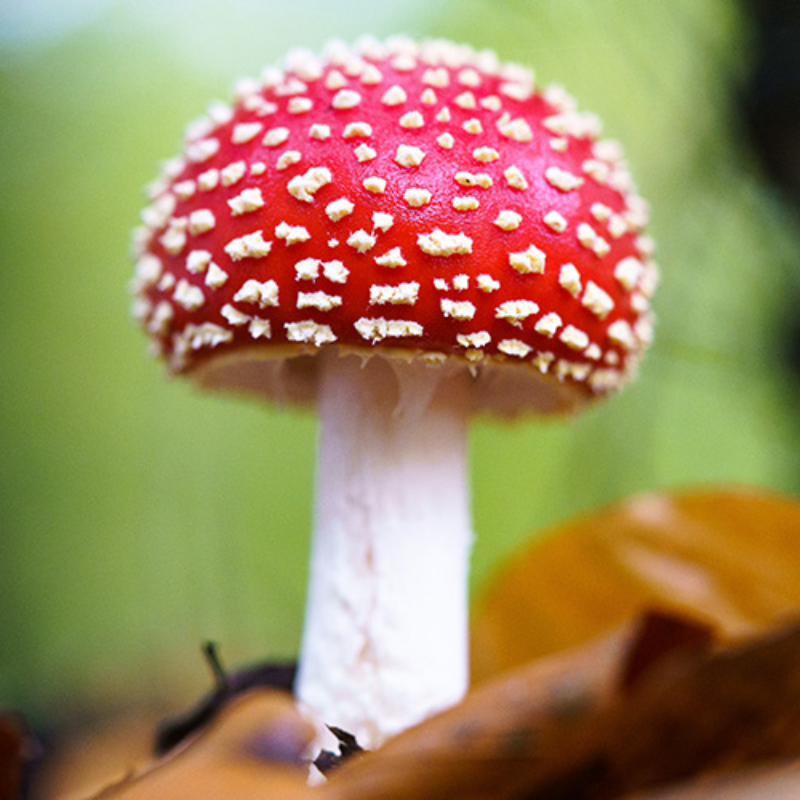
The striking red-and-white Amanita muscaria mushroom — often depicted in fairy tales and folklore — has long fascinated human cultures. While its appearance is iconic, what truly captures scientific interest today is one of its active compounds: muscimol.
Unlike psilocybin, which acts on serotonin receptors, muscimol is unique. It works on a completely different system in the brain — the GABAergic system — making its effects and potential therapeutic applications remarkably distinct.
This research blog explores the chemistry, history, neuroscience, health benefits, risks, and future directions of muscimol.
What Is Muscimol?
Muscimol is an isoxazole compound and the primary psychoactive ingredient in Amanita muscaria (fly agaric) and Amanita pantherina.
- Chemical class: Isoxazole alkaloid
- Mode of action: Potent agonist of the GABAA_AA receptor, mimicking the effects of gamma-aminobutyric acid (GABA), the brain’s main inhibitory neurotransmitter.
- Discovery: Isolated in the 1960s, muscimol was identified as the key compound responsible for Amanita’s psychoactivity.
By binding to GABAA_AA receptors, muscimol produces sedative, hypnotic, and psychoactive effects — more comparable to tranquilizers than classic psychedelics.
Historical and Cultural Use
The use of Amanita muscaria mushrooms dates back centuries:
- Siberian shamans reportedly consumed them in ritual ceremonies, seeking altered states of consciousness.
- In Viking folklore, warriors known as berserkers may have used Amanita to enter frenzied battle states.
- Some researchers even suggest Amanita inspired cultural symbols like the “Santa Claus” myth (red and white clothing, flying reindeer, chimneys).
Though traditional use was widespread, preparation was key — improper processing can lead to unpleasant or dangerous effects.
The Science of Muscimol’s Action
GABA and Brain Function
GABA is the brain’s chief inhibitory neurotransmitter, preventing overstimulation by calming neural circuits. When GABA binds to its receptors, it reduces excitability, promoting relaxation and balance.
Muscimol as a GABAA_AA Agonist
Muscimol directly binds to GABAA_AA receptors, producing strong inhibitory effects. This leads to:
- Sedation and relaxation
- Altered sensory perception
- Dreamlike states or hallucinations
- Reduced anxiety (anxiolysis)
Research Applications
In neuroscience, muscimol is used experimentally to temporarily silence brain regions, allowing scientists to study localized brain function in memory, fear, and decision-making.
Subjective Effects in Humans
Users describe muscimol experiences as different from psilocybin or LSD. Rather than intense visuals, muscimol produces:
- Low doses: Relaxation, enhanced sensory perception, vivid dreams, mild euphoria.
- Moderate doses: Changes in perception of time and space, colorful visions, feelings of floating.
- High doses: Strong sedation, confusion, or delirium; in some cases, powerful hallucinations.
The experience is often described as “dreamlike,” reflecting muscimol’s action on the inhibitory system rather than serotonin pathways.
Potential Therapeutic Benefits
1. Anxiety and Stress Relief
Muscimol’s GABAergic action resembles that of benzodiazepines (like Valium), making it a potential candidate for anxiolytic therapies without the same risk of dependency.
2. Insomnia and Sleep Regulation
Research suggests muscimol may promote sleep by enhancing natural inhibitory signaling in the brain. Unlike caffeine or stimulants, it aligns with circadian rest patterns.
3. Pain Relief
Preclinical studies show muscimol can reduce neuropathic pain, offering non-opioid pain management potential.
4. Neuroprotection
Animal research hints that muscimol could protect neurons against oxidative stress and excitotoxic damage, relevant to diseases like Parkinson’s, Alzheimer’s, and Huntington’s.
5. Epilepsy Research
Because of its anticonvulsant properties, muscimol has been tested experimentally for epilepsy. Early studies showed promise but clinical use has been limited.
Risks and Safety Considerations
While muscimol itself is not highly toxic, its precursor compound ibotenic acid (also found in Amanita) can cause nausea, agitation, and neurotoxicity.
Common Side Effects
- Drowsiness or confusion
- Nausea and stomach upset
- Hallucinations or disorientation
- Loss of motor coordination
Safety Profile
- Low toxicity at moderate doses
- Effects are reversible and usually fade within 6–8 hours
- Fatalities are extremely rare but improper preparation of mushrooms can cause severe poisoning
Interactions
Muscimol should not be combined with alcohol, benzodiazepines, or other CNS depressants, as this may dangerously enhance sedation.
Legal Status
- United States: Muscimol is not federally scheduled, but Amanita muscaria is not approved for dietary use by the FDA.
- Australia: Classified as a Schedule 9 prohibited substance (research only).
- Europe: Legal in some countries, restricted in others.
- Louisiana (USA): Specifically bans Amanita and muscimol products.
The legal status is a gray area, with regulations evolving alongside growing interest in mushroom therapeutics.
Modern Research and Applications
- Neuroscience Tool: Muscimol remains valuable in labs to “turn off” brain regions for study.
- Drug Development: Derivatives like gaboxadol (THIP) were developed as sleep aids, though discontinued due to side effects.
- Nutraceutical Market: Amanita extracts standardized for muscimol are increasingly marketed for wellness, though regulatory oversight is limited.
The Future of Muscimol Research
With rising interest in alternative psychoactives and mushroom-based therapeutics, muscimol is gaining attention as a non-serotonergic compound with unique benefits. Future research may explore:
- Clinical trials for anxiety, sleep disorders, and chronic pain
- Controlled use in psychedelic therapy models
- Agricultural or nutraceutical applications in standardized, lab-tested extracts
The challenge will be balancing therapeutic promise with responsible regulation and safety.
Conclusion
Muscimol is one of the most fascinating natural compounds in neuroscience — bridging folklore, traditional use, and modern research. Its effects are distinct from classic psychedelics, rooted in the GABA system rather than serotonin.
- For scientists, it’s a powerful tool to study brain circuits.
- For clinicians, it represents a potential therapy for anxiety, pain, and sleep issues.
- For culture, it remains a symbol of mystery and altered states.
As research progresses, muscimol could emerge not just as a compound of curiosity, but as a valuable therapeutic molecule in the 21st century.