$15.99
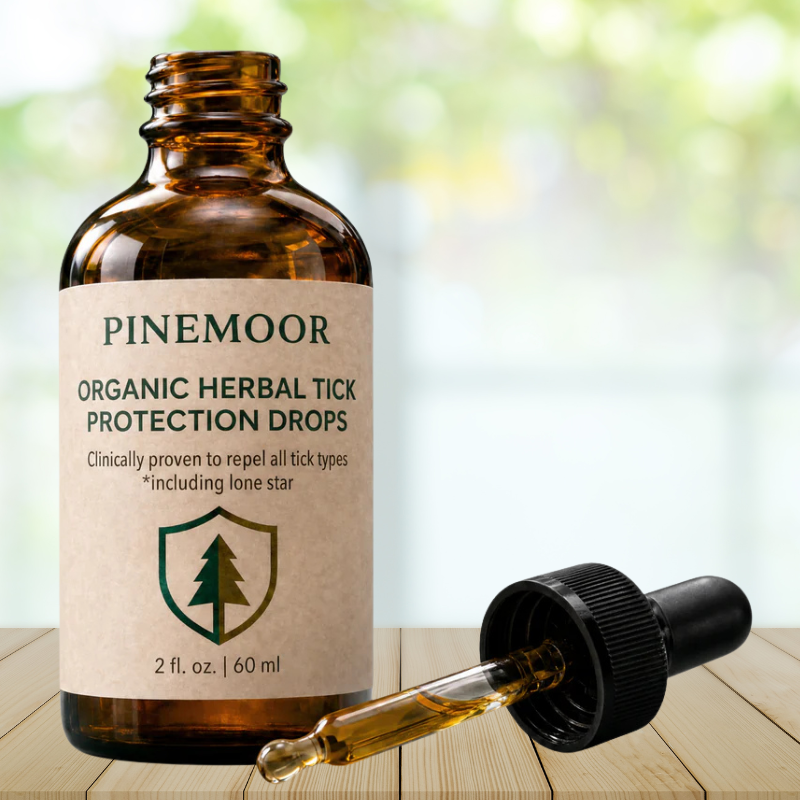
Stay protected and adventure with confidence using Pinemoor Tick Repellent, your ultimate shield against outdoor pests. Designed for hikers, campers, and families, our advanced formula creates a reliable, invisible barrier that keeps ticks away, allowing you to focus entirely on the trail ahead. Unlike greasy alternatives, Pinemoor provides long-lasting, heavy-duty protection that is easy to apply and gentle on your skin. Whether you are exploring dense woods or enjoying your backyard, choose Pinemoor for peace of mind and superior defense. Don’t let unwanted pests ruin your day; gear up with Pinemoor and reclaim the great outdoors with complete security.
Description
This article is for informational purposes only and is not medical advice. Pinemoor Tick Protection Drops are a dietary supplement and are not intended to diagnose, treat, cure, or prevent any disease, including tick-borne illness. They are not a substitute for EPA-registered insect repellents, protective clothing, tick checks, or guidance from a healthcare provider regarding tick bite prevention.
Spending time outdoors — hiking, gardening, camping, or simply enjoying a backyard in tick season — has become something many people approach with more caution than they used to. Tick populations have expanded across large parts of the country, and awareness of tick-borne illness has grown alongside them. Against that backdrop, a wave of interest has emerged around natural, herbal-based approaches that people incorporate into their broader outdoor routine, and Pinemoor Tick Protection Drops is one of the products that has drawn attention in that conversation. Formulated with a blend of traditional herbal extracts — including oregano, garlic, thyme, and Pau D’Arco — the drops are positioned as a daily addition to a wellness routine rather than a stand-alone shield against ticks.
In this article, we’ll take a close look at what Pinemoor is, what’s actually in it, who it may appeal to, and what the current pricing and purchasing options look like. We’ll also address the questions people most commonly search for — whether it’s sold on major retail platforms, whether it’s linked to any regulatory approval, and what its ingredient profile is genuinely capable of versus what it isn’t. Throughout, we’ll keep the distinction clear between traditional herbal use and any suggestion that a supplement alone can prevent tick bites or tick-borne disease. Understanding that distinction is the first step to deciding whether a product like this has a reasonable place in your own outdoor season.
Product Overview
- Formulation: Liquid herbal drops, taken orally, formulated by Pinemoor
- Key Ingredients: Oregano Extract, Carvacrol, Garlic Extract, Thyme, Soursop Root, Pau D’Arco
- Bottle Contents: One bottle of liquid drops, per-bottle serving instructions on label
- Guarantee: Purchase-backed satisfaction guarantee (confirm current terms on the official site)
- Cost: Starting at $15.99 per bottle with multi-bottle bundle pricing (see pricing section below)
What Is Pinemoor Tick Protection Drops?
Pinemoor Tick Protection Drops is a liquid herbal supplement built around a small group of plant extracts that have a long history of traditional use, most notably oregano and its concentrated compound carvacrol, alongside garlic, thyme, soursop root, and Pau D’Arco. The product is taken orally as drops, typically added to water or another beverage, and is marketed as part of a broader outdoor and wellness routine rather than as a topical repellent applied to skin or clothing.
It’s worth being precise about what that means. Pinemoor is a dietary supplement, not an EPA-registered insect repellent, and it does not claim to physically repel ticks the way a spray or treated clothing does. Its appeal is rooted in the tradition of herbal wellness — the idea that certain plant compounds have historically been used to support the body during periods of higher outdoor exposure. Whether that translates to any measurable effect against tick bites specifically is not something current research on these ingredients establishes, and Pinemoor’s own marketing is best understood as speaking to a general wellness routine rather than a proven protective barrier.
For readers evaluating the product, the practical question isn’t “does this replace a repellent,” because it isn’t positioned to. The more useful question is whether a blend of these particular herbal extracts fits into a routine someone already has — one that still includes the tick-prevention basics recommended by public health authorities, such as EPA-registered repellents, permethrin-treated clothing, and thorough tick checks after time outdoors.
Who Is Pinemoor Tick Protection Drops Specifically For?
Pinemoor tends to draw interest from people who are already inclined toward herbal or plant-based wellness products and who spend meaningful time outdoors — hikers, gardeners, campers, hunters, and people who live in wooded or high-grass areas where tick exposure is part of daily life for much of the year. These are often people who already use conventional repellents and protective clothing and are looking for an additional, complementary piece to add to that routine, not a replacement for it.
It also appeals to people who prefer to avoid synthetic chemical exposure where they reasonably can, and who are comfortable evaluating a supplement on the basis of its ingredient tradition rather than a guarantee of a specific outcome. Because the product does not make — and should not be sold on — a promise that it prevents tick bites or tick-borne illness, it’s best suited to someone who understands they are adding an herbal wellness product to their routine, not substituting it for the protective steps that public health guidance actually recommends.
People who are not a good fit include anyone looking for a single-product solution to tick exposure, anyone with a diagnosed tick-borne illness who needs medical treatment rather than a wellness supplement, and anyone who is pregnant, nursing, on medication, or managing a health condition — all of whom should speak with a healthcare provider before adding any new herbal supplement to their routine.
Does Pinemoor Tick Protection Drops Work?
This is the question most readers actually want answered, and the honest answer requires separating two different claims. The first is whether the individual ingredients in Pinemoor — oregano, carvacrol, garlic, thyme, soursop root, and Pau D’Arco — have any documented biological activity at all. Several of them do have a body of laboratory research behind them, largely around antimicrobial and antioxidant properties studied in controlled settings. The second, separate question is whether taking these ingredients as an oral supplement has been shown to repel ticks or prevent tick-borne disease in real-world use. That second claim is not supported by current published research, and no supplement — herbal or otherwise — should be marketed or understood as a proven substitute for EPA-registered repellents and standard tick-prevention practices.
With that distinction in place, what Pinemoor can reasonably be evaluated on is its role as a wellness-oriented addition to an existing outdoor routine, built on ingredients with a long history of traditional herbal use. Some people who prefer plant-based products may find value in that framing on its own terms, separate from any specific protective claim. If your goal is prevention of tick bites and tick-borne illness specifically, the evidence-based tools remain EPA-registered repellents, permethrin-treated clothing and gear, and prompt tick checks — with a supplement like Pinemoor considered, if at all, as a complementary addition rather than a stand-in for those measures.
Pinemoor Real Customer Feedback
The following reflects common themes reported by users in publicly available feedback and is presented as illustrative rather than verbatim, attributed quotations.
Recurring themes in user feedback center on ease of use — drops are simple to add to a morning drink — and a general sense of fitting well into an existing outdoor or wellness routine. Some users mention appreciating that the ingredient list is short and recognizable. Others note they continue to use conventional repellents alongside the drops and view Pinemoor as one additional layer in a broader routine rather than their primary line of defense. As with any supplement, individual experiences vary, and no specific outcome regarding tick bite prevention should be expected or assumed.
What Are the Ingredients in Pinemoor Tick Protection Drops?
Oregano Extract
Oregano has a long culinary and traditional-use history, and modern research has focused largely on its concentrated compound, carvacrol, which is discussed separately below. On its own, oregano extract is valued in herbal formulations for its aromatic oil content and its long-standing place in Mediterranean traditional wellness practices. It’s a common anchor ingredient in herbal blends aimed at general outdoor-season wellness, though it is not established as a tick repellent or preventive for tick-borne illness when taken as an oral supplement.
Carvacrol
Carvacrol is the primary active compound found in oregano oil and has been the subject of laboratory research examining its antimicrobial and antioxidant properties in controlled, in-vitro settings. That body of research is preliminary and conducted outside the context of human tick exposure, so it should not be read as evidence that carvacrol supplementation prevents tick bites or tick-borne disease. Its inclusion in Pinemoor reflects the broader herbal-wellness rationale behind the formula rather than a specific, proven protective mechanism.
Garlic Extract
Garlic is one of the most studied culinary herbs in general wellness research, with a long history of traditional use across cultures. Some anecdotal and folk traditions associate garlic consumption with reduced insect attraction, though rigorous, real-world evidence specific to ticks is limited. In Pinemoor’s formulation, garlic extract functions as part of the broader herbal blend rather than as a standalone, clinically established repellent.
Thyme
Thyme is another herb with deep roots in traditional wellness practices, often included in herbal blends for its aromatic oil profile. As with the other ingredients here, its role in Pinemoor reflects traditional herbal formulation practice rather than a specific claim about tick prevention, and any wellness benefit should be understood in that general, traditional-use context.
Soursop Root
Soursop root is less commonly discussed than the other ingredients in this blend but appears in some traditional herbal formulations valued for general wellness support. As with the rest of the formula, its inclusion should be understood as part of a broader herbal-wellness approach rather than a claim tied specifically to tick exposure.
Pau D’Arco
Pau D’Arco is derived from the inner bark of a tree native to South America and has a history of use in traditional herbal wellness practices. It’s a common addition to herbal blends focused on general immune and wellness support. Its presence in Pinemoor follows that same traditional rationale rather than any tick-specific claim.
Pinemoor Science
The ingredients in Pinemoor draw from a body of laboratory and traditional-use research that is broader than it is deep when it comes to any single, specific outcome. Compounds like carvacrol and allicin (found in garlic) have documented antimicrobial and antioxidant activity in laboratory studies, and thyme, Pau D’Arco, and soursop root each carry histories of traditional herbal use across different cultures. What this body of research does not include is controlled, real-world study of oral herbal supplementation preventing tick bites or tick-borne illness in humans. Readers should treat the ingredient-level research as background on the individual compounds’ general properties, not as evidence supporting a specific tick-protection outcome for the finished product. That distinction matters both for setting realistic expectations and for understanding why supplements in this category are marketed as wellness support rather than as EPA-registered protective products.
Pinemoor Benefits
Framed accurately, the benefits associated with Pinemoor are best understood as general wellness benefits tied to its herbal ingredient profile, rather than a specific tick-protection outcome. Users who are drawn to plant-based products may value the simplicity of adding a short list of recognizable herbal extracts to a daily routine, particularly during a season when they’re already spending more time outdoors. The format — oral drops rather than a topical application — also appeals to people who prefer not to apply additional products directly to skin, and who are looking for something that fits alongside, rather than replaces, the repellents and protective clothing they already use. As with any herbal supplement, the practical benefit is best evaluated on the basis of how it fits an individual’s existing wellness routine rather than as a guarantee of a specific protective result against ticks or tick-borne disease.
Pinemoor: Pros and Cons
Pros:
- Short, recognizable ingredient list built around herbs with long traditional-use histories
- Oral drop format that doesn’t require topical application
- Simple to incorporate into an existing morning routine
- Multi-bottle bundle pricing available for ongoing use
Cons:
- Not an EPA-registered repellent and not a substitute for one
- No controlled, real-world research establishing that oral supplementation prevents tick bites or tick-borne illness
- Not available through major retail platforms, which limits purchasing options
- As with any supplement, individual response can vary and is not guaranteed
What Is the Price of Pinemoor Tick Protection Drops?
Pinemoor is currently offered directly through the official site in single-bottle and multi-bottle bundle formats, with per-bottle pricing decreasing as bundle size increases:
- Single Bottle: $34.99/bottle (listed at $44.99) — 1 bottle, savings of $10, free shipping
- Buy 2 Get 1 Free (3 Bottles): $15.99/bottle (listed at $29.99) — savings of $50, free express shipping plus a listed $39 mystery gift
- Family Bundle, Buy 3 Get 3 Free (6 Bottles): $10.99/bottle (listed at $19.99) — savings of $70
Pricing and promotional offers are subject to change at any time. Always confirm current pricing, bundle availability, and shipping terms on the official website before purchasing.
Usage
Pinemoor is designed to be taken orally as drops, typically mixed into water or another beverage, following the serving instructions printed on the product label. As with any herbal supplement, consistency matters more than any single dose — most herbal wellness routines are built around daily use over time rather than occasional, as-needed application. It’s worth noting again that Pinemoor is not applied topically and is not designed to create a physical barrier against ticks the way a spray or treated clothing does; its role, per its own labeling, is as a general wellness addition rather than a direct-contact repellent. Anyone who is pregnant, nursing, taking medication, or managing a health condition should check with a healthcare provider before starting any new herbal supplement, and the product label’s specific serving guidance should always take precedence over any general description here.
More Pinemoor User Feedback
Illustrative themes from publicly available feedback, not verbatim attributed quotes.
Additional feedback themes touch on the taste and ease of mixing the drops into a morning drink, with some users noting they appreciate not having to remember a topical application. Others describe using Pinemoor seasonally, during the months they’re most active outdoors, alongside their usual repellent and protective-clothing routine. A smaller number of users mention being drawn to the product specifically because of its traditional-herb ingredient list. Across all feedback, individual results and experiences vary, and no specific protective outcome should be assumed.
Are There Side Effects to Pinemoor Tick Protection Drops?
As with any herbal supplement, Pinemoor’s ingredients carry the general considerations associated with their categories. Garlic and oregano-derived compounds are generally well-tolerated in typical culinary and supplemental amounts but can, in some individuals, cause mild digestive discomfort, and garlic in particular can interact with certain blood-thinning medications — a consideration anyone on such medication should discuss with their doctor before use. People with known allergies to any of the listed botanicals (oregano, garlic, thyme, soursop, or Pau D’Arco) should avoid the product or consult a healthcare provider first. Pregnant or nursing individuals should also check with a healthcare provider before adding any new herbal supplement to their routine, since safety data specific to pregnancy and lactation is limited for several of these ingredients.
More broadly, the FDA does not review dietary supplements for safety and efficacy before they reach the market the way it does prescription medications, so quality and consistency can vary between manufacturers. Reading the full label, checking with a healthcare provider about any existing conditions or medications, and starting with the labeled serving size are reasonable precautions with any new herbal product, Pinemoor included.
Who Makes Pinemoor Tick Protection Drops?
Pinemoor Tick Protection Drops is formulated and sold directly through the official Pinemoor website. As with most direct-to-consumer herbal supplement brands, the company controls manufacturing, quality assurance, and distribution end-to-end rather than relying on third-party retail channels. That direct model is common across the herbal wellness category and allows a brand to manage storage and handling conditions more tightly, though it also means purchasing options are limited to the official site rather than familiar third-party retailers. Readers looking for specifics on manufacturing practices, facility certifications, or sourcing details should reach out to Pinemoor directly through their official site, as that information is best confirmed at the source rather than assumed.
Does Pinemoor Really Work? Supplements Work Best Alongside Diet and Lifestyle
One of the most consistent findings across herbal and nutritional supplement research generally — not specific to Pinemoor — is that supplements tend to perform best as one piece of a broader, healthy routine rather than as a stand-alone solution. This holds true whether the goal is general wellness, immune support, or, in this case, an outdoor-season routine that also includes proven tick-prevention practices. A supplement can be a reasonable complementary addition, but it works within the context of everything else a person is doing, not in isolation from it.
For someone specifically concerned about tick exposure, that broader routine should still center on the practices with actual evidence behind them: using an EPA-registered repellent, wearing permethrin-treated clothing when spending extended time in tick habitat, staying on cleared trails, and performing a thorough tick check on yourself, your clothing, and any pets after being outdoors. Diet and overall wellness — adequate hydration, sleep, and a generally nutrient-dense diet — support the body’s baseline resilience, but they are not a substitute for those specific, evidence-based prevention steps.
Where a product like Pinemoor may reasonably fit is as an additional, low-effort habit layered on top of that foundation — something some people find aligns with a broader preference for plant-based, traditional wellness products. It should not be understood as replacing any of the steps above, and anyone in a high-tick-exposure area or with specific health concerns about tick-borne illness should prioritize the evidence-based prevention measures first and treat a supplement like Pinemoor as, at most, a complementary addition to that routine.
Is Pinemoor a Scam?
“Scam” is a strong word, and it’s worth being precise about what it would actually mean here. Pinemoor is a legitimate, purchasable herbal supplement with a disclosed ingredient list, direct-to-consumer fulfillment, and a stated satisfaction guarantee — none of which are hallmarks of a scam operation. Where scrutiny is genuinely warranted is in how any product like this is marketed: if a company claims a supplement prevents tick bites or tick-borne disease outright, that would be an overstated, unsubstantiated claim worth pushing back on regardless of the brand.
Based on publicly available information, Pinemoor’s positioning centers on traditional herbal ingredients as part of a general wellness routine, rather than a guaranteed protective outcome — which is the appropriate way to frame a supplement in this category. Buyers evaluating any product like this should look at the actual ingredient list, check the return/guarantee policy directly on the official site before purchasing, and treat any claim of guaranteed tick prevention, from any brand, with healthy skepticism.
Is Pinemoor FDA Approved?
No dietary supplement, including Pinemoor, is “FDA approved” in the way a prescription drug is, because the FDA does not approve supplements before they go to market. Under the Dietary Supplement Health and Education Act (DSHEA), supplement manufacturers are responsible for ensuring their products are safe and that any claims made about them are truthful and not misleading, but the FDA does not evaluate or approve individual supplement formulations for efficacy the way it does with drugs. Manufacturing facilities for dietary supplements are generally expected to follow current Good Manufacturing Practice (cGMP) regulations, which govern quality and consistency, but that is a manufacturing standard, not a marker of FDA approval of the product’s claims. Readers should treat any product description using the phrase “FDA approved” for a supplement with skepticism, as it’s not an accurate characterization of how supplements are regulated.
Where to Buy Pinemoor Tick Protection Drops
Pinemoor Tick Protection Drops is currently sold exclusively through its official website, with single-bottle and multi-bottle bundle options available directly from the manufacturer. Buying direct is generally the most reliable way to confirm you’re getting current formulation, freshness, and accurate pricing, since the company controls the entire fulfillment process rather than relying on third-party sellers. Before purchasing, it’s worth reviewing the current bundle pricing, shipping terms, and guarantee policy directly on the official site, as promotional offers and terms can change.
Is Pinemoor Really on Amazon, eBay, and Walmart?
Is Pinemoor Tick Protection Drops Available on Amazon?
Pinemoor is not currently sold on Amazon or through Amazon-affiliated sellers. The company sells exclusively through its own website at this time, which allows it to control storage, handling, and fulfillment directly rather than relying on third-party marketplace logistics.
Can You Find Pinemoor on eBay?
Pinemoor is not listed for sale on eBay or through eBay-affiliated storefronts. As with other third-party platforms, the brand’s current distribution model is direct-to-consumer only, which helps reduce the risk of counterfeit or mishandled products reaching buyers.
Does Walmart Carry Pinemoor?
Pinemoor is not currently available in Walmart stores or on Walmart.com. The product is sold only through the official Pinemoor website at this time, which the brand cites as its preferred way to maintain consistent quality and freshness.
Conclusion
Pinemoor Tick Protection Drops is best understood as an herbal wellness supplement built around a short list of traditional botanicals — oregano, carvacrol, garlic, thyme, soursop root, and Pau D’Arco — offered in an easy-to-use oral drop format. It is not an EPA-registered repellent, and there is no controlled, real-world research showing that oral supplementation prevents tick bites or tick-borne illness. For someone who already follows evidence-based tick-prevention practices and is interested in adding a plant-based wellness product to their routine, Pinemoor may be worth evaluating on those terms. For anyone specifically seeking protection against tick bites or tick-borne disease, the priority should remain EPA-registered repellents, protective clothing, and thorough tick checks, with a supplement like this considered — if at all — as a complementary addition rather than a primary defense. As with any new supplement, checking with a healthcare provider first is a reasonable step, particularly for anyone pregnant, nursing, on medication, or managing an existing health condition.
Pinemoor Tick Protection Drops FAQs
Does Pinemoor prevent tick bites?
No. Pinemoor is a dietary supplement, not an EPA-registered repellent, and it is not intended to prevent tick bites or tick-borne illness.
What are the main ingredients in Pinemoor?
Oregano extract, carvacrol, garlic extract, thyme, soursop root, and Pau D’Arco.
How do you take Pinemoor?
The drops are taken orally, typically mixed into water or another beverage, following the serving size on the product label.
Is Pinemoor FDA approved?
No dietary supplement is “FDA approved” in the way prescription drugs are; the FDA does not pre-approve supplement formulations.
Can I buy Pinemoor on Amazon, eBay, or Walmart?
No. It’s currently sold exclusively through the official Pinemoor website.
Are there side effects?
Some people may experience mild digestive discomfort from garlic or oregano-derived ingredients, and those on blood-thinning medication or with botanical allergies should consult a doctor first.
Is Pinemoor safe during pregnancy?
Pregnant or nursing individuals should consult a healthcare provider before taking Pinemoor or any new herbal supplement.
How much does Pinemoor cost?
Pricing starts at $10.99 per bottle in the 6-bottle family bundle, with single-bottle and 3-bottle options also available. Confirm current pricing on the official site.
Is there a guarantee?
Pinemoor is sold with a satisfaction guarantee; confirm the current terms directly on the official website before purchasing.
Should I stop using my regular tick repellent if I take Pinemoor?
No. Pinemoor is not a substitute for EPA-registered repellents, protective clothing, or tick checks, which remain the recommended methods for tick bite prevention.
Where can I learn more or purchase Pinemoor?
Visit the official Pinemoor website for current ingredient information, pricing, and bundle options.