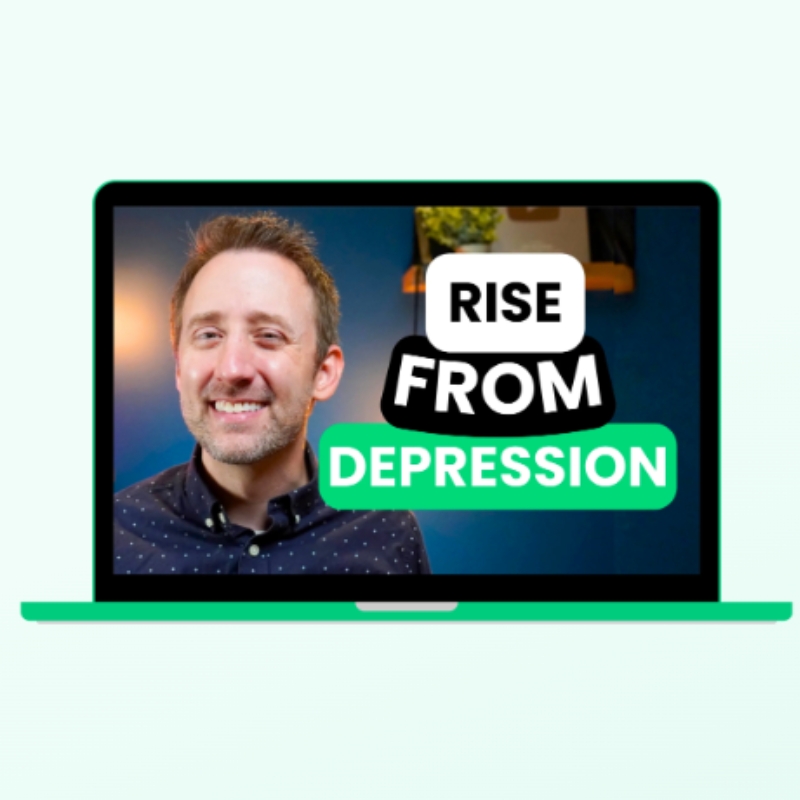
$47.00
Rise From Depression is a structured, self-paced online course designed to help you better understand and manage patterns commonly associated with depression using evidence-based techniques like CBT, behavioral activation, and mindfulness. Created by a licensed clinical social worker, the program includes 13 guided video lessons, practical worksheets, and lifetime access so you can learn at your own pace. It’s ideal for those seeking affordable, flexible support and actionable tools to build healthier routines and thinking habits. While not a substitute for professional care, it offers a clear, step-by-step framework to help you take meaningful, consistent steps forward.
Description
Depression is often described in simple terms – low mood, lack of energy, or loss of motivation. But for many people, the experience runs deeper and more complex than those surface-level descriptions suggest. It can affect how you think, how you feel, how you act, and even how you perceive your future.
In recent years, online mental health resources have expanded rapidly, offering more accessible options for individuals who may not be able to access traditional therapy. One such program is Rise From Depression, an online course developed by licensed clinical social worker Nathan Peterson, LCSW.
This article provides a detailed, objective overview of the course, including its structure, approach, and intended use – while maintaining a clear distinction between educational tools and clinical treatment.
Understanding Depression: Why Structured Support Matters
Depression is not simply a matter of “thinking positively” or “trying harder.” It often involves patterns that reinforce themselves over time:
- Negative thought loops
- Reduced activity and withdrawal
- Low motivation and energy
- Emotional numbness or overwhelm
These patterns can create a cycle that becomes increasingly difficult to break without structured intervention.
Traditional therapy – particularly cognitive behavioral therapy (CBT) – has been widely studied and is commonly used by licensed professionals. However, access to therapy can be limited by:
- Cost
- Availability of providers
- Geographic barriers
- Scheduling constraints
This gap has led to the rise of structured self-guided programs designed to introduce evidence-based techniques in a more accessible format.
What Is “Rise From Depression”?
Rise From Depression is a self-paced online course that introduces tools commonly used in therapeutic settings, including:
- Cognitive Behavioral Therapy (CBT)
- Behavioral activation
- Mindfulness practices
- Self-compassion techniques
The course is designed as an educational program, not a clinical service. It aims to help users better understand patterns associated with depression and explore structured strategies for managing them.
Key Features
- 13 structured video lessons
- 8 worksheets plus a bonus journaling guide
- Lifetime access
- Self-paced format
- Accessible on multiple devices
The program is positioned as a structured learning experience rather than a replacement for individualized therapy.
About the Instructor: Nathan Peterson, LCSW
The course is developed by Nathan Peterson, a licensed clinical social worker (LCSW) with over 13 years of clinical experience.
According to the course information, his background includes:
- Private clinical practice
- Experience treating depression, OCD, and anxiety
- Educational content with millions of online views
- Published work in mental health
It is important to note that while the course is created by a licensed professional, it does not establish a therapist-client relationship.
Core Approach: Evidence-Based Frameworks
The course draws from several widely recognized psychological frameworks. These approaches are commonly used in therapy but are presented here in a structured, self-guided format.
1. Cognitive Behavioral Therapy (CBT)
CBT focuses on identifying and modifying unhelpful thinking patterns.
Within the course, this includes:
- Recognizing cognitive distortions
- Understanding thought-emotion relationships
- Practicing structured thought challenges
Rather than presenting abstract theory, the course aims to translate these concepts into practical exercises.
2. Behavioral Activation
Behavioral activation is based on the idea that actions can influence mood, even when motivation is low.
Key principles include:
- Starting with small, manageable actions
- Building momentum gradually
- Reintroducing meaningful activities
This approach is particularly relevant because depression often reduces activity levels, which can further reinforce low mood.
3. Mindfulness and Present Awareness
Mindfulness techniques focus on:
- Observing thoughts without judgment
- Reducing over-identification with negative thinking
- Anchoring attention in the present moment
The course incorporates mindfulness as a complementary tool rather than a standalone solution.
4. Self-Compassion
Self-criticism is a common feature of depression. The program introduces structured ways to:
- Recognize harsh internal dialogue
- Replace it with more balanced perspectives
- Practice emotional acceptance
Course Structure: What You Learn
The program is divided into 13 lessons, each focusing on a different aspect of understanding and managing depression.
Lesson Topics Include:
- Understanding depression
- The cycle of depression
- Medication considerations (educational overview)
- Awareness training
- Physical health and its role
- Challenging negative thoughts
- Behavioral activation
- Radical acceptance
- Self-compassion
- Assertiveness skills
- Gratitude practices
- Mindfulness techniques
- Building a long-term roadmap
Each lesson is paired with worksheets designed to reinforce learning.
Worksheets and Practical Tools
The course includes structured worksheets such as:
- Mood tracking tools
- Thought-challenging exercises
- Behavioral planning sheets
- Habit tracking systems
- Mindfulness guides
- Daily gratitude planners
These tools are intended to help translate theory into consistent action.
Who This Course Is Designed For
According to the course description, Rise From Depression may be suitable for individuals who:
- Want structured, educational tools
- Are unable to access therapy currently
- Prefer self-paced learning
- Are willing to actively engage with exercises
Who It May Not Be Suitable For
The program explicitly states it is not intended for:
- Individuals in crisis
- Those requiring immediate clinical intervention
- People seeking a passive or quick solution
This distinction is important for compliance and safety.
Accessibility and Cost Considerations
One of the primary positioning points of the course is accessibility.
Compared to Traditional Therapy
While therapy costs vary, sessions can range significantly depending on location and provider. The course is offered as a one-time payment with lifetime access, which may make it more accessible for some users.
However, it is essential to understand:
- Therapy provides personalized care
- This course provides general education and tools
They serve different roles.
Self-Guided Learning: Benefits and Limitations
Potential Benefits
- Flexibility in pacing
- Lower cost barrier
- Ability to revisit material
- Structured introduction to therapeutic concepts
Potential Limitations
- No personalized guidance
- Requires self-motivation
- Not suitable for severe cases
- No real-time clinical support
The Role of Motivation (and Why It’s Not First)
A key concept emphasized in the course is that motivation often follows action – not the other way around.
This aligns with behavioral activation theory, which suggests:
- Waiting for motivation may prolong inactivity
- Small actions can gradually improve engagement
Testimonials and User Experiences
The course includes testimonials from users who report positive experiences with:
- Understanding their condition
- Building routines
- Applying structured tools
However, it is important to emphasize:
Individual results vary. Testimonials do not guarantee similar outcomes.
Online Mental Health Education: A Growing Trend
Programs like Rise From Depression reflect a broader trend toward:
- Digital mental health tools
- Self-guided learning platforms
- Increased accessibility to psychological education
This shift does not replace traditional care but may complement it in certain situations.
Important Safety and Medical Disclaimer
This course is an educational program and does not provide medical advice, diagnosis, or treatment.
If you are experiencing severe depression or are in crisis, it is important to seek immediate help from:
- Licensed healthcare providers
- Emergency services
- Local crisis hotlines
Final Perspective: Where This Course Fits
Rise From Depression appears to be positioned as:
- A structured educational resource
- A self-guided introduction to evidence-based techniques
- A supplementary tool – not a clinical replacement
For individuals seeking to better understand their mental health and explore structured strategies, it may provide a starting point.
For those needing personalized care, working with a licensed professional remains the recommended path.
Common Questions (SEO FAQ Section)
Is an online depression course effective?
Some individuals may benefit from structured learning and tools, particularly when they actively engage with the material. However, results vary and it is not a substitute for professional care.
Can I use this instead of therapy?
No. This course is designed as an educational resource and may complement therapy, but it does not replace working with a licensed provider.
How long does it take to complete?
The course is self-paced, allowing users to progress at their own speed.
What makes CBT useful for depression?
CBT focuses on identifying and modifying thought patterns that may contribute to emotional distress. It is commonly used by mental health professionals.
Bottom Line
Rise From Depression offers a structured, self-paced introduction to tools commonly used in therapy, including CBT and behavioral activation. Its accessibility and lifetime access may appeal to individuals looking for flexible learning options.
However, like all self-guided programs, its effectiveness depends on individual engagement and circumstances – and it should not be considered a substitute for professional care.
Related products
-
Sale!

Whyff Rebal Herbal Inhaler
Original price was: $14.99.$11.99Current price is: $11.99. Buy From The Official Website -

RegenLabs InstaZen
$53.99 Buy From The Official Website -

Rad Roller Centre Massage Ball
$35.00 Buy From This Official Website -
Sale!
Anxiovita
Original price was: $79.00.$59.00Current price is: $59.00. Buy From The Official Website