Original price was: $59.00.$39.00Current price is: $39.00.
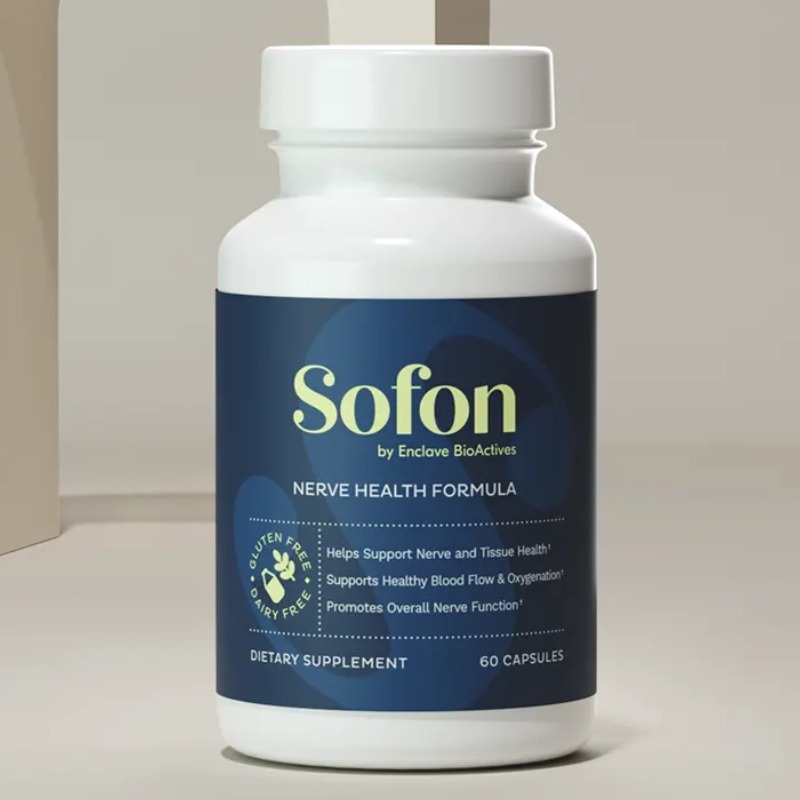
Sofon is a thoughtfully formulated nerve support supplement designed for adults seeking everyday comfort, mobility, and wellness support. Featuring a blend of ingredients such as green-lipped mussel, bromelain, MSM, alpha-lipoic acid, CoQ10, and vitamin B12, Sofon is crafted to help support healthy nerve function, circulation, and tissue health. It is a convenient option for those looking to complement an active lifestyle with targeted nutritional support. Customers may choose Sofon for its multi-ingredient formula, easy daily use, and focus on whole-body wellness. As with any supplement, results vary, and professional medical guidance is recommended for personalized care decisions.
Description
Sofon is positioned as a natural wellness supplement for people looking for broader support around nerve comfort, circulation, tissue resilience, and day-to-day mobility. On its official sales page, the product is marketed as an all-natural formula intended for adults dealing with tingling, sensitivity, numbness, or general nerve-related discomfort, with a messaging focus on circulation, oxygenation, and “nerve health at the source.” Meridian Medical Centre’s approach to products like this is more measured: while certain ingredients in nerve-support supplements have been studied for roles in antioxidant defense, metabolic health, inflammation balance, and normal nervous-system function, that does not automatically mean any supplement will diagnose, treat, or reverse an underlying medical condition. Consumers should read these products as supportive wellness options, not substitutes for medical evaluation, especially when symptoms are persistent, worsening, or associated with diabetes, spinal issues, medication side effects, or unexplained numbness.
What makes Sofon notable from a consumer-research standpoint is that the official page names several familiar supplement ingredients often associated with nerve or inflammatory support, including green-lipped mussel, bromelain, MSM, alpha-lipoic acid, CoQ10, and vitamin B12. The page also promotes bundle pricing, direct-to-consumer purchasing, and a guarantee, although the accessible page text does not clearly show the exact guarantee length and consumers should verify those details on the official checkout page before ordering. In practical terms, Sofon appears to be marketed less as a general multivitamin and more as a niche supplement aimed at people who want a wellness-oriented formula that may complement professional care, lifestyle changes, movement, and nutrition. For readers trying to make an informed decision, the best question is not “Is this a miracle?” but “Do the ingredients have a plausible rationale, is the marketing responsible, and is this appropriate for my situation?” That is the lens used throughout this review.
Product Overview
Formulation: Natural nerve-health support supplement marketed for circulation, tissue support, and nerve comfort
Key Ingredients: Green-lipped mussel, bromelain, MSM, alpha-lipoic acid, CoQ10, vitamin B12
Bottle Contents: 30-day supply per bottle, based on the official pricing bundles
Guarantee: A guarantee is referenced on the official sales page, but the exact terms should be confirmed on the official website before purchase
Cost: Starts at $59 for one bottle, with lower per-bottle pricing on 3-bottle and 6-bottle bundles
What is Sofon?
Sofon is a dietary supplement sold through the Nerve Discovery sales funnel and promoted as a nerve-health formula for adults who want support for occasional tingling, sensitivity, numbness, circulation-related discomfort, and general mobility concerns. The official page frames the product around three central ideas: supporting nerve and tissue health, increasing blood flow and oxygenation, and strengthening nerve performance. Those are classic structure/function-style themes in the supplement category, and they are materially different from drug-style claims. In plain language, Sofon is being presented as a wellness product designed to support normal physiological processes tied to nerve function and comfort rather than as a clinically proven treatment for a diagnosed disease. That distinction matters. Under U.S. rules, dietary supplements are not approved by the FDA the way prescription drugs are, and marketers must avoid disease-treatment claims unless they have gone through drug approval pathways.
From an ingredient-positioning standpoint, Sofon appears to combine marine lipids, antioxidant support, enzyme-based inflammation support, and basic nerve-nutrient support. That makes it a fairly typical “multi-mechanism” supplement in the pain-and-mobility space. The pitch is that nerve wellness is influenced not only by nerves themselves but also by circulation, oxidative stress, inflammatory balance, tissue nutrition, and recovery environment. There is a reasonable scientific basis for discussing those pathways in general. At the same time, the official copy goes much further than the evidence comfortably supports in several places, especially where it implies direct nerve regeneration, fast pain relief, or broad effectiveness across multiple serious conditions. A compliant rewrite should keep the mechanistic discussion while softening the certainty. A more defensible phrasing is that Sofon is marketed to support healthy nerve function, antioxidant balance, and circulation, and that some of its individual ingredients have been studied in related contexts.
Consumers should also understand what this product is not. It is not a replacement for neurological workup, diabetes management, vascular care, spinal assessment, or medication review. Numbness, burning, or shooting pain can be associated with many causes, some minor and some serious. A supplement may fit into a broader wellness plan, but it should not delay diagnosis. That is especially important for older adults, people with diabetes, those taking multiple medications, and anyone with rapidly progressing symptoms.
Who is Sofon specifically for?
Sofon appears to be aimed at adults who are actively searching for a natural wellness option after becoming frustrated with general discomfort, reduced mobility, tingling sensations, or the feeling that their recovery and resilience are not what they used to be. Based on the official page, the ideal buyer is likely someone who wants a non-prescription supplement and is attracted to the idea of supporting circulation, tissue comfort, and everyday nerve function through nutrition-oriented ingredients. The page also speaks directly to people who notice discomfort during walking, sitting for long periods, travel, sleep, or post-exercise recovery. That places the product squarely in the consumer wellness market for aging-related comfort concerns, physical wear-and-tear complaints, and people who prefer supplement-based support alongside conventional care.
A more evidence-based way to describe the target user is this: Sofon may appeal to adults interested in a supplement that combines antioxidant nutrients, vitamin support, and inflammation-related ingredients in one formula. It may be especially interesting to readers already familiar with alpha-lipoic acid, vitamin B12, or CoQ10, since those ingredients are often discussed in the broader nerve-health conversation. It may also appeal to people looking for a product that fits into a larger wellness routine involving movement, blood-sugar awareness, posture, sleep quality, and anti-inflammatory eating patterns. That does not mean every person with nerve symptoms is an appropriate user. Individuals with shellfish allergies should be cautious because green-lipped mussel is a marine ingredient. People on anticoagulants or other medications should also speak to a clinician or pharmacist first, because bromelain and multi-ingredient supplements can raise interaction questions depending on the rest of the formula and the user’s health profile.
In short, Sofon is best framed for readers seeking a supportive wellness supplement, not a stand-alone answer to a medical diagnosis. It is more suitable for the informed consumer who understands that supplements work best when expectations are realistic, labels are checked carefully, and medical symptoms are not self-managed indefinitely without professional input. That framing fits Meridian Medical Centre’s evidence-based, ethical tone much better than aggressive cure-style marketing.
Does Sofon Work?
The fairest answer is that Sofon has a plausible ingredient strategy, but the accessible public materials do not provide high-quality clinical trial evidence proving that the finished Sofon formula itself works as broadly as the marketing suggests. That distinction is critical. A supplement can contain ingredients with supportive research while still lacking direct product-level evidence. Sofon’s official sales page leans heavily on mechanisms like circulation support, antioxidant defense, and nerve-growth-factor support. Those ideas may sound compelling, but consumers should separate marketing extrapolation from demonstrated outcomes. There is some scientific literature around alpha-lipoic acid in peripheral neuropathy contexts, some evidence that vitamin B12 is essential for healthy nerve function, and broader research suggesting CoQ10, bromelain, MSM, and green-lipped mussel may support inflammation balance or oxidative-stress pathways. But that is not the same thing as saying Sofon itself is proven to reverse nerve damage or reliably resolve pain.
A reasonable consumer takeaway is that Sofon may be more credible than a generic “miracle” product because its ingredient list includes compounds that at least connect to recognized physiological pathways. For example, vitamin B12 is well established as important for nerve health, and alpha-lipoic acid has been studied for neuropathy-related symptoms, particularly in metabolic contexts. That gives the formula a stronger foundation than supplements built around vague proprietary buzzwords. Even so, results with multi-ingredient supplements are inherently variable. Baseline nutrition status, underlying cause of symptoms, dosage, adherence, time frame, comorbidities, and concurrent care all matter. A product like this is much more likely to be experienced as a gradual support tool than as a fast, universal fix.
So, does Sofon work? It may offer useful support for some consumers as part of a broader health strategy, but the public evidence currently supports a cautious, qualified yes-maybe, not an absolute promise. The strongest compliant position is that Sofon may help support healthy nerve function, circulation, and day-to-day comfort in some users, while individual results will vary and medical evaluation remains essential when symptoms are ongoing or severe.
Sofon Real Customer Reviews and Testimonials
The official page includes several enthusiastic customer testimonials describing improvements in burning, tingling, walking comfort, travel tolerance, typing comfort, and sleep. That kind of feedback can be useful for understanding how the product is being perceived by buyers, but it should not be treated as independent clinical proof. Reviews shown on a brand-controlled sales page are best read as marketing testimonials, not as peer-reviewed evidence. Consumers should pay attention to the tone as well: when reviews sound highly dramatic or unusually uniform, they may be better viewed as anecdotal examples of user experience rather than a reliable predictor of what most people will experience.
A balanced article can still mention that some users report improved day-to-day comfort and mobility, while clearly stating that testimonials are subjective, not verified medical outcomes, and should never replace medical advice or a clinician’s assessment. That keeps the section trustworthy and legally safer.
What are the ingredients in Sofon?
Green-Lipped Mussel
Green-lipped mussel is a marine-derived ingredient sourced from New Zealand and often discussed for its unique fatty acid profile. The Sofon page highlights it as containing “91 essential fatty acids,” using it as the centerpiece of the product’s tissue and nerve-support story. The ingredient has been studied more often in inflammatory and joint-comfort settings than in direct nerve-regeneration research, so the compliant angle is to say it may support a healthier inflammatory environment and overall tissue comfort rather than claiming it repairs nerves. People with shellfish allergies should use added caution.
Bromelain
Bromelain is an enzyme complex derived from pineapple. It is commonly discussed in the supplement world for inflammation-related support and recovery. Research reviews suggest bromelain has anti-inflammatory potential and is generally well tolerated, but clinical outcomes can vary depending on dose, formulation, and population studied. In a compliant article, it is best described as an ingredient that may support recovery comfort and inflammatory balance, not as a direct treatment for nerve pain. It may also warrant caution in people taking blood thinners or preparing for surgery.
MSM
MSM, or methylsulfonylmethane, is a sulfur-containing compound found in many joint and mobility supplements. It is usually included for its potential role in supporting connective tissue and helping the body manage exercise- or inflammation-related stress. Evidence around MSM is stronger in joint-comfort and recovery settings than in nerve-specific clinical care, but its inclusion in a nerve-support formula fits the broader “mobility plus inflammation balance” positioning. The careful wording here is that MSM may support comfort, resilience, and tissue recovery in some users.
Alpha-Lipoic Acid
Alpha-lipoic acid is one of the most research-visible ingredients in the formula. It is an antioxidant that has been studied in peripheral neuropathy contexts, especially diabetic peripheral neuropathy. Some reviews suggest it may support symptom management in certain settings, likely through antioxidant and metabolic mechanisms, though results are not uniform and it is not a cure. This is one of the few ingredients in Sofon with a more direct connection to nerve-health discussions, which strengthens the formula’s overall plausibility.
CoQ10
Coenzyme Q10 is best known for its role in mitochondrial energy production and antioxidant support. In wellness products, it is often used to support cellular energy and oxidative balance. Emerging research has explored possible neuroprotective and nerve-recovery applications, but this remains a developing area rather than settled consumer guidance. For a compliant article, the safest line is that CoQ10 may support cellular energy and antioxidant defenses, which are relevant to overall tissue resilience.
Vitamin B12
Vitamin B12 is the most established “essential nutrient” in the formula from a nerve-health standpoint. The NIH Office of Dietary Supplements notes that vitamin B12 helps keep nerve cells healthy. This does not mean every person with nerve discomfort should assume B12 will solve the issue, but it does mean its presence in a nerve-support supplement is scientifically coherent. B12 is particularly relevant when low intake, impaired absorption, or deficiency risk is a factor.
Sofon Science
The strongest scientific case for Sofon is not that the finished product has been proven in large human trials, but that several of its named ingredients connect to pathways that matter in nerve and tissue health. Alpha-lipoic acid has been studied in neuropathy-related research because oxidative stress is believed to contribute to nerve dysfunction in some populations. Vitamin B12 is essential for normal nerve function, and inadequate status can contribute to neurological issues. CoQ10 has been explored for neuroprotective and mitochondrial-support roles, while bromelain, MSM, and green-lipped mussel are more commonly discussed for inflammatory balance, recovery, and tissue support. In other words, the formula appears to be built around a “multi-pathway support” concept: antioxidant defense, nutrition for normal nerve physiology, and a more favorable recovery environment.
That said, consumers should not overread the science. Ingredient-level plausibility is not the same as product-level proof. Multi-ingredient supplements are difficult to evaluate because doses, bioavailability, interactions among ingredients, and user characteristics all affect outcomes. When a sales page leaps from mechanism to certainty, that is usually where evidence-based writing should slow down. The science can justify interest, but it does not justify promises of nerve regeneration, guaranteed pain relief, or broad correction of serious medical conditions. A credible article should say that Sofon’s ingredients have research relevance, yet better product-specific evidence would be needed before stronger conclusions could be made.
Sofon Benefits
Boosts Nerve and Tissue Health
A compliant interpretation of this benefit is that Sofon may help support the nutritional and antioxidant environment associated with normal nerve and tissue function. Vitamin B12’s role in nerve health gives this claim a legitimate base, and alpha-lipoic acid adds antioxidant relevance. The right way to present this is not “repairs damaged nerves,” but “may support healthy nerve function and tissue resilience as part of a broader wellness plan.”
Increases Blood Flow and Oxygenation
The official page leans heavily on circulation language. This can be discussed carefully as a wellness-oriented concept, especially when referring to general vascular support and tissue nourishment. However, promising meaningful circulation changes from a supplement alone can become overstated quickly. A safer claim is that certain ingredients are marketed to support a healthier recovery environment, which may include pathways related to circulation and oxidative stress.
Strengthens Nerve Performance
This is best reframed as support for normal nerve function rather than stronger “performance” in a clinical sense. Products in this category often use performance language to imply symptom reduction, sensation improvement, and daily-comfort gains. A responsible article should avoid guaranteeing those outcomes and instead note that ingredients like vitamin B12 and alpha-lipoic acid are relevant to nerve-health discussions, while real-world response depends heavily on the underlying cause of symptoms.
The softer benefit statements below are more Meridian-safe:
Sofon may help support healthy nerve function, a balanced inflammatory response, daily mobility, and general tissue resilience. Some users may also value its positioning around sleep-disrupting discomfort, post-activity recovery, and long periods of standing or sitting, but those should be framed as lifestyle-use contexts rather than promised outcomes. Persistent symptoms require medical assessment.
Sofon: Pros and Cons
Pros
- Includes several recognizable ingredients with a plausible wellness rationale for nerve support, antioxidant defense, and inflammation balance.
- Vitamin B12 and alpha-lipoic acid give the formula stronger scientific relevance than many vague “miracle nerve” products.
- Bundle pricing lowers the per-bottle cost substantially for longer-term users.
- Direct-to-consumer sales may reduce the chance of third-party marketplace mix-ups or storage issues, though buyers should still confirm seller legitimacy.
Cons
- The official marketing makes stronger claims than the public evidence comfortably supports.
- No clear product-level clinical trial data for the finished formula are presented in the accessible public materials.
- Shellfish-sensitive consumers may need to avoid it because of green-lipped mussel.
- Multi-ingredient supplements can complicate interaction questions and individual tolerance.
- Guarantee details are referenced but not fully clear in the accessible page text, so consumers should verify terms before ordering.
What is the price of Sofon?
Sofon is sold in a tiered pricing structure designed to reward larger orders. Based on the official sales page, the current offers are:
- Entry Offer: 1 bottle, 30-day supply, $59
- Shipping for 1 bottle:+$4.95
- Mid Tier: 3 bottles, 90-day supply, $49 per bottle, $147 total, free shipping
- Best Value: 6 bottles, 180-day supply, $39 per bottle, $234 total, free shipping
For readers comparing value, the six-bottle bundle clearly offers the lowest per-bottle price. Still, from a consumer-protection standpoint, it is often smarter to confirm tolerance, ingredient suitability, and guarantee terms before committing to a larger bundle. Pricing may change at any time, so always verify the final price, shipping, bonuses, and refund terms on the official website before purchasing.
More Sofon Actual User Reviews and Testimonials
Additional testimonials on the official page describe users reporting easier walking, less burning in the legs or feet, improved typing comfort, better sleep, and greater confidence during travel. These are powerful marketing themes because they connect symptom language to everyday quality of life. Still, the safest editorial approach is to present them as anecdotal brand-hosted feedback rather than objective proof. Testimonials can help readers understand the kind of outcomes buyers hope for, but they cannot establish efficacy for the average person. Readers should weigh them alongside ingredient evidence, label transparency, and clinical guidance.
Are there side effects to Sofon?
Any supplement with multiple active ingredients carries the possibility of side effects, sensitivities, or interactions, even when it is marketed as natural. The accessible Sofon page emphasizes that the product is all-natural, but “natural” does not automatically mean risk-free. Green-lipped mussel may be inappropriate for people with shellfish allergies. Bromelain may raise questions for people using blood thinners or preparing for surgery. Multi-ingredient products may also be poorly tolerated by some individuals depending on GI sensitivity, medication use, or underlying conditions. This is why Meridian Medical Centre’s safer framing is that readers should review the label carefully and consult a qualified healthcare professional before use, especially if pregnant, nursing, managing chronic illness, or taking prescription medications.
Another important point is that a supplement should never become a reason to ignore progressive neurological symptoms. Side effects are only one half of the safety discussion; the other half is missed diagnosis. Burning, numbness, weakness, balance changes, or radiating pain can sometimes reflect conditions that need medical workup. If symptoms are escalating, one-sided, linked to injury, or accompanied by weakness or bladder/bowel changes, immediate medical attention matters more than any supplement decision. That kind of caution makes the article more responsible and more trustworthy.
Who makes Sofon?
Based on the publicly accessible materials, Sofon is sold through the Nerve Discovery website and associated checkout links. The official public page clearly presents the product branding and sales structure, but the accessible text does not fully spell out a detailed manufacturer profile, corporate background, or extensive production disclosures. Because of that, a compliant article should avoid inventing a rich company history that is not clearly documented. The safest wording is that Sofon appears to be a direct-to-consumer supplement marketed through Nerve Discovery, and prospective buyers should verify company information, label details, contact information, and refund terms on the official website before ordering.
From a credibility standpoint, shoppers should look beyond branding language and focus on practical verification points: full supplement facts, allergen warnings, contact transparency, return policy, and whether the company provides realistic claims rather than miracle language. Those factors often tell you more about a supplement brand than polished sales copy does.
Does Sofon Really Work?
Supplements are most likely to feel useful when they are part of a broader health strategy rather than treated like a stand-alone solution. That is especially true for products positioned around nerve health, circulation, and mobility. If someone’s symptoms are influenced by nutrition gaps, sedentary behavior, poor glycemic control, sleep disruption, chronic mechanical stress, or recovery overload, a supplement may play a supportive role. But it generally works best alongside habits that address the bigger picture: balanced nutrition, protein adequacy, movement, posture, hydration, weight management where appropriate, and medical care for underlying conditions.
For example, alpha-lipoic acid and vitamin B12 may be more meaningful when the user is also addressing metabolic health, dietary quality, and clinician-guided care. The same goes for inflammation-focused ingredients such as bromelain, MSM, and green-lipped mussel: their value is more plausible when paired with an overall anti-inflammatory lifestyle pattern rather than a high-stress, low-sleep, highly processed routine. Exercise also matters. Gentle resistance work, walking, physical therapy, mobility training, and circulation-supportive daily activity can all influence how someone perceives recovery and comfort over time. That does not mean lifestyle fixes every case, only that supplements usually perform best as part of a system, not as a shortcut.
So the honest answer is that Sofon may help some users feel better supported, especially if the formula fits their needs and expectations are realistic. But the “really works” question should be answered with nuance: it may work best as a supportive wellness tool used consistently alongside diet, movement, sleep, and appropriate medical care, not as a substitute for them. That is the compliant, evidence-aligned position.
Is Sofon a Scam?
Calling Sofon a scam would go further than the available evidence supports. The product has a real sales page, named ingredients, listed pricing tiers, and brand-hosted testimonials. Those are features of an active commercial supplement offer, not proof of fraud. However, responsible reviewers should also avoid the opposite extreme of acting as though the product is fully validated simply because it is being sold online. The bigger issue is not whether Sofon exists, but whether the marketing sometimes overstates certainty. On that point, the answer is yes: portions of the sales copy are more aggressive than an evidence-based health publisher should repeat.
A fair verdict is that Sofon looks like a real supplement with a plausible ingredient concept, but consumers should approach it like any direct-response health product: read the label, verify the seller, review the return policy, check for contraindications, and keep expectations grounded. Informed skepticism is appropriate. Blanket dismissal is not necessary, and blind trust is not wise either.
Is Sofon FDA Approved?
No dietary supplement like Sofon should be described as “FDA approved” in the same way a prescription drug is. The FDA explains that dietary supplements are regulated differently from drugs and do not require FDA approval before marketing. The agency can take action against adulterated or misbranded products after they reach the market, and supplement marketers may use certain structure/function claims as long as they avoid disease-treatment claims and follow disclosure rules. That means the right question is not “Is it FDA approved?” but “Is it marketed and labeled responsibly?”
For a compliant article, this section should clearly educate readers that supplements are not preapproved for effectiveness the way drugs are. That is one reason to be cautious with claims that sound like disease treatment or guaranteed recovery. Sofon may still be lawfully marketed as a supplement, but it should not be presented as FDA-approved medical therapy.
Where to buy Sofon?
Based on the official materials, Sofon is sold directly through the brand’s own website and checkout flow. Buying through the official source is typically the safest route for confirming current pricing, bundle offers, shipping, and refund terms. It also reduces the chance of receiving outdated, mishandled, or unauthorized inventory from third-party sellers. Before ordering, consumers should confirm the supplement facts, allergen information, guarantee terms, and billing details on the official website.
Is Sofon Really on Amazon, eBay and Walmart?
Sofon on Amazon
At the time reflected in the official sales materials, Sofon is positioned as a direct-to-consumer product rather than an Amazon-marketplace supplement. The brand’s messaging suggests this is intended to maintain tighter control over fulfillment and product handling. For the most reliable purchase path, buyers should use the official website.
Sofon on eBay
The official positioning also indicates that Sofon is not intended for sale through eBay-affiliated listings. That helps the seller limit the risks associated with resale inventory, uncertain storage conditions, or unauthorized product handling. Consumers who want the official offer should buy through the authorized brand site.
Sofon on Walmart
The public sales materials likewise frame Sofon as a website-direct purchase rather than a Walmart shelf or Walmart.com product. For buyers, that means the safest option is to verify availability, pricing, and policy details directly with the brand’s official sales channel.
Conclusion for Sofon
Sofon is best understood as a direct-to-consumer nerve-support supplement built around a combination of antioxidant, marine-lipid, enzyme, and vitamin ingredients. It has a more plausible wellness rationale than many generic “miracle cure” products because several of its named ingredients connect to real scientific discussions around nerve health, oxidative stress, and inflammation balance. The strongest points in its favor are the presence of vitamin B12 and alpha-lipoic acid, the clear pricing structure, and a formula concept that at least aligns with recognized physiological pathways.
Its biggest weakness is the aggressiveness of the marketing. The official page often speaks with more certainty than the evidence comfortably supports, and that is where a responsible publisher should draw a line. Sofon may be worth considering for adults interested in a supplement that could support nerve-health goals as part of a larger routine, but it should not be framed as a cure, a guaranteed fix, or a replacement for diagnosis and treatment. Meridian Medical Centre readers are best served by a balanced verdict: Sofon is a real product with a plausible support-oriented formula, but prudent buyers should verify the label, review medical compatibility, and keep expectations realistic. When symptoms are ongoing, severe, or unexplained, consultation with a qualified healthcare professional remains the most important next step.
Sofon FAQs
1. What is Sofon used for?
It is marketed as a dietary supplement intended to support nerve health, circulation, and day-to-day comfort.
2. Is Sofon a medicine?
No. It is sold as a dietary supplement, not as an FDA-approved drug.
3. Does Sofon cure neuropathy?
There is no reliable public evidence that the product should be described as curing neuropathy. A safer view is that it may offer supportive wellness benefits for some users.
4. What ingredients are highlighted in Sofon?
Green-lipped mussel, bromelain, MSM, alpha-lipoic acid, CoQ10, and vitamin B12.
5. Is vitamin B12 relevant to nerve health?
Yes. NIH states vitamin B12 helps keep nerve cells healthy.
6. Is alpha-lipoic acid researched for neuropathy?
Yes, it has been studied in peripheral neuropathy contexts, particularly diabetic peripheral neuropathy.
7. Can everyone take Sofon safely?
Not automatically. People with allergies, chronic conditions, or medication use should review the label and consult a clinician first.
8. How much does Sofon cost?
The official page shows $59 for one bottle, $147 for three, and $234 for six, though prices can change.
9. Does Sofon have independent clinical proof?
The accessible public materials do not clearly present robust product-specific clinical trials for the finished formula.
10. Where should I buy Sofon?
The official website appears to be the intended authorized source.
11. Is Sofon on Amazon?
The official marketing indicates direct website sales rather than Amazon marketplace distribution.
12. What is the smartest way to evaluate Sofon?
Look at the ingredient logic, read the label, verify the seller, check the guarantee terms, and consult a healthcare professional if you have ongoing symptoms or medication concerns