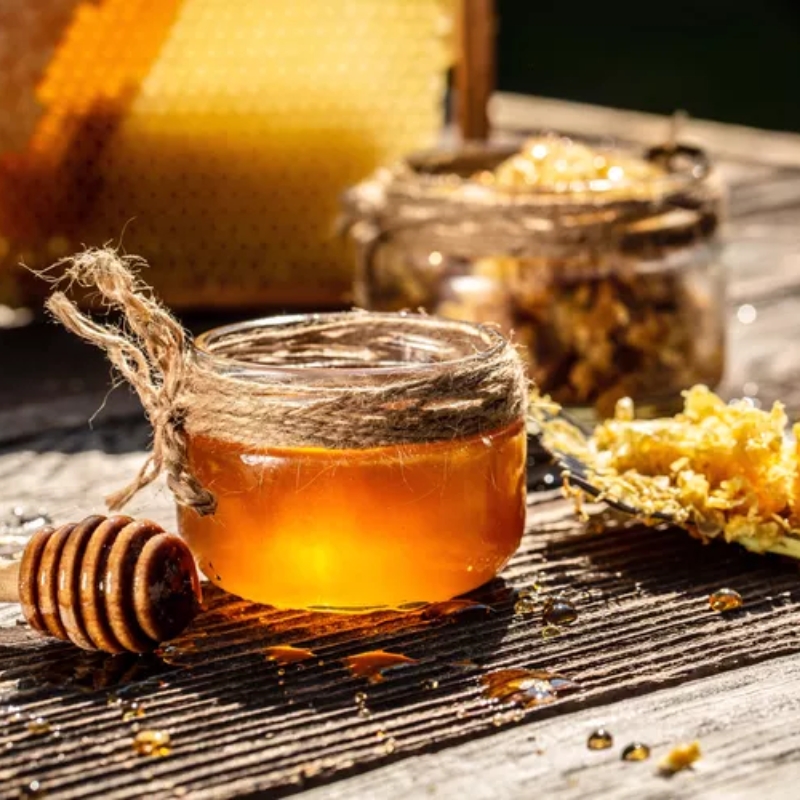
Discover the science behind two of the world’s most talked-about medicinal honeys in this research-based guide comparing Tualang Honey vs Manuka Honey. Learn how these premium honeys differ in antioxidant activity, antibacterial properties, sourcing, flavor, and wellness applications. This engaging article explores current scientific findings, potential health-supporting benefits, and the unique characteristics that make each honey stand out in modern natural wellness discussions. Ideal for health-conscious readers seeking evidence-informed insights, this professionally written resource helps simplify complex research while separating facts from marketing hype. A valuable educational read for anyone interested in functional foods, natural wellness, and premium honey products.
Description
Honey has been valued for centuries across traditional medicine systems, but in recent years, certain varieties have gained extraordinary attention in modern wellness conversations. Among them, Manuka honey from New Zealand has become globally recognized for its antibacterial properties and premium positioning. More recently, Tualang honey from the rainforests of Malaysia has emerged as another highly discussed medicinal honey, attracting attention from researchers investigating its antioxidant profile, antimicrobial activity, and potential wellness-supporting applications.
As consumer interest in functional foods and natural wellness products continues to rise, many people are asking an important question: Is Tualang honey actually better than Manuka honey?
The answer is more nuanced than most marketing claims suggest.
Current scientific literature shows that both Tualang honey and Manuka honey possess unique biochemical properties that may support general wellness when incorporated into a balanced lifestyle. However, the two honeys differ significantly in floral origin, chemical composition, harvesting methods, antioxidant activity, and standardization systems. Research also suggests that each honey may excel in different areas depending on the application being studied.
For healthcare-focused readers, it is important to separate evidence-based findings from exaggerated online claims. While laboratory and preliminary clinical studies on both honeys appear promising, neither should be viewed as a replacement for medical treatment, prescription therapies, or professional healthcare advice.
This article explores the science, sourcing, composition, potential wellness applications, and research limitations behind Tualang honey and Manuka honey to help readers understand how these two premium honeys compare from a medical and nutritional perspective.
What Is Tualang Honey?
Tualang honey is a wild multifloral honey produced primarily in the tropical rainforests of Malaysia. It is harvested from enormous Tualang trees, scientifically known as Koompassia excelsa, where wild Apis dorsata bees build large hives high above the forest floor.
Unlike commercial apiary honey production, Tualang honey harvesting remains physically demanding and highly specialized. Harvesters often climb trees exceeding 200 feet in height, typically at night, using traditional techniques passed through generations. This labor-intensive process contributes to the rarity and high cost of authentic Tualang honey.
One of the defining characteristics of Tualang honey is that it is polyfloral, meaning bees collect nectar from multiple plant species rather than a single dominant flower source. This creates natural variability in flavor, color, aroma, and nutrient composition depending on geography, season, and floral availability.
Researchers have identified several naturally occurring compounds in Tualang honey, including:
- Phenolic acids
- Flavonoids
- Organic acids
- Enzymes
- Amino acids
- Trace minerals
- Antioxidant compounds
Scientific interest in Tualang honey has expanded considerably over the past decade, particularly in Malaysia and Southeast Asia, where researchers have explored its antioxidant activity, antimicrobial properties, wound-healing potential, and broader biological effects in laboratory settings.
What Is Manuka Honey?
Manuka honey originates primarily from New Zealand and parts of Australia, where honeybees collect nectar from the Manuka shrub (Leptospermum scoparium). Unlike Tualang honey, Manuka honey is largely monofloral, meaning it derives predominantly from one botanical source.
Manuka honey gained international recognition due to its unusually high concentration of methylglyoxal (MGO), a naturally occurring compound associated with antibacterial activity. This unique composition helped establish Manuka honey as one of the most commercially valuable honey products in the world.
Another defining feature of Manuka honey is its standardized grading systems, including:
- UMF (Unique Manuka Factor)
- MGO ratings
- KFactor certifications
These systems aim to measure authenticity, potency, and concentrations of specific marker compounds. Tualang honey currently lacks a universally accepted grading framework, which can create variability between products and manufacturers.
Modern scientific research on Manuka honey has focused heavily on:
- Antibacterial properties
- Wound care applications
- Biofilm inhibition
- Skin-supportive uses
- Oral health research
- Antioxidant activity
Some medical-grade wound dressings used in healthcare settings incorporate sterilized Manuka honey due to its documented antimicrobial characteristics.
The Biggest Difference Between Tualang and Manuka Honey
The most important distinction between these honeys lies in their chemical profile and floral origin.
Manuka honey is prized largely because of methylglyoxal (MGO), which contributes to its stable non-peroxide antibacterial activity. Tualang honey, on the other hand, appears to derive much of its biological activity from its diverse polyphenols, flavonoids, and broader antioxidant composition.
In simple terms:
- Manuka honey is known for standardized antibacterial potency.
- Tualang honey is known for diverse antioxidant compounds and multifloral complexity.
This distinction shapes how researchers investigate each honey in scientific studies.
Antioxidant Activity: Does Tualang Honey Have an Advantage?
Several comparative studies suggest that Tualang honey may contain higher total phenolic and flavonoid content than Manuka honey in certain laboratory analyses.
Phenolic compounds and flavonoids are naturally occurring plant substances associated with antioxidant activity. Antioxidants help neutralize oxidative stress caused by unstable molecules called free radicals. Oxidative stress has been studied extensively in connection with aging and various chronic health conditions.
Researchers evaluating Malaysian honeys have repeatedly observed strong antioxidant performance in Tualang honey samples. Some studies even found antioxidant measurements exceeding those of Manuka honey under specific testing conditions.
However, readers should interpret these findings carefully.
Higher antioxidant activity in laboratory testing does not automatically translate into superior health outcomes in humans. Human physiology is far more complex than test-tube environments, and many nutritional compounds behave differently inside the body.
Still, the antioxidant profile of Tualang honey remains one of the primary reasons researchers continue to investigate its potential wellness applications.
Antibacterial Properties: Which Honey Performs Better?
Both Tualang honey and Manuka honey demonstrate antibacterial activity in laboratory settings. Multiple studies have evaluated their effects against various bacterial strains associated with wounds and infections.
Research indicates:
- Manuka honey often shows particularly strong activity against gram-positive bacteria.
- Tualang honey may perform comparatively well against certain gram-negative bacteria.
One comparative study examining wound-related microorganisms found that Tualang honey exhibited antibacterial activity within ranges similar to Manuka honey across several tested organisms.
Scientists believe several mechanisms contribute to these antimicrobial effects, including:
- Natural acidity
- High sugar concentration
- Hydrogen peroxide production
- Bioactive phytochemicals
- Methylglyoxal content (especially in Manuka honey)
Importantly, these findings do not mean consumers should self-treat infections using honey alone. Clinical management of wounds and infections should always involve appropriate medical evaluation and evidence-based treatment strategies.
Wound Care Research and Medical Interest
One of the most extensively studied applications for medicinal honey involves wound care.
Medical-grade honey dressings have attracted attention because honey may help maintain a moist wound environment while demonstrating antibacterial properties. Researchers have studied both Tualang and Manuka honey in this context.
Some comparative research suggests Tualang honey dressings may perform similarly to conventional wound-care materials in certain experimental settings. Studies involving burn wounds and chronic wound environments have shown encouraging preliminary findings.
Meanwhile, Manuka honey currently has broader commercialization in medical-grade wound products due partly to:
- Stronger international recognition
- Established grading systems
- Regulatory familiarity
- Greater market infrastructure
This does not necessarily mean Manuka honey is biologically superior in every context. Rather, it reflects the larger body of commercial development surrounding Manuka products.
Neuroprotective and Cognitive Research on Tualang Honey
One area where Tualang honey has generated growing scientific interest involves neurological and cognitive wellness research.
Some preliminary animal and laboratory studies have explored whether Tualang honey’s antioxidant compounds may help support neurological function, memory processes, or stress-related pathways.
Researchers have investigated topics such as:
- Cognitive performance
- Oxidative stress in brain tissue
- Stress-related biomarkers
- Mood-related behavioral responses
These findings remain early-stage and should not be interpreted as proof that Tualang honey can prevent or treat neurological conditions, depression, or cognitive disorders. However, the research highlights why Tualang honey is attracting attention beyond traditional honey applications.
Skin and Beauty Interest in Both Honeys
Honey has long been used in skincare traditions across multiple cultures. Modern cosmetic and wellness brands increasingly incorporate Manuka and Tualang honey into:
- Face masks
- Cleansers
- Topical creams
- Hair products
- Lip treatments
Researchers studying honey’s skin-supportive properties often focus on its:
- Moisture-retaining qualities
- Antioxidant compounds
- Antibacterial activity
- Potential soothing effects
Some experimental studies involving Tualang honey have explored UV-related cellular stress and inflammatory pathways.
Manuka honey also appears frequently in dermatological research because of its established antimicrobial characteristics.
Still, consumers should remember that cosmetic applications differ substantially from clinically validated medical treatments. Individuals with skin conditions should consult qualified healthcare professionals before replacing conventional care with natural products.
Nutritional Composition Comparison
From a macronutrient perspective, both Tualang and Manuka honey remain nutritionally similar to most natural honeys.
Both contain:
- Natural sugars
- Small amounts of amino acids
- Trace minerals
- Organic acids
- Polyphenols
Neither should be considered a low-sugar food.
Although premium honeys are frequently marketed as “superfoods,” moderation remains important, especially for individuals managing blood sugar concerns or calorie intake.
Some studies suggest Malaysian honeys, including Tualang honey, may exhibit distinctive micronutrient and antioxidant profiles compared with Manuka honey.
However, nutritional composition can vary widely depending on:
- Climate
- Floral sources
- Harvest timing
- Storage conditions
- Processing methods
Why Manuka Honey Became More Famous Globally
Several factors contributed to Manuka honey’s worldwide dominance in the medicinal honey market.
Standardization
The UMF and MGO grading systems helped create measurable quality indicators that consumers could understand.
Commercial Scale
New Zealand invested heavily in branding, export infrastructure, and scientific promotion surrounding Manuka honey.
Medical Product Integration
Manuka honey became incorporated into wound-care products and clinical discussions earlier than many competing honey varieties.
Marketing and Consumer Trust
Manuka honey successfully positioned itself as a premium wellness product backed by scientific terminology and traceability systems.
Tualang honey, despite promising research, has not yet achieved the same degree of global standardization or commercial infrastructure.
Authenticity Concerns and Adulteration Risks
One important issue affecting both premium honeys is product authenticity.
Honey adulteration remains a global concern, particularly for high-value products such as Manuka and Tualang honey. Researchers have investigated advanced authentication techniques because fraudulent labeling and dilution practices continue to affect the honey industry worldwide.
Consumers purchasing premium honey should look for:
- Reputable sourcing
- Third-party testing
- Traceability information
- Authentic certification programs
- Transparent labeling
Because Tualang honey lacks universal grading systems, product variability may be especially significant between brands.
Taste and Culinary Differences
Flavor differences between these honeys are substantial.
Tualang Honey Flavor
Tualang honey tends to have:
- Complex multifloral notes
- Slight bitterness
- Tangy undertones
- Variable taste profiles depending on harvest
Manuka Honey Flavor
Manuka honey is often described as:
- Earthy
- Rich
- Herbaceous
- Slightly medicinal
Taste preference ultimately depends on individual palate preferences.
Because Tualang honey is multifloral, no two batches are truly identical.
Price Comparison
Tualang honey can sometimes exceed the cost of premium Manuka honey due to its difficult harvesting process and limited production scale.
Factors influencing price include:
- Harvest difficulty
- Wild sourcing
- Export limitations
- Authenticity verification
- Supply scarcity
Meanwhile, high-grade Manuka honey with elevated UMF or MGO ratings also commands premium pricing internationally.
Consumers should approach extremely cheap “medicinal honey” products cautiously, as authenticity concerns remain widespread across the global honey market.
Is Tualang Honey Better Than Manuka Honey?
Current evidence does not support declaring one honey universally superior to the other.
Instead, research suggests they possess different strengths.
Potential Strengths of Tualang Honey
- Higher phenolic content in some studies
- Strong antioxidant activity
- Diverse multifloral composition
- Emerging neurological and wellness research
Potential Strengths of Manuka Honey
- Strong antibacterial reputation
- Standardized grading systems
- Extensive commercialization
- Greater medical-grade integration
The “better” choice may depend on what characteristics matter most to the consumer.
For example:
- Those prioritizing standardized antibacterial grading may prefer Manuka honey.
- Those interested in antioxidant diversity and multifloral composition may gravitate toward Tualang honey.
However, neither product should be viewed as a miracle cure or substitute for evidence-based healthcare.
Important Medical Perspective
Despite exciting research, many online discussions surrounding medicinal honey exaggerate scientific findings.
Current studies on Tualang and Manuka honey include:
- Laboratory research
- Animal studies
- Small human trials
- Observational findings
More large-scale clinical research is still needed to determine how these honeys may affect human health outcomes in real-world medical settings.
Consumers should also remember:
- Honey remains a sugar-containing food.
- Honey is not appropriate for infants under one year old.
- Individuals with allergies should exercise caution.
- Medical conditions require professional evaluation and treatment.
Healthcare providers should always guide decisions involving chronic conditions, wound care, infections, or disease management.
The Future of Medicinal Honey Research
Interest in medicinal honey continues to grow globally as researchers explore natural bioactive compounds and alternative wound-care approaches.
Areas currently being investigated include:
- Biofilm inhibition
- Antioxidant mechanisms
- Skin-supportive applications
- Microbial resistance research
- Tissue regeneration studies
- Oral health support
- Functional food development
Tualang honey, in particular, is gaining scientific attention because of its unique rainforest origin and rich phytochemical diversity.
Future standardization efforts and additional human clinical trials may help clarify where Tualang honey fits within evidence-based wellness and medical applications.
Final Thoughts
The comparison between Tualang honey and Manuka honey reveals an important reality often overlooked in wellness marketing: both honeys are scientifically interesting, but neither deserves exaggerated claims unsupported by rigorous clinical evidence.
Manuka honey currently dominates global recognition because of its standardized antibacterial grading systems and integration into medical-grade wound-care products. Tualang honey, meanwhile, has emerged as a promising multifloral rainforest honey with impressive antioxidant characteristics and growing scientific interest.
Research suggests Tualang honey may contain higher phenolic content and broader antioxidant diversity in some analyses, while Manuka honey continues to stand out for its stable methylglyoxal-driven antibacterial profile.
For consumers seeking natural wellness products, the best approach is balanced and evidence-informed:
- Choose authentic, reputable honey products.
- Avoid exaggerated miracle-cure marketing.
- Understand the limits of current research.
- View honey as part of a broader healthy lifestyle rather than a standalone medical solution.
As ongoing scientific investigation continues, both Tualang honey and Manuka honey will likely remain important subjects within nutritional science, natural product research, and integrative wellness discussions.