$34.99
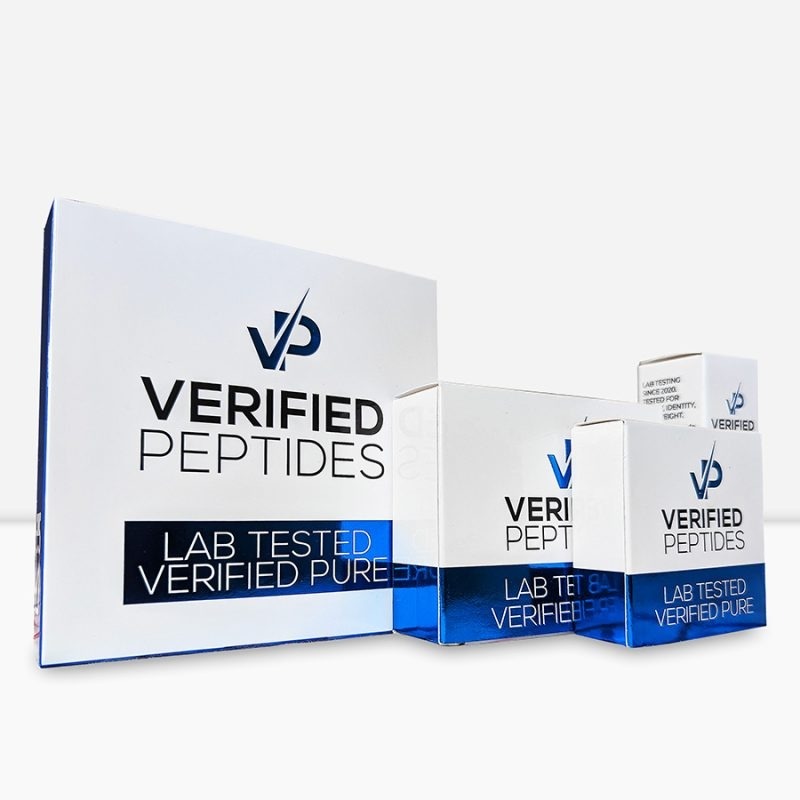
Verified Peptides is a research-focused peptide supplier committed to quality, transparency, and laboratory-tested products. Known for emphasizing third-party testing, purity verification, and carefully controlled manufacturing standards, Verified Peptides provides researchers with access to premium peptide solutions designed for scientific and laboratory use. The brand highlights batch-tested products, insulated shipping for temperature-sensitive compounds, and detailed quality assurance protocols to support confidence and consistency. Whether exploring peptide research related to recovery, metabolism, or cellular science, Verified Peptides stands out for its dedication to reliability and professional standards. Customers choose Verified Peptides for transparent sourcing, dependable testing practices, and a strong focus on research integrity.
Description
Peptide science has rapidly evolved from a niche area of biotechnology into one of the most discussed topics in wellness research, regenerative medicine, sports science, and metabolic studies. As researchers continue exploring the role of amino acid chains in cellular signaling, recovery pathways, and biological communication, the demand for laboratory-tested peptide products has expanded significantly across the global market.
Among the companies operating in this emerging space, Verified Peptides has positioned itself as a supplier focused on laboratory-tested peptide products intended for research purposes. According to the company website, Verified Peptides emphasizes batch testing, quality control standards, and transparent laboratory verification processes for its peptide catalog.
At the same time, the broader peptide industry remains heavily scrutinized by medical professionals, researchers, and regulatory agencies due to the complex legal and scientific landscape surrounding peptide compounds. Experts continue warning consumers that many peptides lack long-term clinical validation for general wellness use, and some are sold through unregulated channels online.
This article examines the growing interest in peptide research, the role of quality verification in peptide sourcing, the standards promoted by Verified Peptides, and the important scientific and regulatory considerations surrounding peptide-related products.
Understanding Peptides and Their Scientific Role
Peptides are short chains of amino acids that act as signaling molecules within the body. They help regulate various biological functions and may influence communication between cells and tissues. Researchers have spent decades investigating peptides in fields involving metabolism, endocrinology, tissue repair, dermatology, neuroscience, and exercise science.
Some peptides already play recognized roles in modern medicine. Certain peptide-based therapies have received regulatory approval for specific clinical applications, particularly in areas related to diabetes and metabolic disorders. However, many other peptide compounds remain under investigation or exist exclusively within research settings.
Scientific interest in peptides continues growing because of their versatility. Researchers study peptide pathways associated with:
- Cellular communication
- Growth signaling
- Recovery processes
- Hormonal regulation
- Metabolic activity
- Skin and connective tissue research
- Muscle physiology
- Longevity science
The broader peptide research market now includes academic laboratories, biotechnology firms, pharmaceutical developers, and independent scientific communities exploring emerging peptide compounds.
Why Peptide Quality Verification Matters
One of the biggest concerns in the peptide industry involves product purity and quality assurance.
Unlike heavily regulated pharmaceutical manufacturing systems, some online peptide suppliers operate in loosely regulated environments. Multiple industry reviews and medical experts have warned that low-quality peptide products may contain contamination, incorrect dosages, inaccurate labeling, or poor storage stability.
This is why third-party laboratory testing has become one of the most important standards in the peptide market.
Researchers and buyers frequently look for companies that provide:
- Certificates of Analysis (COAs)
- Third-party analytical testing
- Purity verification
- Sterility testing
- Batch traceability
- Controlled manufacturing practices
- Transparent sourcing standards
According to industry analyses, transparency and independent verification are increasingly viewed as critical trust indicators when evaluating peptide suppliers.
Because peptides can be highly sensitive to temperature, contamination, and manufacturing inconsistencies, quality control measures often play a central role in product reliability.
Verified Peptides and Its Position in the Research Market
Verified Peptides markets itself as a supplier of lab-tested peptides designed for laboratory research use. The company states that it has operated since 2020 and emphasizes purity verification, potency testing, and quality control procedures.
The company website highlights several operational claims related to quality standards, including:
- Independent laboratory testing
- Controlled clean-facility manufacturing
- Good Manufacturing Practice (GMP)-focused production environments
- Batch-specific quality verification
- Purity and potency analysis
- Insulated shipping protocols for temperature-sensitive products
Verified Peptides also notes that its products are intended “for laboratory research use only.”
This distinction reflects a broader industry trend among peptide suppliers, many of which position themselves as research-oriented vendors rather than direct-to-consumer therapeutic providers.
The Importance of Third-Party Testing in Peptide Research
Third-party testing has become a defining feature among peptide companies attempting to build credibility within the research community.
Several peptide industry reviews now rank suppliers based heavily on independent laboratory analysis and public access to Certificates of Analysis.
The reason is simple: peptide synthesis is technically demanding.
Even minor production inconsistencies can affect:
- Molecular stability
- Purity percentages
- Biological activity
- Storage lifespan
- Research reliability
Analytical laboratories commonly use methods such as:
- High-Performance Liquid Chromatography (HPLC)
- Mass spectrometry
- Sterility testing
- Residual solvent analysis
Independent verification helps researchers confirm whether a peptide sample aligns with the labeled concentration and molecular profile.
According to The Guardian’s reporting on the global peptide market, some laboratories estimate that a significant portion of tested peptide samples fail basic quality standards or contain discrepancies in purity or labeling.
This growing concern has increased demand for suppliers emphasizing transparent testing procedures.
Common Categories of Peptides in Research
The peptide research field spans numerous categories and biological targets.
Verified Peptides lists several peptide blends and compounds frequently discussed in modern peptide research, including:
- BPC-157
- TB-500
- CJC-1295
- Ipamorelin
- GHK-Cu
- NAD+
- Tesamorelin
- Glutathione-related compounds
Researchers investigate these compounds in relation to various experimental models involving cellular signaling, tissue response, metabolic regulation, and recovery pathways.
However, it is important to note that many peptides sold online are not FDA-approved for general consumer therapeutic use, and experts caution against interpreting research findings as confirmed clinical outcomes.
The Regulatory Landscape Surrounding Peptides
One of the most complex aspects of the peptide industry involves regulation.
Some peptide compounds have approved medical uses under physician supervision. Others remain investigational, while some exist within regulatory gray areas associated with compounding pharmacies and research supply channels.
Recent media coverage has highlighted increasing FDA scrutiny regarding certain peptide compounds marketed online.
Medical experts consistently emphasize several important points:
- Not all peptides are FDA-approved
- Online products may not meet pharmaceutical standards
- Long-term safety data is limited for many compounds
- Medical oversight is important for any clinical peptide use
- Research-use labeling does not equal medical approval
According to Verywell Health, experts recommend verifying laboratory testing and avoiding companies lacking transparency regarding sourcing or manufacturing.
The growing visibility of peptides on social media has also intensified concerns about misinformation and exaggerated marketing claims.
Why Transparency Has Become Essential in the Peptide Industry
As the peptide market expands, transparency has become one of the strongest differentiators among suppliers.
Modern researchers increasingly evaluate peptide companies based on:
- Publicly available COAs
- Batch traceability
- Testing disclosures
- Manufacturing standards
- Shipping protocols
- Customer support
- Research-use disclaimers
Industry reviews now routinely compare peptide vendors based on these criteria.
This shift reflects broader awareness that peptide quality can vary substantially between suppliers.
Companies emphasizing analytical verification and documentation are often viewed more favorably within the research community than vendors relying solely on marketing language.
Verified Peptides appears to position itself within this transparency-focused segment of the market by emphasizing laboratory verification and QC testing throughout its branding.
Peptide Storage and Shipping Standards
Peptides are biologically sensitive compounds that can degrade if improperly handled.
Temperature control, moisture exposure, and shipping conditions may all affect peptide integrity. Because of this, many research-focused suppliers now emphasize insulated shipping procedures.
Verified Peptides states that it provides insulated packaging and cooling materials for sensitive products.
Industry experts frequently note that proper cold-chain logistics can be important for preserving peptide stability during transit.
Researchers often look for suppliers that maintain:
- Refrigerated handling procedures
- Temperature-conscious packaging
- Tamper-resistant sealing
- Clear labeling systems
- Controlled storage environments
Shipping standards have become especially important as the peptide market expands internationally.
The Rise of Peptide Interest in Longevity and Wellness Research
Peptides have become increasingly associated with longevity science, biohacking culture, metabolic research, and regenerative medicine discussions.
Media coverage suggests growing public interest in peptides linked to:
- Healthy aging research
- Recovery studies
- Metabolic signaling
- Exercise physiology
- Cosmetic science
- Cellular maintenance pathways
However, researchers and physicians continue emphasizing that enthusiasm should not replace scientific rigor.
Many peptide compounds remain insufficiently studied in large-scale human clinical trials. Experts caution that anecdotal online testimonials are not substitutes for peer-reviewed evidence.
This balance between innovation and scientific caution now defines much of the peptide conversation.
Scientific Databases and Expanding Peptide Research
Academic peptide research continues expanding globally.
Large scientific databases such as Peptipedia have been developed to organize peptide sequences, biological activity data, and predictive modeling systems for researchers.
These databases reflect how rapidly peptide science is evolving across biotechnology and pharmaceutical development.
Researchers continue exploring peptides for potential applications involving:
- Drug development
- Molecular signaling studies
- Biotechnology engineering
- Immunology research
- Cellular response analysis
- Protein interaction modeling
The continued expansion of peptide databases and computational tools suggests that peptide science will likely remain an important area of biomedical research for years to come.
Evaluating a Peptide Supplier Responsibly
Researchers evaluating peptide suppliers often consider several key factors before purchasing products for laboratory use.
Important considerations may include:
Third-Party Testing
Independent verification remains one of the most important indicators of quality.
Transparency
Clear documentation, accessible COAs, and detailed product specifications help improve confidence in research materials.
Manufacturing Standards
Controlled production environments and GMP-focused processes are commonly viewed as positive indicators.
Shipping Integrity
Temperature-sensitive compounds require careful logistics and storage protocols.
Research Compliance
Responsible companies clearly distinguish research-use products from approved medical therapies.
Verified Peptides promotes several of these characteristics through its emphasis on laboratory testing, controlled production environments, and quality verification procedures.
Safety Considerations and Expert Warnings
Despite growing popularity, peptide experts consistently recommend caution.
Recent reporting from medical publications and health experts has highlighted several concerns associated with unregulated peptide products, including:
- Unknown purity
- Contamination risks
- Inaccurate dosing
- Limited long-term safety data
- Potential interactions
- Misleading marketing claims
Healthcare professionals generally advise individuals not to rely solely on influencer content or anecdotal online discussions when evaluating peptide-related products.
Researchers and clinicians continue emphasizing the importance of evidence-based evaluation and regulatory oversight within the peptide industry.
The Future of the Peptide Industry
The peptide industry appears poised for continued growth.
Scientific interest in peptides intersects with several expanding fields, including:
- Precision medicine
- Biotechnology
- Longevity science
- Metabolic research
- Cosmetic science
- Regenerative medicine
At the same time, regulatory scrutiny is also increasing.
Future industry development will likely depend heavily on:
- Improved clinical research
- Stronger quality standards
- Better transparency
- Regulatory clarity
- Expanded peer-reviewed evidence
Companies emphasizing testing transparency and laboratory verification may continue gaining attention as researchers seek more reliable sources within a rapidly growing marketplace.
Verified Peptides represents one example of a supplier attempting to position itself around quality assurance and testing-focused branding within the broader peptide research sector.
Final Thoughts on Verified Peptides and Modern Peptide Research
The peptide market continues evolving at a remarkable pace, driven by scientific curiosity, biotechnology innovation, and growing interest in cellular signaling research.
Verified Peptides has entered this landscape as a research-focused peptide supplier emphasizing laboratory testing, purity verification, and quality control procedures. According to its website, the company highlights independent testing, GMP-oriented production practices, and controlled shipping standards as core components of its operational model.
At the same time, the broader peptide industry remains scientifically complex and highly nuanced. Medical experts continue urging caution regarding unregulated peptide use and emphasize that many compounds lack sufficient long-term clinical evidence for widespread therapeutic applications.
For researchers exploring peptide science, transparency, analytical verification, and evidence-based evaluation remain essential.
As peptide research expands across biotechnology and medical science, the importance of responsible sourcing, rigorous testing, and scientific integrity will likely continue shaping the future of the industry.