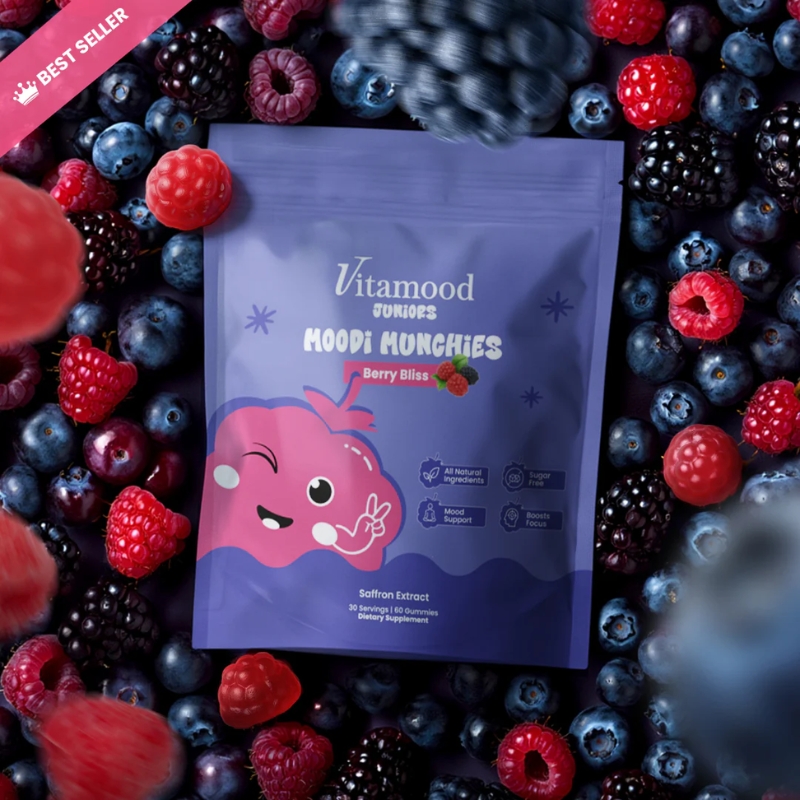
$47.00
Vitamood Munchies is a berry-flavored children’s gummy supplement designed to support everyday calm, focus, mood balance, and emotional well-being. Each easy-to-chew gummy combines saffron, passionflower, magnesium glycinate, GABA, vitamin D2, and vitamin B12 in a sugar-free, pectin-based formula. Created for children aged four and older, it offers a convenient alternative to capsules, powders, or liquids. Parents may appreciate the naturally flavored gummy format, transparent ingredient amounts, and simple daily serving guidance. Vitamood Munchies is best used alongside a balanced diet, healthy sleep, regular activity, and professional guidance when needed. Individual experiences may vary.
Description
Parents searching for a natural mood and focus supplement for children are often faced with a difficult balance. They want an option that is easy to use and appealing to their child, but they also need realistic information about ingredients, safety, limitations, and scientific evidence. Vitamood Munchies, also marketed as Moodi Munchies Berry Bliss, is a sugar-free gummy supplement designed for children aged four and older. Its formula combines saffron, passionflower, magnesium glycinate, gamma-aminobutyric acid, vitamin D2, and vitamin B12 in a berry-flavored chewable format.
The brand positions Vitamood Munchies as daily nutritional support for calmness, focus, emotional steadiness, and self-regulation. These are structure-and-function positioning statements rather than promises to diagnose, prevent, or treat a medical condition. This distinction is particularly important because difficulties with concentration, emotional regulation, sleep, sensory overload, or behavior can have many causes. Nutritional deficiencies, stress, inconsistent sleep, family circumstances, learning challenges, medication effects, and diagnosable health conditions may all play a role.
Vitamood Munchies may appeal to families who prefer gummies over capsules, powders, or liquids. The product page states that each pouch contains 60 gummies and recommends one gummy daily for children ages four to six and two gummies daily for children ages six and older. The formula is advertised as sugar-free and uses pectin rather than gelatin, along with natural raspberry and blueberry flavors and purple carrot juice concentrate for color.
This review examines what Vitamood Munchies contains, how its ingredients are intended to function, what the available research can and cannot establish, potential side effects, pricing, company information, customer feedback, and where the product may be purchased. Vitamood Munchies should not replace professional assessment, prescribed treatment, behavioral support, adequate nutrition, physical activity, or healthy sleep routines.
Product Overview
Formulation:
A sugar-free, pectin-based berry gummy dietary supplement formulated with saffron, passionflower, magnesium glycinate, GABA, vitamin D2, and vitamin B12.
Key Ingredients:
Saffron extract, passionflower extract, magnesium glycinate, GABA, vitamin D2, and vitamin B12.
Pouch Contents:
60 gummies per pouch. The Supplement Facts information supplied for this review lists 60 one-gummy servings or 30 two-gummy servings.
Guarantee:
The product page advertised a 10-day money-back guarantee when reviewed. Customers should read the complete refund conditions before purchasing because eligibility requirements, time limits, return-shipping rules, and exclusions may apply.
Cost:
Pricing supplied for this review starts at $47.00 for one pouch, with multi-pouch packages offering a lower effective cost per pouch. Prices, promotions, availability, shipping charges, taxes, and subscription terms may change.
What Is Vitamood Munchies?
Vitamood Munchies is a children’s dietary supplement presented as a convenient way to provide selected vitamins, minerals, botanical extracts, and GABA in a chewable gummy. It is sold under the Vitamood brand and may also appear under the Moodi Munchies or Vitamood Juniors branding.
The product is primarily marketed to parents who are interested in nutritional support for their child’s mood, attention, everyday calmness, and ability to manage emotionally demanding situations. According to the brand’s product page, Vitamood Munchies is intended for children aged four and older, with parent or caregiver supervision. Children ages four to six are directed to take one gummy daily, while those aged six and older are directed to take two.
Each gummy reportedly provides 44.25 milligrams of saffron equivalent from a concentrated extract, 250 milligrams of passionflower equivalent, 25 milligrams of magnesium, 15 milligrams of GABA, 12.5 micrograms of vitamin D2, and 25 micrograms of vitamin B12. Two gummies provide twice those amounts.
The gummy format is a meaningful feature for families whose children resist swallowing tablets or dislike powdered supplements. Natural raspberry and blueberry flavors are used to create the Berry Bliss taste, while purple carrot juice concentrate provides color. Pectin gives the product its gummy texture, making it potentially suitable for families who prefer to avoid animal-derived gelatin.
Vitamood Munchies is not a prescription medicine and should not be represented as a natural replacement for medication. It has not been established as a treatment for ADHD, anxiety disorders, autism, sleep disorders, depression, sensory-processing difficulties, or behavioral conditions. Parents who are worried about persistent mood changes, declining school performance, severe emotional outbursts, self-harm statements, developmental regression, prolonged sleep problems, or major changes in appetite should seek qualified medical or mental-health guidance.
The most balanced way to understand Vitamood Munchies is as a multi-ingredient dietary supplement that may help fill selected nutrient gaps and provide botanical compounds being researched for mood and attention. Whether it produces a noticeable benefit will depend on the individual child, diet, baseline nutrient status, health history, medications, consistency of use, and the underlying cause of the symptoms a parent hopes to address.
Who Is Vitamood Munchies Specifically For?
Vitamood Munchies is designed primarily for parents and caregivers seeking a child-friendly supplement that supports general nutritional wellness, mood balance, calm behavior, and everyday focus. The brand states that it is formulated for children aged four and older.
The product may be particularly appealing for children who dislike capsules, tablets, or strongly flavored liquids. A berry gummy can be easier to include in a morning routine, although caregivers should still treat it as a supplement rather than candy. The pouch should be stored securely because children may be tempted to consume more than the recommended amount.
Families may also consider Vitamood Munchies when a child has a limited or selective diet. However, a gummy should not be used as a substitute for a varied eating pattern. A pediatrician or registered dietitian can help determine whether a child has an actual deficiency and whether the amounts in this formula are appropriate.
The supplement may be of interest to parents whose children experience occasional restlessness, difficulty winding down, inconsistent concentration, or strong emotions during ordinary daily transitions. These experiences can occur in otherwise healthy children. Nevertheless, similar symptoms can also be associated with inadequate sleep, bullying, learning disorders, iron deficiency, medication effects, anxiety, ADHD, autism, family stress, or other conditions. A supplement should not delay appropriate evaluation.
Vitamood Munchies may not be suitable for every child. Professional guidance is especially important when a child:
- Takes prescription or over-the-counter medication.
- Uses another vitamin D, magnesium, B12, saffron, passionflower, or GABA supplement.
- Has kidney, liver, neurological, bleeding, gastrointestinal, or metabolic concerns.
- Has food, plant, flavoring, or ingredient allergies.
- Is scheduled for surgery or a medical procedure.
- Experiences unexplained drowsiness, weakness, dizziness, digestive symptoms, or behavioral changes.
- Is younger than the age shown on the product directions.
Parents should also review the maltitol and isomalt content. These sugar alcohols may cause gas, bloating, loose stools, or abdominal discomfort in some children, particularly when consumed in larger amounts.
Does Vitamood Munchies Work?
There is no responsible way to guarantee that Vitamood Munchies will work for every child. Its formula includes nutrients and botanical ingredients with plausible roles in nervous-system function, nutritional status, or relaxation, but the finished product should not be assumed to reproduce the outcomes of studies conducted on isolated ingredients.
Saffron is the most research-focused ingredient in the formula. A small six-week randomized pilot study compared saffron with methylphenidate in 54 children and adolescents diagnosed with ADHD. The researchers reported improvement in both groups, but the trial was small, short, and conducted using a specific saffron preparation and controlled clinical protocol. It does not establish that Vitamood Munchies treats ADHD or performs like prescription medication.
Magnesium, vitamin D, and vitamin B12 are essential nutrients. They support normal physiological functions, but supplementation is most likely to be meaningful when intake or status is inadequate. Giving additional amounts to a child who already has sufficient levels does not necessarily produce better concentration or emotional regulation. Vitamin D is important for calcium absorption and normal bone development, while vitamin B12 contributes to central nervous-system function, red blood cell production, and DNA synthesis.
Passionflower has a history of traditional use for relaxation. However, research in children remains limited. One recent observational study examined passionflower in children and adolescents with eating disorders and coexisting anxiety or insomnia, but the study was retrospective, lacked a placebo-controlled design, and often involved concurrent psychiatric medication. Those results cannot be generalized to healthy children or to this specific gummy.
GABA is involved in inhibitory signaling within the nervous system, but questions remain about how effectively supplemental GABA crosses the blood-brain barrier and whether oral supplementation produces consistent behavioral effects.
A realistic expectation is that some families may notice a change, while others may see little or no difference. Changes should be assessed over a consistent period using observable measures such as bedtime duration, homework completion, school feedback, emotional recovery time, and digestive tolerance. Parents should avoid interpreting every good or difficult day as proof that the supplement is working or failing.
Vitamood Munchies Real Customer Reviews and Testimonials
The Vitamood website displays testimonials from parents who describe calmer behavior, improved listening, shorter emotional reactions, easier daily routines, or repeat purchases. The site labels several reviewers as verified customers and states that the brand serves more than 40,000 customers.
These accounts may help prospective buyers understand why some families like the product, but testimonials are not clinical evidence. Reviews are subjective, may be selectively displayed, and cannot control for changes in sleep, diet, school routines, therapy, parenting strategies, medication, or natural developmental variation.
Testimonial disclaimer: Individual experiences vary. Customer comments do not establish that Vitamood Munchies will produce the same result for another child, and they should not be interpreted as medical advice or proof that the product treats a condition.
What Are the Ingredients in Vitamood Munchies?
Vitamin D2
Vitamin D2, also called ergocalciferol, is a form of vitamin D used in fortified foods and dietary supplements. Each Vitamood Munchies gummy contains 12.5 micrograms, while two gummies provide 25 micrograms.
Vitamin D supports normal calcium and phosphate regulation and contributes to healthy bone mineralization and growth. It also has established functions in immune and neuromuscular processes. Children with insufficient vitamin D may benefit from appropriate supplementation, but testing and individualized guidance may be necessary when deficiency is suspected.
Although vitamin D is sometimes promoted for mood support, evidence does not justify claiming that vitamin D gummies reliably improve a child’s behavior or emotional state. Parents should add together vitamin D from all multivitamins, fortified foods, drops, and other supplements to avoid unnecessary duplication.
Vitamin B12
Each gummy contains 25 micrograms of vitamin B12, and a two-gummy serving provides 50 micrograms. Vitamin B12 contributes to normal red blood cell formation, DNA synthesis, and the development and function of the central nervous system.
Vitamin B12 is naturally present mainly in animal-derived foods and fortified products. Children following vegan or highly restrictive diets may be at greater risk of inadequate intake, although supplementation decisions should still be discussed with a qualified professional.
The amount in Vitamood Munchies is substantially higher than the daily requirement for children, but vitamin B12 has no established tolerable upper intake level because it is generally considered to have low toxicity. Even so, more is not automatically better. A high supplemental amount does not prove improved focus or energy in a child who already has adequate B12 status.
Magnesium Glycinate
Vitamood Munchies provides 25 milligrams of magnesium per gummy or 50 milligrams per two-gummy serving. Magnesium is involved in hundreds of enzymatic reactions and contributes to normal nerve signaling, muscle function, energy metabolism, and bone health.
Magnesium glycinate combines magnesium with the amino acid glycine. It is commonly chosen because it may be gentler on digestion than some other magnesium forms, although tolerance differs between individuals.
For children ages four to eight, the U.S. tolerable upper intake level for magnesium from supplements and medications is 110 milligrams daily. This limit excludes magnesium naturally occurring in food. A two-gummy serving provides 50 milligrams, but parents must count magnesium from all supplemental sources. Excess supplemental magnesium can cause diarrhea, nausea, and abdominal cramping.
Magnesium contributes to normal nervous-system function, but this does not mean it independently treats anxiety, ADHD, sleep disorders, or emotional dysregulation.
Passionflower
The supplied label lists 250 milligrams of passionflower equivalent per gummy, derived from 25 milligrams of a 10:1 extract. Two gummies provide 500 milligrams equivalent from 50 milligrams of extract.
Passionflower, or Passiflora incarnata, is traditionally used in herbal preparations associated with relaxation and sleep support. Some research has explored its possible effects on anxiety or sleep, but pediatric evidence is limited and product preparations vary substantially.
A retrospective observational study involving children and adolescents with eating disorders and coexisting anxiety or insomnia reported symptom improvement among some participants receiving passionflower. However, many participants were also taking psychiatric medications, there was no placebo group, and the findings do not prove efficacy in the broader pediatric population.
Passionflower may cause drowsiness, dizziness, or additive sedation when combined with other calming substances or medications. Parents should discuss its use with a pediatric clinician or pharmacist when a child takes medication.
Saffron
Saffron is the stigma of the Crocus sativus flower. The Vitamood label lists 44.25 milligrams of saffron equivalent per gummy from 4.425 milligrams of a 10:1 extract. Two gummies provide 88.5 milligrams equivalent from 8.85 milligrams of extract.
Saffron contains compounds such as crocin, crocetin, picrocrocin, and safranal. These constituents are being studied for antioxidant activity and possible effects on neurotransmitter-related pathways.
A randomized pilot trial in children and adolescents with ADHD compared a specific saffron capsule preparation with methylphenidate over six weeks. Both groups improved, but the study involved only 54 participants and was not designed to establish the effectiveness of every saffron product.
The evidence is promising enough to justify further research, but not strong enough to state that saffron gummies treat ADHD, replace medication, or consistently improve behavior. Extract standardization, dosage, participant characteristics, study design, and treatment duration all matter.
GABA
Gamma-aminobutyric acid, commonly called GABA, is a naturally occurring neurotransmitter involved in inhibitory signaling. Each gummy contains 15 milligrams, and two gummies provide 30 milligrams.
GABA is often included in relaxation supplements because inhibitory signaling helps regulate neuronal excitability. However, the relationship between oral GABA supplementation and brain activity is not fully resolved. Researchers continue to debate how much supplemental GABA crosses the blood-brain barrier and whether peripheral pathways may contribute to reported effects.
The presence of GABA makes the formula conceptually aligned with calmness support, but it does not establish a therapeutic effect. Pediatric research on routine supplemental GABA remains limited. Children taking neurological, sedating, psychiatric, or blood-pressure medications should not use GABA-containing products without professional guidance.
Other Ingredients
The formula also contains maltitol, isomalt, pectin, citric acid, phosphoric acid, sodium citrate, sunflower seed oil, purple carrot juice concentrate, natural raspberry flavor, natural blueberry flavor, and carnauba wax.
Pectin creates the gummy structure, while carnauba wax and sunflower seed oil help prevent sticking. Purple carrot concentrate provides color without synthetic dye. Maltitol and isomalt supply sweetness with little or no added sugar, but they may cause digestive discomfort or a laxative effect in sensitive individuals.
Vitamood Munchies Science
The scientific rationale behind Vitamood Munchies combines essential nutrition with botanicals and GABA. Magnesium, vitamin D, and vitamin B12 have recognized physiological roles. Saffron and passionflower have emerging or traditional applications, while oral GABA is marketed for relaxation despite unresolved questions about its central nervous-system availability.
The most relevant pediatric evidence concerns saffron. In the six-week randomized trial involving 54 participants aged six to seventeen with ADHD, a standardized saffron preparation was compared with methylphenidate. The study suggested similar short-term changes in symptom-rating scores, but it was a pilot trial with a small sample. Replication in larger, independent, multicenter trials is needed. The results should not be used to claim that Vitamood Munchies is equivalent to medication.
Passionflower evidence in young people is much weaker. The available observational research may support further investigation, but it cannot determine causation or establish how healthy children will respond.
Vitamin D and B12 support normal health, but nutrient supplementation should not be confused with pharmacological treatment. Vitamin D is necessary for bone development and calcium metabolism, and B12 is necessary for blood and neurological functions. Correcting deficiency may improve deficiency-related symptoms, but supplementation above adequate levels does not guarantee better mood or cognition.
Most importantly, no clinical study identified during this review tested the complete Vitamood Munchies formula. The evidence applies to individual ingredients, often at different doses or in different preparations. Therefore, conclusions about the finished product must remain cautious.
Vitamood Munchies Benefits
May Support Everyday Emotional Self-Regulation
Vitamood Munchies is formulated for children who experience ordinary episodes of frustration, overstimulation, or difficulty settling after demanding activities. Saffron, magnesium, passionflower, and GABA are included to create a formula centered on calmness and emotional balance.
A child’s ability to regulate emotions is influenced by sleep, developmental stage, temperament, family environment, nutrition, sensory demands, and learned coping skills. A supplement cannot replace these foundations. However, families who establish consistent meals, sleep, movement, screen limits, and emotional coaching may find a gummy easier to incorporate into an overall wellness routine.
Claims that the product “improves” emotional regulation should be interpreted as brand positioning, not a guaranteed clinical outcome.
May Help Maintain a Balanced Mood and Focus
Vitamin B12, vitamin D, and magnesium support normal neurological and metabolic functions. Saffron is being researched for possible effects on mood- and attention-related pathways.
For a child with inadequate nutrient intake, correcting a deficiency may support overall functioning. For a child without a deficiency, the effect may be less noticeable. Focus is also strongly affected by sleep quality, classroom environment, task difficulty, hydration, hunger, vision, hearing, and emotional stress.
Vitamood Munchies should therefore be presented as supportive rather than corrective. It is not an evidence-based replacement for educational accommodations, behavioral therapy, medical treatment, or professional evaluation.
Designed for Children With Big Feelings or Sensory Needs
The gummy is marketed to parents of children who become easily overwhelmed or have difficulty transitioning between activities. The convenient format may reduce conflict for children who resist pills or liquid supplements.
However, “sensory needs” is a broad phrase and should not be used to imply treatment of autism or sensory-processing conditions. Children with significant sensory distress may benefit from assessment by a pediatrician, psychologist, occupational therapist, or other qualified professional.
The product may serve as an optional component of a wider plan that includes predictable routines, sensory breaks, movement, quiet spaces, adequate sleep, and individualized professional support.
Berry-Flavored Chewable Format
One of the clearest practical benefits is convenience. Vitamood Munchies does not require mixing, measuring, or swallowing a capsule. The berry flavor may make daily use easier for children who are selective about taste and texture.
The sugar-free formula may also appeal to parents seeking to limit added sugar. However, sugar-free does not mean consequence-free for digestion. Maltitol and isomalt can cause bloating, gas, or loose stools.
Because the gummies may taste like candy, adult supervision and secure storage are essential.
Formulated Without Synthetic Dyes
The brand states that the product contains no added sugar or synthetic dyes and that its color comes from purple carrot juice. It also describes the formula as third-party tested and uses a pectin-based gummy.
“Natural” should not be interpreted as automatically safer or more effective. Botanical extracts can produce side effects and interact with medications, and naturally derived flavoring ingredients can still trigger sensitivities in some individuals.
Vitamood Munchies: Pros and Cons
Pros
- Contains several essential nutrients involved in normal nervous-system and metabolic function.
- Uses saffron, an ingredient supported by limited but emerging pediatric research.
- Provides clear age-based serving instructions on the product page.
- Berry gummy format may be easier for children than capsules or powders.
- Contains no listed added sugar or synthetic dye.
- Uses pectin rather than gelatin.
- Provides transparent per-gummy ingredient amounts.
- Offers multi-pouch package discounts.
- Advertised as third-party tested by the brand.
- Includes a 10-day money-back guarantee according to the product page.
- Ships from fulfillment centers in the United States, Australia, and Europe, according to the company.
Cons
- No identified clinical trial evaluates the complete Vitamood Munchies formula.
- Ingredient studies do not guarantee finished-product effectiveness.
- Pediatric evidence for passionflower and oral GABA is limited.
- The product should not be promoted as a treatment for ADHD, anxiety, autism, or sensory disorders.
- Customer testimonials cannot establish typical results.
- Maltitol and isomalt may cause digestive discomfort.
- Multiple active ingredients increase the possibility of interactions.
- Vitamin D, magnesium, and B12 may duplicate other supplements.
- The guarantee period is relatively short.
- The product was displayed as out of stock with preorders open when reviewed.
- At $47.00 per pouch, the cost may be high for ongoing family use.
- “Natural ingredients” is not a substitute for pediatric safety review.
What Is the Price of Vitamood Munchies?
The pricing supplied for this review includes three purchasing options. The larger packages provide a lower effective cost per pouch and include a digital e-book.
Buy 1 — One-Month Supply
- Current price: $47.00
- Regular price: $57.00
- Includes: One pouch containing 60 gummies
- Approximate price per pouch: $47.00
Most Popular — Buy 2, Get 1 Free
- Current price: $94.00
- Regular price: $171.00
- Advertised savings: $77.00
- Includes: Three pouches
- Approximate price per pouch: $31.33
- Bonus: Free e-book
Best Value — Buy 3, Get 2 Free
- Current price: $141.00
- Regular price: $285.00
- Advertised savings: $144.00
- Includes: Five pouches
- Approximate price per pouch: $28.20
- Bonus: Free e-book
Optional Subscription Savings
Customers may also be offered:
- A 5% subscription discount.
- A minimum commitment of two orders.
- Recurring billing and shipment under the company’s subscription terms.
Before selecting a subscription, customers should review the billing frequency, cancellation method, minimum commitment, renewal terms, notice requirements, and refund eligibility.
Pricing disclaimer: Prices, discounts, package contents, shipping charges, taxes, availability, subscription terms, gifts, and refund conditions are subject to change at any time. Always check the Vitamood website and checkout page for the final price and complete terms before ordering. The product page was displaying the item as out of stock with preorders open when reviewed on July 28, 2026.
Usage
The Vitamood website recommends one gummy daily for children ages four to six and two gummies daily for children ages six and older. The brand suggests giving the gummies in the morning and states that use should occur with parent supervision.
Caregivers should follow the current package label rather than relying only on an online review, as formulations and directions can change. Do not exceed the recommended serving unless instructed by a qualified healthcare professional.
The gummy can be included with breakfast or another consistent morning routine. Taking it with food may improve tolerance for children who experience nausea or stomach discomfort from supplements. Parents should observe for digestive changes, drowsiness, headaches, unusual behavior, rash, or other reactions.
Do not combine Vitamood Munchies with additional magnesium, vitamin D, B12, saffron, passionflower, or GABA products without reviewing the total intake. Because the formula contains botanicals and a calming neurotransmitter compound, a pediatrician or pharmacist should review it when a child uses prescription medication.
Store the pouch in a cool, dry location away from heat and moisture. Keep it locked or placed well beyond a child’s reach. Although the gummies taste sweet, they are not candy.
Consistent sleep, adequate protein, whole foods, hydration, physical activity, predictable routines, and professional care remain more important than any single supplement.
More Vitamood Munchies Actual User Reviews and Testimonials
Additional testimonials on the brand website describe children recovering more quickly after becoming upset, appearing calmer, listening more consistently, or finding daily life easier. Some reviewers report purchasing another supply after noticing changes.
These reports may be sincere and useful as consumer feedback, but they are not independently controlled evidence. Parents often introduce several changes at once, including new routines, reduced screen time, dietary changes, counseling, school support, or medication adjustments.
Testimonial disclaimer: Reviews reflect the experiences of individual purchasers. Results are not guaranteed, and customer statements have not been established as proof that Vitamood Munchies diagnoses, treats, cures, or prevents any medical or psychological condition.
Are There Side Effects to Vitamood Munchies?
Vitamood Munchies may be well tolerated by many users, but no active supplement is completely free of potential side effects.
The most likely concerns involve digestion. Maltitol, isomalt, and supplemental magnesium may cause gas, bloating, abdominal discomfort, loose stools, nausea, or a laxative effect. This may be more noticeable in children with sensitive digestion or when more than the recommended amount is consumed.
Passionflower and GABA may contribute to sleepiness or reduced alertness in some individuals. Combining the gummies with sedating antihistamines, sleep aids, anti-anxiety medicines, seizure medicines, or other calming supplements could increase drowsiness.
Saffron may cause nausea, headache, dizziness, dry mouth, appetite changes, or allergic reactions in susceptible individuals. Children with known allergies to plants in the Iridaceae family should obtain professional advice.
Magnesium can interfere with the absorption of certain antibiotics and other medications when taken too closely together. The NIH notes that excessive supplemental magnesium may cause diarrhea, nausea, and cramping.
Although vitamin B12 has a low toxicity profile, vitamin D is fat-soluble and can accumulate when excessive amounts are taken over time. Parents should total the vitamin D from all supplements and fortified products.
Stop use and seek medical guidance if a child develops:
- Hives, swelling, wheezing, or difficulty breathing.
- Severe vomiting or persistent diarrhea.
- Extreme drowsiness, confusion, weakness, or fainting.
- A rapid or irregular heartbeat.
- Significant behavioral changes.
- Any reaction that appears serious or continues after stopping the product.
This section is educational and is not a substitute for individualized medical advice.
Who Makes Vitamood Munchies?
Vitamood Munchies is sold by Vitamood, a wellness brand that markets children’s mood and focus supplements in gummy and powdered formats. The company website identifies an address at 378 Parramatta Road, Homebush, New South Wales 2140, Australia, and lists Hello@tryvitamood.com.au as a contact email.
The brand states that orders are fulfilled through centers in Australia, the United States, and Europe. According to its shipping information, U.S. delivery is estimated at three to seven business days after processing, although actual delivery can vary.
The product page describes Vitamood Munchies as third-party tested and says its saffron is sourced from Greece. These are company-provided representations. Consumers who require detailed verification may wish to request a current certificate of analysis, testing laboratory information, allergen statement, manufacturing location, lot-specific results, and confirmation of compliance with applicable manufacturing standards.
The website also advertises a 10-day money-back guarantee. Customers should review the refund policy carefully because consumable products may have special conditions, exclusions, or reporting deadlines.
Vitamood, as the selling brand, is responsible for its product formulation, labeling, quality controls, marketing statements, fulfillment, and customer service. MeridianMedicalCentre.com has not formulated the product and does not provide medical treatment through this review.
Does Vitamood Munchies Really Work?
Vitamood Munchies is most likely to be useful when it is treated as one small component of a child’s broader health routine rather than as a stand-alone solution.
Diet has a direct effect on nutrient intake. Children need sufficient protein, healthy fats, complex carbohydrates, fruits, vegetables, and mineral-rich foods to support growth and daily energy. A gummy may provide selected nutrients, but it does not supply fiber, protein, iron, essential fatty acids, or the wide range of phytonutrients found in whole foods.
Physical activity is also important. Age-appropriate movement can support sleep quality, stress management, confidence, cardiovascular health, and opportunities for social development. It should not be presented as a cure for behavioral or emotional concerns, but it is an important part of general wellness.
Sleep may be one of the most influential variables affecting mood and focus. A child who is chronically sleep-deprived may struggle with attention, frustration tolerance, school performance, and emotional recovery. Before attributing these difficulties to a need for supplements, parents should examine bedtime consistency, screen exposure, snoring, nighttime waking, caffeine, bedroom conditions, and morning schedules.
A useful evaluation process may include:
- Establishing a consistent baseline before beginning the supplement.
- Tracking sleep, digestion, school feedback, and observable behavior.
- Avoiding several new interventions at the same time.
- Following the recommended serving consistently.
- Reassessing after a reasonable period.
- Stopping if adverse effects occur.
- Discussing persistent concerns with a pediatric professional.
The ingredient most likely to attract scientific interest is saffron. Small pediatric studies suggest that standardized saffron preparations deserve further research for attention-related symptoms. However, the studies do not prove that every saffron gummy will deliver the same effect, and they do not justify replacing prescribed medication.
Magnesium, vitamin D, and vitamin B12 are essential, but benefits depend heavily on nutritional status. A deficient child may respond differently from a child whose intake is already adequate. Supplementation should correct a need rather than pursue the assumption that higher intake always creates better performance.
Passionflower and GABA contribute to the formula’s calming positioning, but pediatric evidence is limited. Any benefit may be subtle, inconsistent, or absent.
Vitamood Munchies may therefore work for some users as nutritional or routine-based support. Others may notice no meaningful change. It should not be described as clinically proven to treat a condition, and it should never become a reason to postpone evidence-based care.
Is Vitamood Munchies a Scam?
There is not enough verified evidence to characterize Vitamood Munchies as a scam. The company operates a functioning website, displays a detailed ingredient list, provides serving instructions, lists contact information, publishes shipping estimates, and advertises a refund policy. The formula contains identifiable vitamins, minerals, botanicals, and GABA rather than an undisclosed proprietary blend.
However, consumers should distinguish between a real product and a clinically proven outcome. A legitimate supplement may still use marketing language that is stronger than the available evidence. Statements suggesting predictable improvements in meltdowns, focus, emotional steadiness, or sensory overwhelm should be interpreted cautiously.
The product page also contains customer testimonials and comparisons with other brands. Reviews may provide consumer perspective, but they should not be treated as a substitute for controlled research. The page includes some broad statements that may overstate certainty, and several benefit sections contain repeated text about aged garlic even though aged garlic is not listed in the formula. That appears to be a website-copy inconsistency and should be clarified by the brand.
Before ordering, customers should:
- Confirm the product is currently available.
- Review the Supplement Facts panel.
- Verify the return-policy conditions.
- Check subscription terms.
- Request testing documentation when needed.
- Pay by a method offering appropriate purchase protection.
- Avoid sellers making disease-treatment promises.
Vitamood Munchies appears to be a genuine supplement, but its effectiveness should be judged realistically.
Is Vitamood Munchies FDA Approved?
No dietary supplement of this type should be described as FDA approved. The U.S. Food and Drug Administration does not approve dietary supplements for safety, effectiveness, or labeling before they are sold to the public.
Manufacturers and distributors are responsible for ensuring that their supplements are safe, accurately labeled, and compliant with applicable regulations. The FDA generally becomes involved through post-market oversight, inspections, adverse-event monitoring, warning letters, recalls, or action against adulterated or misbranded products.
Therefore, the correct statement is that Vitamood Munchies may be regulated as a dietary supplement when sold in the United States, but it is not FDA approved to treat ADHD, anxiety, autism, sleep disorders, mood disorders, or any other disease.
Terms such as “FDA registered facility,” “manufactured according to GMP,” or “made in an FDA-inspected facility” also do not mean the FDA has approved the product or confirmed its effectiveness.
Parents should report serious adverse reactions to a healthcare professional and the appropriate regulatory authority.
Where to Buy Vitamood Munchies
Vitamood Munchies is sold through the Vitamood brand website. Purchasing through the brand’s own storefront may provide access to the current ingredient information, package options, subscription terms, shipping estimates, customer service, and refund policy.
At the time this review was researched, the product page showed Vitamood Munchies as out of stock while accepting preorders. It also stated that orders are shipped from fulfillment centers in the United States, Australia, and Europe.
Before completing checkout, confirm the final price, currency, number of pouches, shipping fee, taxes, estimated dispatch date, recurring-billing status, and refund conditions.
Is Vitamood Munchies Really on Amazon, eBay, and Walmart?
Can You Purchase Vitamood Munchies Through Amazon?
Current Amazon availability was not confirmed during this review. Marketplace listings can appear or disappear without notice and may be offered by independent sellers. Consumers should verify the seller, expiration date, seal, storage history, and return terms before buying any children’s supplement through Amazon.
Is Vitamood Munchies Listed on eBay?
An authorized eBay listing was not verified. Because eBay sellers may be individuals or third-party resellers, buyers should be cautious about opened, expired, improperly stored, or relabeled supplements. Check seller credentials and packaging integrity before considering a marketplace purchase.
Does Walmart Sell Vitamood Munchies?
Walmart availability was not confirmed during this review. Inventory can differ between Walmart stores, Walmart.com, and third-party marketplace sellers. Search the current catalog and confirm who is fulfilling the order, as a marketplace listing does not necessarily indicate direct brand authorization.
Conclusion for Vitamood Munchies
Vitamood Munchies is a thoughtfully presented children’s gummy supplement combining saffron, passionflower, magnesium glycinate, GABA, vitamin D2, and vitamin B12. Its sugar-free berry format may appeal to families seeking an alternative to capsules, liquids, or powders.
The formula has a reasonable nutritional and botanical rationale, but expectations should remain measured. Saffron has generated promising preliminary research, including a small pediatric ADHD trial, yet that research does not establish that Vitamood Munchies treats ADHD or performs like medication. Evidence for passionflower and oral GABA in children is limited, while magnesium, vitamin D, and B12 are most likely to help when intake or status is inadequate.
Vitamood Munchies may be worth discussing with a pediatrician for families who want a convenient daily supplement and understand its limitations. It may be less suitable for children who take interacting medications, already receive the same nutrients from other products, have sensitive digestion, or require assessment for ongoing behavioral, emotional, sensory, or attention difficulties.
Parents should evaluate the product by reviewing its label, calculating total nutrient intake, monitoring side effects, and tracking observable changes rather than relying solely on marketing language or testimonials. Healthy meals, sufficient sleep, regular physical activity, stable routines, supportive parenting, and professional care remain the foundation of childhood wellness.
The supplied pricing makes the multi-pouch packages more economical than a single pouch, but buyers should confirm availability and final checkout terms. The product was shown as out of stock with preorders open when researched, and the company advertised a 10-day money-back guarantee.
Overall, Vitamood Munchies appears to be a legitimate supplement with an appealing child-friendly delivery format. It should be considered supportive nutrition—not a guaranteed solution or substitute for healthcare.
Vitamood Munchies FAQs
1. What is Vitamood Munchies?
Vitamood Munchies is a berry-flavored gummy supplement containing saffron, passionflower, magnesium glycinate, GABA, vitamin D2, and vitamin B12.
2. What age is Vitamood Munchies intended for?
The brand states that it is made for children aged four and older under parent supervision.
3. How many gummies should a child take?
The product page recommends one gummy daily for ages four to six and two gummies daily for ages six and older. Follow the current package label.
4. Does Vitamood Munchies treat ADHD?
No. It is a dietary supplement and has not been established as a treatment for ADHD. It should not replace diagnosis, therapy, school support, or prescribed medication.
5. Is Vitamood Munchies sugar-free?
The brand describes it as sugar-free and lists maltitol and isomalt as sweetening ingredients. These sugar alcohols may cause digestive discomfort in some children.
6. Does it contain artificial color?
The listed formula uses purple carrot juice concentrate for color. The brand states that it does not contain synthetic dyes.
7. Is Vitamood Munchies FDA approved?
No. The FDA does not approve dietary supplements for safety or effectiveness before marketing.
8. Can Vitamood Munchies cause side effects?
Possible effects include bloating, gas, diarrhea, nausea, headache, dizziness, drowsiness, or an allergic reaction. Stop use and obtain medical advice if concerning symptoms occur.
9. Can it be taken with medication?
A pediatrician or pharmacist should review the formula before it is combined with prescription medicine, sedatives, antihistamines, antibiotics, or other supplements.
10. How long does one pouch last?
A 60-gummy pouch lasts approximately 60 days at one gummy daily or 30 days at two gummies daily.
11. Does Vitamood Munchies contain gelatin?
The supplied ingredient list names pectin rather than gelatin.
12. How quickly should results appear?
The brand states that experiences vary, with some parents noticing changes within the first few weeks. This is not guaranteed, and no universal timeline has been established.
13. Does the product come with a guarantee?
The website advertised a 10-day money-back guarantee when reviewed. Read the complete refund policy for eligibility conditions.
14. Where is Vitamood based?
The website lists an address in Homebush, New South Wales, Australia.
15. Is the product third-party tested?
The brand states that it is third-party tested. Consumers may request current lot-specific testing documentation for independent verification.
16. Can adults take Vitamood Munchies?
The website notes that some parents take the gummies, but the product is marketed primarily for children. Adults should still follow label directions and consider their medications and total nutrient intake.
17. Is Vitamood Munchies available through Amazon or Walmart?
Authorized availability was not independently confirmed. Marketplace inventory changes frequently, so buyers should verify the seller and product condition.
18. Can this gummy replace a healthy diet?
No. Supplements cannot replace balanced meals, adequate sleep, physical activity, hydration, or professional healthcare.
19. What flavor is Vitamood Munchies?
The formula is marketed as Berry Bliss and contains natural raspberry and blueberry flavors.
20. Is Vitamood Munchies safe for every child?
No supplement is appropriate for every child. A healthcare professional should be consulted when the child takes medication, has a medical condition, uses other supplements, or experiences persistent mood, behavior, sleep, or attention concerns.
Medical and affiliate disclosure: This article is provided for educational purposes and does not offer medical diagnosis or treatment. Parents and caregivers should consult a pediatrician, pharmacist, registered dietitian, or other qualified professional before giving a child a new supplement. Individual results vary. This article may contain affiliate links, and a commission may be earned from qualifying purchases without increasing the purchaser’s price.
Related products
-
Theobroma Cacao for Weight Loss
Buy From The Official Website -

Blue Scorpion
$299.00 Buy From The Official Website -
Sale!
HOTWAVE Twister Arm Exerciser
Original price was: $49.32.$36.99Current price is: $36.99. Buy From The Official Website -
Sale!
Mounja Root
Original price was: $89.00.$49.00Current price is: $49.00. Buy From The Official Website