$299.00
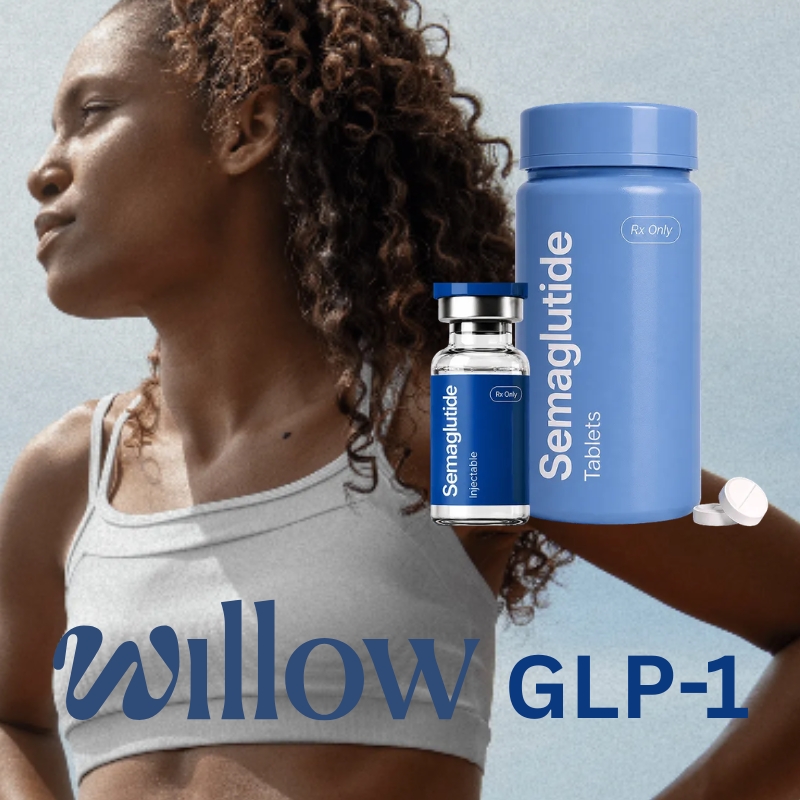
Willow GLP-1 offers convenient, doctor-led weight management from home. Complete an online health assessment, then receive a personalized review from a U.S.-licensed clinician who determines whether prescription treatment is appropriate. Available options may include semaglutide or tirzepatide tablets and weekly injections, with ongoing care-team support and free, discreet shipping. Plans currently start at $299 monthly, and Willow states they may be FSA/HSA eligible, subject to individual plan rules. Prescription approval and product availability vary. Compounded medications are not FDA-approved or reviewed for safety, effectiveness, or quality. Individual results vary. Choose Willow for accessible, supported, fully online care on your schedule.
Description
Medical and editorial disclosure: This independent educational article reviews information published by Willow and public regulatory sources. It is not medical advice and does not guarantee eligibility, a prescription, medication availability, insurance or FSA/HSA reimbursement, or weight-loss results. Willow connects patients with independent licensed clinicians; Willow is not the prescribing clinician, compounding pharmacy, or drug manufacturer. Compounded medications are not FDA-approved, and the FDA does not review them for safety, effectiveness, or quality before marketing. A licensed clinician must determine whether any prescription is appropriate.
Willow is a U.S. telehealth platform offering online access to clinician-guided weight-management care. The platform advertises semaglutide and tirzepatide in injectable and tablet forms, subject to medical eligibility, prescribing decisions, state availability, and pharmacy fulfillment. Its service model combines an online assessment, review by a U.S.-licensed doctor, medication when prescribed, ongoing messaging and follow-up support, and free discreet shipping.
For people researching “Willow GLP-1 reviews,” the most important point is that Willow is a care-access platform rather than a drug manufacturer. The medication decision belongs to an independent clinician. Willow also states that its semaglutide and tirzepatide offerings may be compounded. Those products should not be described as generic Wegovy, Ozempic, Zepbound, or Mounjaro, or as equivalent to those FDA-approved brands. The distinction affects how prospective patients should evaluate evidence, risks, pricing, pharmacy information, and marketing claims.
This review explains the Willow process, available treatment formats, published starting prices, eligibility, safety considerations, support features, and the questions worth asking before enrolling. Service details can change, so readers should confirm current terms directly at StartWillow.com before paying.
What Is Willow GLP-1 Care?
Willow describes itself as a 100% online, medically supervised weight-loss program. Patients begin by completing a health assessment. A licensed U.S. clinician reviews the submitted history, goals, medications, and other relevant information and decides whether treatment is medically appropriate. A completed assessment does not guarantee approval or a prescription.
If a clinician prescribes treatment, Willow says the plan can include the medication, clinician access, online care-team support, follow-ups, educational guidance, and delivery. The website currently presents four options: semaglutide tablets, semaglutide injection, tirzepatide tablets, and tirzepatide injection. Availability may vary by state, patient needs, clinician judgment, and pharmacy capabilities.
Willow states that prescriptions are reviewed by independent licensed physicians and prepared by state-licensed pharmacy partners. The company also says it is not itself a compounding pharmacy or manufacturer. This role separation matters: Willow facilitates the care experience, the clinician evaluates and prescribes, and the pharmacy prepares and dispenses the medication.
How the Willow Process Works
1. Complete the online assessment
The first step is a questionnaire covering health history and weight-management goals. Willow promotes this as a free assessment and says eligible patients may receive a same-day review. “Same-day” is a service claim from Willow, not a guaranteed medical approval time. A clinician may need additional information, and a prescription may be declined when treatment is inappropriate.
Patients should answer every screening question accurately. Relevant information can include current medications, prior reactions, pregnancy status, digestive conditions, endocrine history, kidney or gallbladder concerns, and personal or family medical history. Omitting information can make remote prescribing less safe.
2. Receive an independent clinical review
A U.S.-licensed doctor reviews the information and determines whether a prescription is appropriate. The clinician may recommend one option, request follow-up information, or decide that GLP-1 treatment is not suitable. Patient preference may inform the discussion, but it does not replace clinical judgment.
The word “personalized” should be understood in this practical sense: the clinician considers the individual record and selects or adjusts a plan. It does not mean that every patient receives a unique drug, that a compounded preparation is automatically necessary, or that a particular result can be predicted.
3. Receive medication and ongoing support if prescribed
Willow says prescribed medication is shipped free in discreet packaging and that patients receive access to their doctor, the Willow Care Team, regular follow-ups, video guides, and an online peer community. Patients should verify expected dispatch times, the dispensing pharmacy, storage instructions, refill procedures, and what support is available after hours.
For refrigerated injectable medication, inspect the shipment promptly. The FDA advises patients not to use injectable GLP-1 products that arrive warm or with inadequate refrigeration when refrigeration is required by the product instructions. Contact the dispensing pharmacy or care team if packaging is damaged, labeling is unclear, or the product appears different from what was expected.
Willow Treatment Options
Semaglutide injection
Willow markets semaglutide injection as a weekly option. Semaglutide acts at the glucagon-like peptide-1 receptor and can affect appetite, fullness, and gastric emptying. Evidence supporting FDA-approved semaglutide products cannot automatically be transferred to every compounded preparation. The exact formulation, concentration, instructions, and pharmacy source should be confirmed for the product actually dispensed.
Semaglutide tablets
Willow also advertises a daily needle-free semaglutide option. Consumers should not assume that a compounded semaglutide tablet is the same as an FDA-approved oral semaglutide product or that data from an approved product establishes the safety or effectiveness of Willow’s compounded tablet. Ask the clinician what is being prescribed, why that route is appropriate, how it should be taken, and what evidence supports the chosen formulation.
Tirzepatide injection
Willow describes tirzepatide injection as a weekly, dual-action treatment because tirzepatide acts at both GIP and GLP-1 receptors. As with semaglutide, the clinician must decide whether it is appropriate. Compounded tirzepatide is not FDA-approved and is not the same product as Zepbound or Mounjaro.
Tirzepatide tablets
Willow advertises daily tirzepatide tablets as a needle-free option. This category deserves especially careful questioning. Patients should ask whether the product is compounded, identify the dispensing pharmacy, obtain the precise active ingredient and strength, and discuss the evidence and uncertainties around the oral formulation with the prescriber. “Needle-free” describes the route of administration; it does not prove equivalence to an approved injectable drug or guarantee comparable outcomes.
Semaglutide vs Tirzepatide at Willow
Semaglutide is a GLP-1 receptor agonist. Tirzepatide activates both GIP and GLP-1 receptors. These pharmacologic differences do not establish which Willow option is best for a specific patient. Medical history, tolerability, prior treatment, medication interactions, route preference, affordability, and the exact product available all matter.
Willow’s comparison page says tirzepatide starts at a higher monthly price than semaglutide. It also presents both injections as weekly and both tablet options as daily. The final prescription and schedule should come from the clinician and dispensing label, not from a general marketing page.
No responsible review can promise that one option will produce more weight loss for an individual. Results from trials of FDA-approved products reflect particular formulations, doses, eligibility criteria, monitoring, and study populations. They should not be presented as guaranteed results for compounded products or for any individual Willow patient.
Willow GLP-1 Pricing
As checked in September 2026, Willow’s website lists treatment plans starting at $299 per month. Its semaglutide-versus-tirzepatide page lists semaglutide starting at $299 per month and tirzepatide starting at $399 per month. Willow states that pricing varies according to the treatment plan and dose.
According to Willow, the plan includes a medical evaluation, a personalized treatment plan, medication when prescribed, unlimited access to the Willow doctor, 24/7 online support from the care team, and free discreet shipping. These are brand-stated inclusions and should be reconfirmed at checkout. Prospective patients should also check whether laboratory work, anti-nausea medication, dose changes, replacement shipments, cancellation, or other services create additional charges.
Willow says insurance is not required. That does not mean insurance will cover the program or reimburse the medication. It also markets plans as FSA- and HSA-eligible. Eligibility for reimbursement can depend on the expense, plan rules, documentation, and individual circumstances. Patients should confirm coverage with their plan administrator and retain itemized receipts or requested medical-necessity documents. Avoid treating “FSA/HSA eligible” as an absolute promise that every purchase will be reimbursed.
Who May Be Eligible?
Willow does not provide a universal approval rule on the homepage. It says a licensed doctor reviews each patient’s health history, goals, medications, and individual needs. This is the correct place for the decision: eligibility cannot be established by a blog post, a BMI calculator alone, or a testimonial.
FDA-approved chronic weight-management drugs have label-specific eligibility criteria, contraindications, warnings, and monitoring requirements. A compounded prescription is not FDA-approved and does not acquire an approved indication merely because it contains the same named active ingredient. Patients should ask the prescriber what medical rationale applies to their case and whether an FDA-approved option can meet their needs.
Pregnant patients, people planning pregnancy, and those who are breastfeeding need specific medical advice. People with a personal or family history relevant to thyroid tumors or MEN 2, prior pancreatitis, severe gastrointestinal problems, gallbladder disease, kidney concerns, diabetic retinopathy, or concurrent glucose-lowering medication should disclose that information and discuss it with the clinician. This list is not exhaustive.
Safety, Side Effects, and Compounded-Drug Considerations
Commonly reported adverse effects associated with GLP-1-based therapies include nausea, vomiting, diarrhea, constipation, abdominal discomfort, indigestion, and reduced appetite. Injection-site reactions may occur with injectable products. More serious risks and contraindications depend on the drug, formulation, dose, and patient history. The prescribing information or pharmacy materials for the exact medication should guide the discussion.
Willow’s website mentions access to ondansetron for nausea and vomiting. That medication also requires an individualized prescribing decision and has its own risks and interactions. It should not be treated as proof that side effects will be mild or manageable for everyone.
The FDA states that compounded GLP-1 drugs do not undergo its premarket review for safety, effectiveness, or quality. The agency recommends compounded drugs only when a patient’s medical needs cannot be met by an FDA-approved drug and advises consumers to use a prescription and a state-licensed pharmacy. The FDA has also reported dosing errors involving compounded injectable semaglutide, concerns about doses beyond approved labeling, improper shipping temperatures, fraudulent labels, and semaglutide salt forms that differ from the active ingredient used in approved drugs.
Before using a dispensed medication, verify:
- the patient name, prescriber, pharmacy, active ingredient, concentration, directions, and beyond-use date on the label;
- whether the pharmacy is licensed in the relevant state;
- whether semaglutide is the base form rather than semaglutide sodium or acetate;
- the exact syringe units or tablet instructions and how those correspond to the prescribed dose;
- storage requirements and what to do if a shipment arrives warm or damaged; and
- how to reach the prescriber or pharmacy with dosing or adverse-effect questions.
Never infer a dose from another patient’s instructions or from a social-media video. With compounded injections, concentration can differ between products, so the same syringe-unit marking may not represent the same drug dose.
Seek urgent medical care for severe or persistent symptoms, signs of an allergic reaction, severe abdominal pain, inability to keep fluids down, or any symptom the clinician has identified as urgent. Call 911 for a medical emergency.
What Willow Says Is Included
Willow promotes convenience as a primary feature. The advertised service includes online intake, physician review, messaging, follow-ups, care-team access, video instructions, a peer community, and delivery. For patients who have difficulty attending frequent office visits, those features may reduce logistical barriers.
Convenience does not remove the need for careful monitoring. Before enrollment, ask how often clinician follow-ups occur, whether communication is synchronous or message-based, how response times are handled, who covers urgent questions, how adverse events are documented, and how care coordinates with a primary-care clinician. Patients with complex medical histories may need in-person examination, laboratory testing, or closer follow-up than an online pathway alone can provide.
How to Interpret Willow Reviews and Testimonials
Willow’s website states that more than 100,000 patients have used the service and displays a 4.9/5 rating with more than 2,200 five-star reviews. It also publishes testimonials reporting specific amounts of weight loss. These are Willow’s marketing claims and selected user experiences, not controlled clinical evidence or a forecast of what a new patient will experience.
Testimonials may be useful for learning what customers thought about ordering, communication, packaging, or support. They are less reliable for determining expected clinical results because individual histories, adherence, treatment duration, medication, dose, side effects, and concurrent behavior changes can differ. The website places a “results may vary” disclaimer near outcome testimonials; any republication of those testimonials should keep a clear, adjacent disclosure and should not imply typicality unless Willow has substantiation for typical results.
Independent evaluation should focus on verifiable service details: clinician licensing, pharmacy identity, prescription safeguards, transparent billing, cancellation procedures, medication labeling, response processes, and safety follow-up. A high rating cannot substitute for those checks.
Potential Advantages of Willow
Willow’s apparent strengths are its fully online process, access to licensed clinicians, multiple administration formats, bundled support, free discreet shipping, and published starting prices. The platform also clearly states that compounded drugs are not FDA-approved and that Willow is not the pharmacy or manufacturer. That disclosure is essential.
For an appropriate patient who understands the product being prescribed, the service may offer a structured way to discuss GLP-1 treatment without routine office visits. The availability of ongoing messaging and follow-up support could also be valuable when those services operate as described.
These are service features, not proof of superior medical outcomes. Claims that Willow is better, safer, faster, or more effective than other providers would require direct comparative evidence.
Limitations and Questions to Resolve Before Paying
The largest limitation is that the promoted medication may be compounded rather than FDA-approved. Consumers must evaluate a specific prescription and pharmacy, not merely the reputation of the telehealth website. Tablet versions also require precise clarification because they should not be assumed equivalent to approved injectable products or other oral products.
Pricing is presented as “starting at,” so the final monthly cost may vary. “Same-day” review and shipping language should not be understood as guaranteed approval or delivery. FSA/HSA eligibility is subject to plan rules. Medication and service availability can vary by state.
Ask these questions before enrolling:
- What exact medication and formulation would be prescribed, and is it FDA-approved or compounded?
- Why is this option appropriate for me, and can an FDA-approved drug meet my needs?
- Which pharmacy will dispense it, and is that pharmacy licensed in my state?
- What is the complete monthly cost at my expected dose?
- Are labs, follow-ups, dose changes, supplies, and side-effect treatment included?
- What are the cancellation, refund, pause, and refill rules?
- What concentration will I receive, and how will dosing be taught and verified?
- What follow-up schedule and emergency instructions apply?
- How should the shipment be stored, and what happens if it arrives warm or damaged?
- What documentation is available for an FSA or HSA claim?
Willow GLP-1 Frequently Asked Questions
Is Willow a pharmacy?
No. Willow states that it is a telehealth platform connecting patients with independent licensed physicians. The company says medication is prepared and dispensed by state-licensed pharmacy partners. Patients should confirm the name and license of the actual dispensing pharmacy on their prescription and package.
Are Willow GLP-1 medications FDA-approved?
Willow states that its compounded semaglutide and tirzepatide products are not FDA-approved and are not reviewed by the FDA for safety, effectiveness, or quality. Do not confuse a compounded product with FDA-approved Wegovy, Ozempic, Zepbound, or Mounjaro. Ask the clinician whether the specific prescription is approved or compounded.
Does everyone who completes the assessment receive a prescription?
No. Prescription treatment requires an online consultation and an independent clinician’s determination that it is medically appropriate. Willow’s eligibility assessment and same-day-review language do not guarantee approval, medication, or a particular treatment.
Does Willow offer injections and tablets?
The website currently advertises semaglutide and tirzepatide in injectable and tablet formats. Availability depends on state, clinician judgment, patient needs, and pharmacy fulfillment. A tablet should not be described as equivalent to an approved injection without appropriate evidence.
How much does Willow cost?
Willow currently lists plans starting at $299 per month. Its comparison page lists semaglutide from $299 per month and tirzepatide from $399 per month, with pricing varying by treatment plan and dosage. Confirm the exact recurring charge and all included services before checkout.
Does Willow accept insurance?
Willow says insurance is not required. This is different from saying a plan is covered by insurance. Ask the insurer directly about reimbursement or coverage and obtain the billing information it requires.
Can I pay with FSA or HSA funds?
Willow markets its treatment as FSA/HSA eligible. Reimbursement is controlled by the individual plan and applicable rules, so eligibility should be confirmed with the administrator. Keep receipts and request any required supporting documentation.
How quickly will medication arrive?
Willow promotes same-day clinician review and free discreet delivery, but timing can depend on the completeness of the assessment, clinician questions, prescribing eligibility, pharmacy processing, state availability, and shipping. Confirm a current estimate directly; do not interpret the marketing language as guaranteed delivery on the same day.
What if I experience side effects?
Contact the prescribing clinician or dispensing pharmacy using the instructions provided. Do not independently change the dose. Seek urgent help for severe symptoms and call 911 for an emergency. Side-effect treatment, including ondansetron, requires its own clinical assessment.
Is Willow GLP-1 treatment guaranteed to work?
No. Willow states that individual results vary and are not guaranteed. Clinical-trial averages for FDA-approved drugs do not predict an individual result and cannot automatically substantiate outcomes for compounded formulations.
Final Assessment
Willow presents a streamlined telehealth pathway for patients seeking clinician-guided weight-management care. Its published offer is straightforward: online assessment, review by a licensed physician, semaglutide or tirzepatide in an injectable or tablet format when prescribed, ongoing online support, and free discreet shipping. Published prices currently begin at $299 per month for semaglutide and $399 per month for tirzepatide, subject to plan and dose.
The compliance and consumer-safety conclusion is equally clear. Willow is the platform, not the formulator, manufacturer, or prescribing decision-maker. Compounded GLP-1 products are not FDA-approved and must not be represented as equivalent to approved brands. Eligibility, product selection, dosing, reimbursement, side effects, and results are individual matters requiring licensed clinical review.
Willow may appeal to consumers who value remote access and bundled support, but the decision should follow verification of the exact medication, pharmacy, price, follow-up process, and cancellation terms. The most useful next step is not to rely on an online review as a diagnosis; it is to bring a complete medical and medication history to a qualified clinician and ask the specific questions outlined above.
Editorial note: Pricing, treatment availability, pharmacy relationships, eligibility rules, and service terms may change. Verify current information with Willow, the prescribing clinician, the dispensing pharmacy, and the relevant benefits administrator.