$199.00
Willow NAD+ offers convenient, doctor-guided access to compounded NAD+ injections for adults seeking support for steadier energy, clearer thinking, and vitality. The fully online program includes a licensed clinician’s assessment, pharmacy-prepared medication, injection supplies, free discreet shipping, and ongoing care-team support. Treatment is personalized and prescribed only when medically appropriate, making Willow a practical choice for people who value professional oversight without office visits. Plans are listed at $199 per month and may be HSA/FSA eligible. Compounded NAD+ is not FDA-approved, results vary, and treatment involves potential risks. Consult your Willow clinician to determine whether it is appropriate for you.
Description
Medical and editorial disclosure: This article is independent educational content and is not medical advice. Willow is a telehealth platform, not the manufacturer or compounding pharmacy. Its NAD+ product is a prescription compounded medication available only when an independent licensed clinician determines that treatment is appropriate. Compounded NAD+ is not FDA-approved, and the FDA does not evaluate compounded medications for safety, effectiveness, or quality before marketing. Availability, pricing, eligibility, and treatment details may change and can vary by state. Individual results vary and are not guaranteed. Seek prompt medical care for persistent or unexplained fatigue, cognitive changes, or other concerning symptoms rather than assuming they are caused by low NAD+.
Interest in NAD+ has moved rapidly from research laboratories into wellness clinics and telehealth programs. People searching for steadier energy, sharper focus, better recovery, or a more refreshed appearance may now encounter prescription NAD+ injections alongside capsules, precursor supplements, intravenous infusions, and broad “longevity” packages. Willow is one of the online-care providers offering a doctor-reviewed NAD+ injection program, currently promoted at $199 per month.
That positioning is attractive, particularly for adults who feel that their energy is not as dependable as it once was. It also requires careful interpretation. NAD+ is essential to human biology, but the fact that a molecule performs important functions in cells does not automatically prove that injecting more of it will produce a specific wellness result. Marketing language, biological plausibility, patient experiences, and clinical evidence are different kinds of information. A responsible Willow NAD+ review must keep them separate.
According to the Willow NAD+ page, the program combines a remote health assessment, review by a U.S.-licensed clinician, a prescription when medically appropriate, pharmacy preparation, supplies for subcutaneous administration, shipping, and continued support. Willow describes the goal as supporting the body’s natural energy production without the stimulated feeling associated with caffeine. The company also discusses clearer thinking, steadier day-to-day energy, recovery, and a brighter-looking complexion. Those are Willow’s descriptions of the treatment and reported patient experiences; they should not be read as guaranteed or independently established outcomes.
This article examines what NAD+ is, what Willow says its program includes, how the online process works, what the research can and cannot establish, how injections differ from supplements, potential side effects, pricing, and the questions a prospective patient should ask before enrolling. The goal is neither to sell the treatment as a fountain of youth nor to dismiss it simply because the evidence is still developing. It is to give readers enough context to have a useful conversation with a qualified clinician.
What Is Willow NAD+?
Willow NAD+ is a telehealth-based prescription program centered on compounded injectable nicotinamide adenine dinucleotide, commonly abbreviated NAD+. Willow does not present itself as the dispensing pharmacy or drug manufacturer. Instead, its platform connects patients with independent licensed physicians who assess whether prescription treatment may be appropriate. If a clinician approves treatment, the medication is prepared by a compounding pharmacy and shipped with administration supplies.
The official page describes the medication as a small subcutaneous injection. “Subcutaneous” means the medication is injected into the fatty tissue beneath the skin rather than directly into a vein or muscle. Willow states that treatment begins three times per week during the first month, after which a patient may remain at that frequency or move to once-weekly dosing under clinician guidance. Elsewhere in the FAQ, the company describes administration as one to three times weekly. These statements are not necessarily incompatible, but they reinforce an important point: the prescribing clinician’s directions and the pharmacy label—not a general online article—control an individual patient’s schedule.
Willow currently lists the program at $199 per month and labels it HSA/FSA eligible. Tax-advantaged account eligibility is not an absolute promise for every consumer. Whether an expense qualifies can depend on the person’s plan, documentation, prescription, and applicable tax rules. Prospective patients should confirm reimbursement requirements with their HSA or FSA administrator before assuming the charge will be covered or reimbursed.
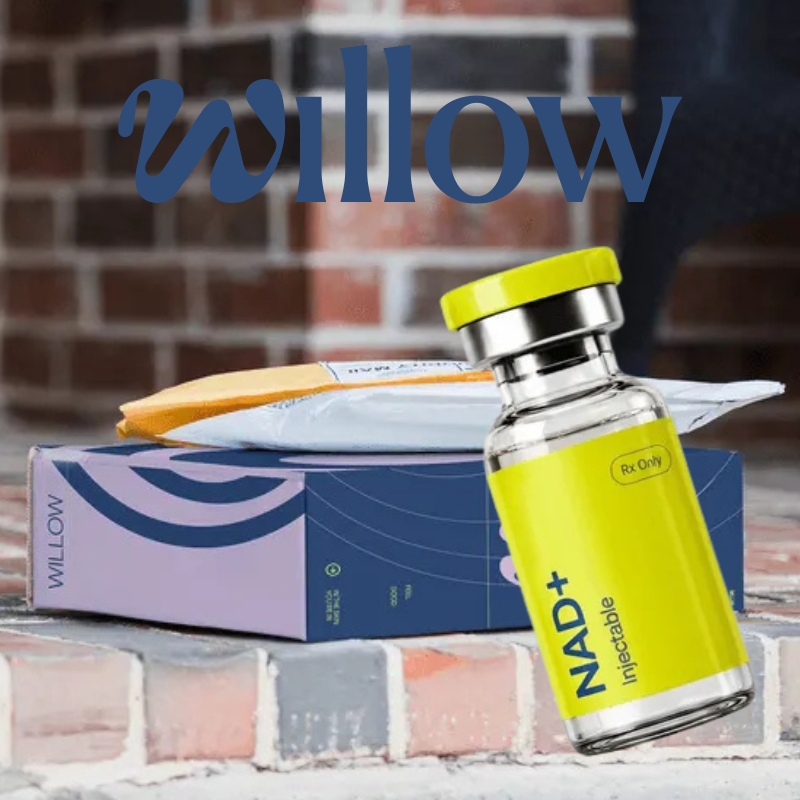
The advertised package includes the vial, syringes, needles, free shipping, access to a Willow doctor, and round-the-clock support from the company’s Patient Care Services Team. The page also promotes an online assessment and same-day clinician review. “Same-day assessment” should not be interpreted as guaranteed prescribing, immediate delivery, or proof that every applicant qualifies. A legitimate prescription decision must depend on the clinician’s evaluation of the patient’s history, risks, current medications, symptoms, and state-specific availability.
Willow states that it has served more than 100,000 patients across its services. That is a brand-reported platform-wide figure, not evidence that 100,000 people have used NAD+ or that a particular outcome is likely. Similarly, the page displays a 4.9/5 score and more than 2,200 five-star reviews. Reviews can help a reader understand experiences with convenience, support, shipping, or perceived effects, but testimonials cannot establish safety or effectiveness. People featured in reviews may have atypical experiences, and individual results vary.
What Is NAD+ and Why Does It Matter?
NAD+ is a coenzyme found in living cells. A coenzyme helps enzymes perform chemical reactions. NAD+ participates in redox reactions, accepting and transferring electrons as cells process carbohydrates, fats, and proteins. Through these pathways, it contributes to the production of adenosine triphosphate, or ATP, which cells use as an immediate source of energy.
NAD+ also acts as a substrate for enzymes involved in cell signaling and maintenance, including sirtuins, poly(ADP-ribose) polymerases, and CD38. These pathways have connections to DNA-damage responses, cellular stress, inflammation, metabolism, and other functions. This central role explains why scientists are interested in NAD+ biology and why marketers frequently connect it with energy and aging.
The body does not rely only on externally administered NAD+. It can synthesize and recycle NAD+ through several pathways using compounds related to vitamin B3, including niacin, nicotinamide, nicotinamide riboside, and nicotinamide mononucleotide. The NIH Office of Dietary Supplements’ niacin fact sheet explains the broader nutritional role of niacin and its coenzyme forms in cellular metabolism. That background supports the statement that NAD-related chemistry is biologically important; it does not prove that a particular injectable regimen treats fatigue, brain fog, skin aging, or any disease.
Research has reported that NAD+ availability changes with age in various tissues and experimental settings. However, “NAD+ declines with age” is often presented too simply in consumer marketing. Human biology varies by tissue, health status, behavior, medication use, and measurement method. Even if a level is lower in a certain context, researchers must still determine whether raising it changes outcomes that matter to patients, which delivery method works, what dose is appropriate, and whether long-term use is safe.
This distinction is especially important when discussing “youthful energy.” The phrase communicates a desired experience, not a recognized diagnosis or a validated clinical endpoint. Fatigue and cognitive complaints can have many causes: inadequate sleep, stress, depression, anemia, thyroid disorders, infection, medication effects, nutrient deficiencies, sleep apnea, cardiovascular disease, metabolic conditions, and more. NAD+ treatment should not become a shortcut around appropriate evaluation.
The Science Behind NAD+ Injections
There is a strong mechanistic basis for studying NAD+ because the molecule is indispensable to cellular metabolism. The clinical question is narrower: does prescribing compounded subcutaneous NAD+ improve energy, cognition, recovery, mood, skin appearance, or healthy aging in generally healthy adults, and does it do so with an acceptable risk profile?
At present, the answer is not established with the confidence expected for an FDA-approved indication. A recent systematic review indexed by PubMed assessed preclinical and clinical evidence relating to NAD+ supplementation for wellness and anti-aging. The existence of clinical research is encouraging, but the field includes different interventions—direct NAD+, intravenous delivery, oral precursor compounds, different doses, and different populations. Results from one formulation or route cannot automatically be transferred to another.
Animal studies and laboratory experiments can reveal mechanisms and generate hypotheses. They cannot tell a prospective Willow patient what she or he will feel after a subcutaneous compounded injection. Small human studies can identify signals, but they may be limited by sample size, short follow-up, lack of a placebo comparison, selection bias, or reliance on subjective outcomes. Well-designed randomized controlled trials are more informative because they can separate an intervention effect from natural symptom fluctuation, expectation, lifestyle changes, and placebo effects.
Direct comparisons between Willow’s regimen and placebo, common supplements, caffeine, sleep optimization, or other interventions are not presented on the product page. Therefore, claims that the injection is “more reliable” or produces steadier support than pills should be treated as brand positioning unless supported by product-specific clinical data. Bypassing digestion changes the route of exposure, but route alone does not establish superior clinical outcomes.
The same caution applies to skin language. Cellular energy and repair are relevant to tissue biology, but that does not prove that injected NAD+ will visibly brighten a person’s complexion. Appearance is influenced by hydration, sun exposure, sleep, nutrition, skincare, smoking, hormones, illness, and many other factors. Willow frames complexion changes as something many patients notice. That is a report of experience, not a guaranteed cosmetic effect.
None of this means that every patient report is invalid. A person may genuinely perceive improved energy or clarity. It means that patient reports answer a different question than controlled trials. Testimonials tell us what selected individuals say happened; clinical studies estimate whether the intervention caused an outcome, how large the average effect may be, how frequently it occurs, and what harms accompany it.
Potential Benefits: What Willow Says and What Readers Should Infer
Willow organizes the proposed benefits around energy and clarity, recovery and appearance, and long-term support. These categories are understandable, but each requires precise framing.
Steadier energy
Willow says NAD+ supports how the body produces and uses energy at a cellular level. That biological statement is broadly plausible because NAD+ participates in metabolism. The next step—feeling more energetic—is a clinical outcome and is less certain. A patient may notice a change, may notice no change, or may find that another health issue better explains low energy. The treatment is not a substitute for sleep, adequate nutrition, physical activity suited to the individual, or investigation of persistent fatigue.
The company’s “natural, not stimulated” positioning is meant to distinguish the experience from caffeine or other stimulants. Compounded NAD+ is not simply a stimulant product, but “natural-feeling” is subjective. It should not be interpreted to mean side-effect-free, risk-free, or universally smooth.
Clearer thinking and less brain fog
Brain fog is a common but nonspecific description. People may use it to mean difficulty concentrating, forgetfulness, slowed thinking, mental fatigue, or reduced alertness. Willow reports that patients may feel more focused or clear. The program is not represented here as an approved treatment for dementia, attention-deficit/hyperactivity disorder, depression, long COVID, neurological disease, or another condition. New, worsening, or disruptive cognitive symptoms deserve medical evaluation.
Recovery and a more consistent baseline
Willow connects NAD+ biology with cellular repair and says patients may feel less depleted after demanding days. This is better understood as a wellness goal than as a proven treatment effect. “Recovery” could refer to exercise, stress, sleep loss, illness, or general workload, and those are not interchangeable endpoints. Readers should ask which outcome is being discussed and whether any evidence is specific to people like them.
A brighter-looking complexion
The official page uses cautious appearance language rather than promising treatment of a dermatologic condition. That is an important distinction. A perceived brighter or less dull appearance is subjective, and there is no basis to promise that every user will see it. Anyone with a persistent skin change, rash, pallor, jaundice, or another concerning sign should seek appropriate medical advice rather than treating it as a cosmetic NAD+ issue.
“Healthy aging” versus anti-aging promises
NAD+ is frequently marketed with terms such as longevity, rejuvenation, cellular youth, and age reversal. Those phrases can overstate the available human evidence. Willow’s page emphasizes youthful energy rather than promising longer life or reversal of aging. A compliant interpretation is that the service is intended to support patient-reported wellness goals under medical supervision. It should not be presented as proven to extend lifespan, reverse biological age, prevent age-related disease, repair all cellular damage, or make the body younger.
Who Might Consider Willow NAD+?
Willow describes the program as potentially relevant for adults who feel run down despite rest, push through their days, experience mental fatigue, recover more slowly from demanding schedules, or want to feel more like themselves. Those concerns may justify a conversation with a clinician, but they do not by themselves establish candidacy.
A thoughtful consultation should start by clarifying the symptom. When did it begin? Is it constant or intermittent? Does it relate to sleep, meals, stress, exercise, the menstrual cycle, a new medication, or a recent illness? Are there warning signs such as chest pain, shortness of breath, fainting, weakness on one side, confusion, severe headache, unexplained weight change, bleeding, fever, or rapidly worsening function? Depending on the answers, a clinician may recommend in-person examination, testing, urgent care, or management of another condition instead of a wellness injection.
Prospective patients should disclose their complete medical history, allergies, current prescriptions, over-the-counter products, supplements, pregnancy or breastfeeding status, previous injection reactions, and any history that may affect treatment. The prescribing clinician—not the marketing page—must decide whether the potential benefits justify the risks for an individual.
Willow’s model may appeal to adults who value remote access, home administration, recurring delivery, and clinician support. It may be less suitable for someone uncomfortable with self-injection, someone who cannot safely store or dispose of sharps, someone who needs hands-on evaluation, or someone expecting a guaranteed transformation. It is also a poor fit for anyone seeking treatment without fully disclosing health information or intending to change the prescribed dose independently.
How Willow NAD+ Works: The Telehealth Process
The process begins with an online assessment covering health history and goals. Willow describes this as free and promotes same-day assessment. Completing a form is only the first step; it does not establish medical eligibility.
Next, a U.S.-licensed doctor reviews the information. Willow says the physician confirms a prescription the same day when appropriate. A prospective patient should understand whether the interaction is asynchronous, by video, by phone, or a combination, and how follow-up questions are handled. State laws and clinical circumstances may affect the process.
If treatment is prescribed, Willow says the medication is prepared by a pharmacy and shipped discreetly at no additional shipping charge. The package reportedly includes a vial of injectable NAD+, syringes, and needles. Patients also receive access to instructions, their Willow doctor, and 24/7 support from the Patient Care Services Team.
The product page says treatment initially involves three injections per week, with the possibility of transitioning to weekly administration after the first month. Its FAQ uses a broader one-to-three-times-per-week description. Patients should follow the exact pharmacy label and clinician directions supplied with their prescription. They should not copy another customer’s schedule or rely on a review article for dose, injection volume, storage, beyond-use date, or technique.
Before the first dose, the patient should know how to inspect the vial, prepare a clean workspace, use a new sterile needle and syringe, select and rotate injection sites, dispose of sharps, store the medication, recognize a possible reaction, and contact the care team. If the solution appears abnormal, packaging is damaged, temperature control may have failed, or the label conflicts with the instructions, the safest course is to pause and contact the dispensing pharmacy or prescriber.
How Are NAD+ Injections Different From Supplements?
Consumers may encounter several products under the NAD+ umbrella. Oral products often contain precursors such as nicotinamide riboside or nicotinamide mononucleotide rather than NAD+ itself. Other products use niacin or nicotinamide. Clinics may offer intravenous NAD+ infusions, while Willow promotes subcutaneous compounded NAD+ injections. These are not interchangeable.
Willow argues that injections bypass digestion and allow more efficient and consistent absorption than pills. It is reasonable that an injected substance avoids the digestive tract, but this does not by itself prove that Willow’s regimen produces better energy, focus, recovery, appearance, or long-term health than a particular oral product. A fair comparison would require evidence about pharmacokinetics, dose, formulation, adherence, safety, and meaningful clinical outcomes.
Supplements are generally regulated differently from prescription drugs. They do not require premarket FDA approval in the same way as approved medications, and label quality can vary. A prescription compounded injection adds clinician oversight and pharmacy preparation, but it also adds injection-specific risks and does not become FDA-approved merely because a prescription is required.
Convenience differs as well. A capsule is easy to take and does not create sharps waste. A subcutaneous injection may provide a controlled route but requires training, sterile technique, storage, and comfort with needles. Intravenous delivery requires venous access and is typically administered in a clinic, making it more time-intensive. “Best” depends on evidence, medical appropriateness, patient preference, cost, and risk—not simply on which route sounds most advanced.
Compounded NAD+ and FDA Status
This is the central regulatory fact: Willow’s compounded NAD+ is not FDA-approved. The FDA explains that compounded drugs are not reviewed by the agency for safety, effectiveness, or quality before they are marketed. Compounded medications can meet an important need for some patients, but poor-quality or contaminated products can cause serious harm.
Willow states that its medications are prepared by state-licensed compounding pharmacies operating under state boards of pharmacy and required to meet applicable USP compounding standards. That is a brand statement about its pharmacy partners. It does not mean that the FDA has approved the finished NAD+ medication, certified its effectiveness, or determined that it is equivalent to an approved brand-name drug. Willow also states that compounded medications are not brand-equivalent.
Readers should avoid two opposite errors. The first is assuming that “compounded” means fake or automatically unlawful; compounding has legitimate medical uses. The second is assuming that “doctor-prescribed” or “pharmacy-prepared” makes a compounded product identical to an FDA-approved medication. These categories carry different forms of oversight and evidence.
Useful questions include the name of the dispensing pharmacy, whether it is licensed to ship to the patient’s state, what testing or quality documentation applies, the medication’s concentration and ingredients, required storage, its beyond-use date, and whom to contact about product-quality concerns. Patients can also check the relevant state board of pharmacy for licensing information.
Side Effects, Risks, and Safety Considerations
Willow says most people tolerate the injections well and lists possible mild effects including redness or soreness at the injection site, brief flushing, fatigue, and mild headache. This is the company’s summarized safety information, not a complete risk profile for every patient. The official safety materials, prescriber guidance, pharmacy label, and individual medical review should control treatment decisions.
Any injection can create localized pain, bruising, swelling, bleeding, irritation, or infection. Incorrect technique, reuse of equipment, contamination, or improper storage can increase risk. Needles and syringes should be used once and disposed of in an appropriate sharps container according to local rules. Medication should never be shared.
Patients should ask in advance which symptoms require stopping treatment and seeking help. Severe allergic symptoms—such as difficulty breathing, swelling of the face or throat, widespread hives, or fainting—require emergency attention. Significant redness, warmth, drainage, fever, or worsening pain could indicate infection and should be assessed promptly. Unexpected or severe symptoms should not be dismissed as evidence that the treatment is “working.”
Long-term safety is another area where certainty is limited. The absence of a dramatic immediate reaction does not prove that indefinite use is beneficial or risk-free. Patients should know the planned duration, how the clinician will judge benefit, whether any monitoring is recommended, and when treatment should be discontinued if goals are not met.
The potential for opportunity cost also matters. Spending money and time on NAD+ could delay evaluation or evidence-based treatment for sleep apnea, anemia, thyroid disease, depression, medication side effects, or another cause of fatigue. Responsible telehealth care should create a pathway to broader evaluation when symptoms suggest it.
Pricing: What Does Willow NAD+ Cost?
As of this review, Willow lists NAD+ at $199 per month. The page says free shipping is included, along with the injectable solution, syringes, needles, doctor access, and 24/7 care-team support. Because telehealth offers change, consumers should confirm the current checkout total and recurring terms before enrolling.
The phrase “$199 per month” does not answer every financial question. Before paying, ask whether there is an assessment fee, whether the subscription renews automatically, how cancellation works, when an order becomes nonrefundable, what happens if the clinician does not approve treatment, whether follow-up visits cost extra, and whether replacement shipments are available if a package is delayed or damaged. Review the current terms and refund policy rather than relying solely on promotional copy.
Willow labels the service HSA/FSA eligible. Consumers should treat that as a prompt to verify, not as absolute insurance language. HSA or FSA reimbursement is different from insurance coverage. A plan administrator may request a receipt, prescription, letter of medical necessity, or other documentation, and eligibility depends on the plan and applicable rules. Willow does not promise on the cited page that commercial insurance will cover the subscription.
At $199 monthly, the annualized cost would be $2,388 if the price remained unchanged and the patient continued for twelve months. That simple calculation can help a consumer compare the program with other priorities. It does not account for price changes, pauses, taxes, ancillary care, or reimbursement.
Willow Reviews and Patient Experiences
Willow’s page highlights patients who describe feeling more energetic, focused, refreshed, motivated, or like themselves again. The page also reports a 4.9/5 rating and more than 2,200 five-star reviews. Such feedback may be meaningful to the people who shared it, but it must be interpreted carefully.
Testimonials are not clinical evidence. They generally do not reveal how people were selected, what other changes they made, whether they had a control comparison, how long the effect lasted, or how many users experienced no benefit. Positive reviews may also reflect satisfaction with customer service, convenience, or shipping rather than medication effectiveness. The quoted experiences on a company sales page should not be treated as representative or guaranteed.
When reading independent reviews, look for specifics about the entire care process: clinician responsiveness, clarity of instructions, pharmacy labeling, packaging, shipping temperature, billing, cancellation, side-effect support, and follow-up. Be skeptical of reviews that promise universal effects, dramatic anti-aging, instant cognitive transformation, or disease treatment. Also be cautious with one-star reports that attempt to prove that no one can benefit based on one individual’s experience. Both extremes can distort reality.
What Willow Gets Right—and What Requires Caution
Willow clearly states on the product page that compounded NAD+ is not FDA-approved and that the FDA does not review compounded medications for safety, effectiveness, or quality. That disclosure is important and more responsible than allowing “prescription” to imply approval. The page also states that Willow is not the compounding pharmacy or manufacturer and that prescribing depends on an online consultation.
The program’s practical strengths are convenience, remote clinician review, home delivery, included supplies, and access to support. For an eligible patient who understands uncertainty and is comfortable self-injecting, those features may reduce logistical barriers.
The main caution is that marketing moves beyond established cellular biology into patient-facing benefits that are not yet supported by definitive product-specific clinical evidence. Phrases about youthful energy, clearer thinking, recovery, and complexion are appealing, but they remain variable outcomes. The stronger the promised transformation sounds, the more carefully readers should look for controlled human evidence.
There are also visible template inconsistencies on the page. Its onboarding area refers to “weight loss care,” “monthly weight loss medication,” and “clinically-informed GLP-1 care,” even though the page is promoting NAD+, which is not a GLP-1 medication. Consumers should not infer that Willow NAD+ is a weight-loss drug or GLP-1 treatment. Those phrases appear to be reused website copy and should be clarified by the brand.
Questions to Ask Before Starting
Before enrolling, a prospective patient can improve the quality of the decision by asking:
- What symptoms or goals make me a reasonable candidate, and what alternative causes should be evaluated first?
- What exactly is in the compounded formulation, including active concentration and inactive ingredients?
- Which pharmacy prepares it, and is that pharmacy licensed to dispense in my state?
- What dose, injection volume, and frequency will be prescribed specifically for me?
- What evidence supports this route and regimen for my goal?
- Which side effects are expected, and which require stopping or seeking urgent care?
- Are there reasons my health conditions, pregnancy status, allergies, prescriptions, or supplements could make treatment unsuitable?
- How should I store the vial, and what should I do after a temperature excursion or damaged shipment?
- What is the beyond-use date, and how should unused medication and sharps be discarded?
- How will we decide whether treatment is helping, and after how long?
- What is the cancellation and refund policy, and when does recurring billing occur?
- What documentation is available if my HSA or FSA administrator requests it?
Specific answers are more useful than generalized reassurance. A clinician should be able to explain not only the potential upside but also uncertainty, alternatives, and stopping criteria.
Frequently Asked Questions
Is Willow NAD+ FDA-approved?
No. Willow explicitly states that its NAD+ is a compounded prescription medication and is not FDA-approved. The FDA does not review compounded medications for safety, effectiveness, or quality before they are marketed. A licensed clinician may still prescribe a compounded medication when appropriate, but prescription status must not be confused with FDA approval. Willow says partner pharmacies operate under state-board oversight and applicable compounding standards. Patients should verify the dispensing pharmacy and review the product-specific label and safety information.
Is Willow NAD+ a supplement?
No. The Willow offering discussed here is a doctor-prescribed compounded injectable medication, not an over-the-counter dietary supplement. Oral NAD-related supplements may contain precursors such as nicotinamide riboside, nicotinamide mononucleotide, niacin, or nicotinamide. Different substances and delivery routes should not be treated as interchangeable. Evidence from an oral precursor study does not automatically establish the benefits or risks of a compounded subcutaneous NAD+ injection.
Is NAD+ a GLP-1 or weight-loss medication?
No. NAD+ is not a GLP-1 receptor agonist and should not be described as one. Willow’s NAD+ page contains onboarding text referring to weight-loss medication and GLP-1 care, but that appears inconsistent with the treatment being promoted. Consumers should not assume NAD+ is proven to cause weight loss. Anyone seeking obesity treatment should discuss evidence-based options, risks, contraindications, and goals with a qualified clinician.
How is Willow NAD+ administered?
Willow describes it as a small subcutaneous injection. The company says patients generally inject one to three times per week and describes an initial schedule of three times weekly, with a possible transition after the first month under clinician guidance. Only the prescription label and treating clinician can provide an individual’s correct dose and schedule. Patients should receive training on sterile technique, site rotation, storage, and sharps disposal before administering medication.
What comes with the monthly treatment?
According to Willow, the package contains a vial of compounded NAD+ injectable solution, syringes, and needles. The service also includes access to a Willow doctor, 24/7 Patient Care Services support, and free discreet shipping. Contents and terms can change, so patients should confirm what is included at checkout and again when reviewing the pharmacy shipment. A patient should not use a shipment with damaged packaging, unclear labeling, or a suspected storage problem without contacting the pharmacy or care team.
When should someone expect results?
There is no guaranteed timeline. Willow says some patients report an early lift in alertness or energy, while other perceived improvements may develop with continued use. These are patient reports and company descriptions, not a promise that treatment will work within hours, days, or at all. A clinician should establish a reasonable trial period and a way to assess benefit. If symptoms persist or worsen, evaluation for other causes is more important than simply continuing indefinitely.
What side effects can occur?
Willow lists injection-site redness or soreness, brief flushing, fatigue, and mild headache as possible effects. Injection-related bruising, irritation, bleeding, or infection are also relevant considerations. The complete risk profile may depend on the formulation, dose, individual history, and other medications. Severe allergic symptoms, fainting, difficulty breathing, significant swelling, or signs of infection warrant urgent medical attention. Patients should review Willow’s current safety information and obtain personalized advice from the prescriber.
Does Willow NAD+ reverse aging?
No reliable evidence supports describing the program as reversing aging. NAD+ biology is an active research area, and levels or metabolism may change with age, but that does not establish that a particular compounded injection makes a person biologically younger, extends lifespan, or prevents age-related disease. “Youthful energy” is promotional wellness language. A compliant description is that Willow offers clinician-reviewed compounded NAD+ for adults pursuing certain energy and focus goals, with uncertain and individual outcomes.
Can Willow NAD+ treat brain fog?
Willow promotes clearer thinking and shares patient reports about focus, but compounded NAD+ is not established here as an FDA-approved treatment for brain fog or a neurological condition. Brain fog is nonspecific and can relate to poor sleep, stress, medications, mood disorders, infection, endocrine conditions, nutritional problems, or other causes. New or persistent cognitive symptoms should be medically evaluated, especially when they interfere with daily life or occur with neurological warning signs.
Is the $199 monthly price covered by insurance?
The page lists $199 per month and describes the program as HSA/FSA eligible, but it does not establish universal insurance coverage. HSA/FSA eligibility and commercial insurance benefits are different. Patients should verify the price, recurring billing, refund terms, and any required documentation with Willow and their plan administrator. Never assume that “eligible” guarantees reimbursement.
Is an online prescription automatically issued after the assessment?
No. Willow connects patients with licensed physicians, and a prescription is available only when the clinician determines it is medically appropriate. Same-day review does not guarantee approval. The clinician may need additional information, recommend another evaluation, or decide that the treatment is unsuitable. This separation between the telehealth platform and independent prescribing decision is important for safe care.
Final Verdict: Is Willow NAD+ Worth Considering?
Willow NAD+ may be worth discussing for an adult who understands the limits of current evidence, values telehealth convenience, is comfortable with subcutaneous injections, and is willing to undergo a genuine medical review. The program has a straightforward consumer proposition: a remote assessment, clinician oversight, compounded medication, home-delivery supplies, and continued support for $199 per month at the time of writing.
The most important limitation is not hidden: this is compounded NAD+, not an FDA-approved treatment. The FDA has not reviewed the finished medication for safety, effectiveness, or quality. While NAD+ has a fundamental role in cellular metabolism, that fact does not guarantee more energy, clearer thinking, faster recovery, better skin, or slower aging after injection. Willow’s benefit statements and testimonials should be understood as brand claims and individual experiences, not universal outcomes.
For the right reader, the next step is not blind purchase or blanket rejection. It is a detailed consultation that explores other causes of symptoms, reviews personal risks, identifies the dispensing pharmacy and formulation, and defines how success or failure will be judged. A strong care plan should make room for the answer that NAD+ is not appropriate—or that it has not provided enough benefit to justify continued cost.
Willow’s online structure can make access easier, but convenience should support medical judgment rather than replace it. Prospective patients should read the current safety information, verify subscription terms, follow only their clinician’s administration instructions, and seek in-person or urgent evaluation when symptoms warrant it.
Final medical disclaimer: This content is for general education and does not diagnose, treat, cure, or prevent disease. It does not replace advice from a licensed healthcare professional who knows your medical history. Compounded drugs are not FDA-approved. Prescription treatment involves risks and is available only following an appropriate clinical evaluation. In an emergency, call 911 or the appropriate local emergency number.